

















• Lootday.com logo
  • Join today to claim your daily loot
English
    • News
    • Guides
    • Gaming
      • Codes
      • League of Legends
      • Lootday
    • Creators
    • Entertainment
    • Careers
    • Lootday
    • EarlyGame+
  • Login
  • Homepage My List Settings Sign out
  • News
  • Guides
  • Gaming
    • All Gaming
    • Codes
    • League of Legends
    • Lootday
  • Creators
  • Entertainment
  • Careers
  • Lootday
  • EarlyGame+
Game selection
Kena
Gaming new
Enterianment CB
ENT new
Influencer 5229646 640
TV Shows Movies Image
TV shows Movies logo 2
Fifa stadium
Fc24
Fortnite Llama WP
Fortnite Early Game
LOL 320
Lo L Logo
Codes bg image
Codes logo
Smartphonemobile
Mobile Logo
Videos WP
Untitled 1
Cod 320
Co D logo
Rocket League
Rocket League Text
Apex 320
AP Ex Legends Logo
DALL E 2024 09 17 17 03 06 A vibrant collage image that showcases various art styles from different video games all colliding together in a dynamic composition Include element
Logo
Logo copy
GALLERIES 17 09 2024
News 320 jinx
News logo
Lootday bg
Guides
More EarlyGame
Logo copy

Galleries

Lootday bg

lootday

News

News

Codes bg image

Codes

Razer blackhsark v2 review im test

Giveaways

  • Copyright 2026 © eSports Media GmbH®
  • Privacy Policy
  • Impressum and Disclaimer
 Logo
English
  • English
  • German
  • Spanish
  • EarlyGame india
  • Homepage
  • Gaming

The Highest-Rated Games From Every Year Since 2000

1-27

Nazarii Verbitskiy Nazarii Verbitskiy
Gaming - September 18th 2026, 01:00 GMT+2
Perfect Dark 2000

2000 — Perfect Dark (Metacritic: 97)

Rare entered the new millennium by squeezing every last ounce of power from the Nintendo 64. Perfect Dark expanded the console-shooter blueprint with multiplayer bots, customizable matches, ambitious missions, and enough alien intrigue to keep Joanna Dark permanently suspicious. Its frame rate occasionally begged for mercy, but the sheer number of ideas packed into the cartridge made technical restraint seem terribly unfashionable. | © Rare

Tony Hawks Pro Skater 3

2001 — Tony Hawk’s Pro Skater 3 (Metacritic: 97)

One small addition turned an already addictive formula into a dangerously efficient time thief. The revert allowed tricks to continue after landing on a ramp, creating enormous combos that could stretch across entire levels. Tony Hawk’s Pro Skater 3 also captured skate culture at its most commercially unstoppable, pairing precise arcade controls with a soundtrack that introduced countless teenagers to punk music—and probably several regrettable wardrobe choices. | © Neversoft

Metroid Prime Remastered

2002 — Metroid Prime (Metacritic: 97)

Turning Metroid into a first-person adventure sounded like an excellent way to upset everyone. Retro Studios responded with Tallon IV, a haunting alien world where scanning ruins felt as important as blasting creatures. Samus remained isolated, the atmosphere stayed heavy, and exploration replaced the constant firefights associated with conventional shooters. The perspective changed completely, yet the result somehow felt unmistakably like Metroid. | © Nintendo

The Wind Waker

2003 — The Legend of Zelda: The Wind Waker (Metacritic: 96)

That cartoon reveal caused an online tantrum before online tantrums became a daily industry. Then players actually met this expressive version of Link and discovered an adventure filled with personality, melancholy, and some of Nintendo’s most timeless art direction. Sailing across the Great Sea could become repetitive, but finding a new island on the horizon preserved the irresistible feeling that Hyrule still had secrets left to uncover. | © Nintendo

Half Life 2

2004 — Half-Life 2 (Metacritic: 96)

City 17 communicates its misery before Gordon Freeman has time to locate his trusty crowbar. Armed patrols, nervous citizens, and enormous alien structures establish a dictatorship through visual details instead of lengthy exposition. Half-Life 2 also made physics part of the entertainment, turning saw blades, radiators, and assorted household rubbish into legitimate weapons. Valve built a shooter where the world itself seemed eager to participate in the violence. | © Valve

Resident Evil 4

2005 — Resident Evil 4 (Metacritic: 96)

Leon Kennedy arrived in rural Europe with excellent hair and permanently altered third-person action games. The over-the-shoulder camera made every encounter more immediate, while limited movement kept combat from becoming effortless. Between frantic village battles, ridiculous villains, inventory organization, and one very persistent merchant, Resident Evil 4 found an unlikely sweet spot between horror and blockbuster excess. Developers spent years borrowing from it, often without understanding why it worked. | © Capcom

Twilight Princess

2006 — The Legend of Zelda: Twilight Princess (Metacritic: 95)

Nintendo answered demands for a darker Zelda with a gloomy Hyrule, monstrous transformations, and a companion who could deliver sarcasm without becoming unbearable. Midna gradually emerged as the emotional center of Twilight Princess, while its elaborate dungeons pushed the traditional 3D formula toward its grandest scale. Wolf Link never controlled quite as gracefully as regular Link, but the game’s strongest temples remain among the finest Nintendo has designed. | © Nintendo

Super Mario Galaxy

2007 — Super Mario Galaxy (Metacritic: 97)

Gravity became a plaything once Mario was launched into space. Tiny planets twisted familiar platforming rules, allowing players to run upside down, orbit obstacles, and leap through environments that behaved like cheerful physics demonstrations. The orchestral score gave Super Mario Galaxy unexpected grandeur, yet the adventure never lost its toy-box spirit. Nintendo introduced brilliant mechanics, explored them briefly, and discarded them before lesser games would have finished a tutorial. | © Nintendo

Grand Theft Auto 4

2008 — Grand Theft Auto IV (Metacritic: 98)

Liberty City traded California sunshine for concrete, rain, and a mood that could sour milk. Niko Bellic’s pursuit of the American dream gave Grand Theft Auto IV a weary emotional core, even as players continued treating traffic laws as optional suggestions. Rockstar’s heavier driving and subdued humor divided fans, but the game’s commitment to consequences made it one of the series’ boldest departures—and easily its most uncomfortable crime story. | © Rockstar Games

Uncharted 2

2009 — Uncharted 2: Among Thieves (Metacritic: 96)

A dangling train carriage opens the game, and somehow the spectacle keeps escalating from there. Uncharted 2: Among Thieves transformed Nathan Drake into PlayStation’s resident action hero through collapsing buildings, Himalayan ruins, and gunfights staged with impeccable cinematic timing. Chloe Frazer and Elena Fisher prevented Drake’s charm from swallowing the story whole. It played like an expensive summer blockbuster, except the audience had to survive every impossible jump personally. | © Naughty Dog

Super Mario Galaxy 2

2010 — Super Mario Galaxy 2 (Metacritic: 97)

Most sequels expand the story; this one practically tossed the story out of an airlock. Super Mario Galaxy 2 concentrated on platforming, introducing Yoshi, new suits, stranger planets, and gravity puzzles that made the original seem almost restrained. Individual ideas appeared, dazzled, and vanished before repetition could settle in. It remains Nintendo at its most ruthlessly playful, treating world-class level design as though it were an unlimited natural resource. | © Nintendo

The Elder Scrolls V Skyrim

2011 — The Elder Scrolls V: Skyrim (Metacritic: 96)

A routine walk toward the next objective could become a three-hour detour involving a cave, a dragon, and an aggressively territorial giant. That unpredictability turned Skyrim into more than a fantasy RPG; it became a generator for personal stories, strange glitches, and endlessly repeated guard dialogue. Bethesda’s frozen province was imperfect but irresistible, offering enough freedom that ignoring the supposedly urgent main quest felt like the intended way to play. | © Bethesda Softworks

Cropped Persona 4

2012 — Persona 4 Golden (Metacritic: 93)

A murder mystery inside television screens is already a strong pitch, but the real magic of Persona 4 Golden happens during ordinary afternoons. School clubs, part-time work, awkward friendships, and rainy-day meals make Inaba feel unusually intimate for a supernatural RPG. The expanded Vita edition improved an acclaimed original with additional scenes and systems, ensuring players became emotionally attached to a group of teenagers before sending them into another dungeon filled with psychological monsters. | © Atlus

Cropped Grand Theft Auto V

2013 — Grand Theft Auto V (Metacritic: 97)

Los Santos is sunny, enormous, and populated almost entirely by people who should never be trusted with money or firearms. Grand Theft Auto V divided its campaign among Michael, Franklin, and Trevor, using instant character switching to keep its heists moving at a remarkable pace. Rockstar’s satire occasionally swung with the delicacy of a wrecking ball, but the city’s density and technical ambition made the game difficult to leave behind. | © Rockstar Games

Super Smash Bros for Wii U

2014 — Super Smash Bros. for Wii U (Metacritic: 92)

Nintendo’s crossover brawler became a playable museum where beloved exhibits repeatedly punched one another off floating platforms. Super Smash Bros. for Wii U offered a huge roster, lavish stages, sharp combat, and eight-player matches that turned local multiplayer into organized chaos. Its greatest trick was balancing reverence with absurdity: Mario fighting Pac-Man felt historically important right until a cartoon dog appeared and launched both of them into the sky. | © Nintendo

METAL GEAR SOLID V THE PHANTOM PAIN

2015 — Metal Gear Solid V: The Phantom Pain (Metacritic: 93)

Mechanically, The Phantom Pain gave players an extraordinary stealth sandbox where every outpost encouraged a new bad idea. Missions could involve silent infiltration, aerial bombardment, an armed dog, or balloons carrying confused soldiers into the clouds. Its fragmented story and missing connective tissue remain frustrating, especially for the conclusion of such a lore-heavy saga. Still, controlling Snake had never felt this smooth, responsive, or gloriously open to improvisation. | © Kojima Productions

Uncharted 4

2016 — Uncharted 4: A Thief's End (Metacritic: 93)

Nathan Drake’s final treasure hunt understood that another collapsing ruin would mean little without confronting the damage left behind. Uncharted 4: A Thief’s End balanced spectacular chases and pirate mysteries with quieter scenes about marriage, obsession, and a hero incapable of staying retired. Naughty Dog made Drake look older without draining away his humor. Even the explosions seemed burdened by the realization that this adventure could not continue forever. | © Naughty Dog

Breath of the Wild

2017 — The Legend of Zelda: Breath of the Wild (Metacritic: 97)

Nintendo dismantled decades of Zelda conventions and replaced them with a mountain that players immediately tried to climb. Breath of the Wild encouraged experimentation through weather, physics, cooking, fire, wind, and weapons apparently constructed from compressed cardboard. Its open Hyrule rarely told anyone where to go, making curiosity the central mechanic. Reaching a distant landmark felt personal because the route—and usually the avoidable disaster along it—belonged entirely to the player. | © Nintendo

Red dead redemption 2

2018 — Red Dead Redemption 2 (Metacritic: 97)

Arthur Morgan inhabits a Western that is already dying, even if Dutch refuses to acknowledge the funeral. Red Dead Redemption 2 moves deliberately through camp conversations, long rides, muddy towns, and violence that rarely feels clean or triumphant. Rockstar’s devotion to detail occasionally borders on lunacy, but the slower rhythm gives its characters room to breathe. Beneath the technical grandeur sits a painful story about loyalty curdling into self-destruction. | © Rockstar Games

Disco Elysium

2019 — Disco Elysium (Metacritic: 91)

The detective wakes without his memory, dignity, or any obvious reason to continue wearing that necktie. From this spectacular collapse, Disco Elysium builds a murder investigation shaped by politics, failed relationships, bizarre skill checks, and arguments occurring inside the protagonist’s own skull. Removing traditional combat allowed conversation to become genuinely dangerous. Revachol feels bruised by history, while Harry Du Bois can emerge as a brilliant investigator, a complete disaster, or both simultaneously. | © ZA/UM

Persona 5 Royal

2020 — Persona 5 Royal (Metacritic: 95)

Already one of the most stylish RPGs ever made, Persona 5 returned with additional characters, mechanical improvements, and an entire semester capable of reframing its central ideas. Persona 5 Royal made dungeon exploration smoother while giving the Phantom Thieves a more emotionally complicated finale. Even mundane activities carried visual swagger; checking a calendar somehow looked exciting. Atlus refined nearly everything, though it still expected players to clear a very substantial portion of their schedules. | © Atlus

Forza Horizon 5

2021 — Forza Horizon 5 (Metacritic: 92)

Mexico became an enormous automotive playground in Forza Horizon 5, stretching from tropical coastlines to deserts and an active volcano. Playground Games paired spectacular scenery with accessible handling, allowing casual drivers and dedicated petrolheads to enjoy the same festival without constantly arguing over realism. The relentless enthusiasm could become exhausting, but its generosity was difficult to resist. A new race, stunt, or expensive machine always waited just beyond the next questionable shortcut. | © Playground Games

Elden ring

2022 — Elden Ring (Metacritic: 96)

Limgrave offers almost no reassurance, unless a distant golden tree counts as customer service. Elden Ring expanded FromSoftware’s punishing design across a vast landscape filled with hidden tunnels, wandering monsters, and bosses capable of correcting overconfidence within seconds. Torrent made exploration liberating, while the open structure allowed struggling players to retreat and return stronger. Getting lost stopped feeling like a mistake because almost every wrong turn uncovered something fascinating—or horrifying. | © FromSoftware

Baldurs Gate 3

2023 — Baldur's Gate 3 (Metacritic: 96)

Larian Studios turned dice rolls, spell slots, and disastrous romantic decisions into mainstream entertainment. Baldur’s Gate 3 gives players enormous freedom, then remembers enough of their choices to make the consequences feel alarmingly personal. Its companions bring warmth, conflict, and enough emotional baggage to sink a merchant ship. The game’s size is impressive, but its responsiveness matters more: even ridiculous plans often produce an outcome instead of a stern invisible wall. | © Larian Studios

Astro Bot

2024 — Astro Bot (Metacritic: 94)

At a moment when blockbusters seemed determined to become permanent second jobs, Astro Bot delivered a compact platformer overflowing with cheerful invention. Team Asobi used the DualSense controller for tactile jokes, movement tricks, and surprises that extended beyond ordinary button presses. PlayStation cameos provided the nostalgia, but precise controls and constantly changing mechanics gave the little robot an identity of his own. Pure fun rarely arrives with craftsmanship this meticulous. | © Team Asobi

Cropped tears of the kingdom

2025 — The Legend of Zelda: Tears of the Kingdom – Nintendo Switch 2 Edition (Metacritic: 95)

Hyrule’s most elaborate construction kit received sharper resolution, steadier performance, faster loading, and HDR support for its Nintendo Switch 2 upgrade. Those improvements make Tears of the Kingdom smoother to revisit, especially once Ultrahand contraptions begin testing the hardware and every known principle of engineering. It remains an enhanced edition rather than a new adventure, but the technical polish lets one of Nintendo’s most ambitious worlds operate with noticeably fewer compromises. | © Nintendo

Mina the Hollower

2026 — Mina the Hollower (Metacritic: 91, Current Leader)

A tiny mouse with a whip currently stands above 2026’s much larger productions. Mina the Hollower borrows the visual language of Game Boy Color adventures, then adds burrowing, demanding combat, flexible equipment, and modern level design beneath the retro surface. Yacht Club Games understands that nostalgia works better as a foundation than a finished product. Mina may resemble a forgotten handheld hero, but her dangerous journey has claws—and several fresh ideas—of its own. | © Yacht Club Games

1-27

Since 2000, gaming has evolved from blocky open worlds and memory cards to cinematic adventures that take up half a hard drive. Each year produced one release that critics rated above the competition, whether it reinvented an entire genre or simply perfected a familiar formula. Looking back at these annual champions reveals changing tastes, major technological leaps, and several classics that remain difficult to dethrone.
  • Facebook X Reddit WhatsApp Copy URL

Since 2000, gaming has evolved from blocky open worlds and memory cards to cinematic adventures that take up half a hard drive. Each year produced one release that critics rated above the competition, whether it reinvented an entire genre or simply perfected a familiar formula. Looking back at these annual champions reveals changing tastes, major technological leaps, and several classics that remain difficult to dethrone.

Related News

More
Dark Souls 1
Gaming
25 Video Games That Changed The Industry Forever
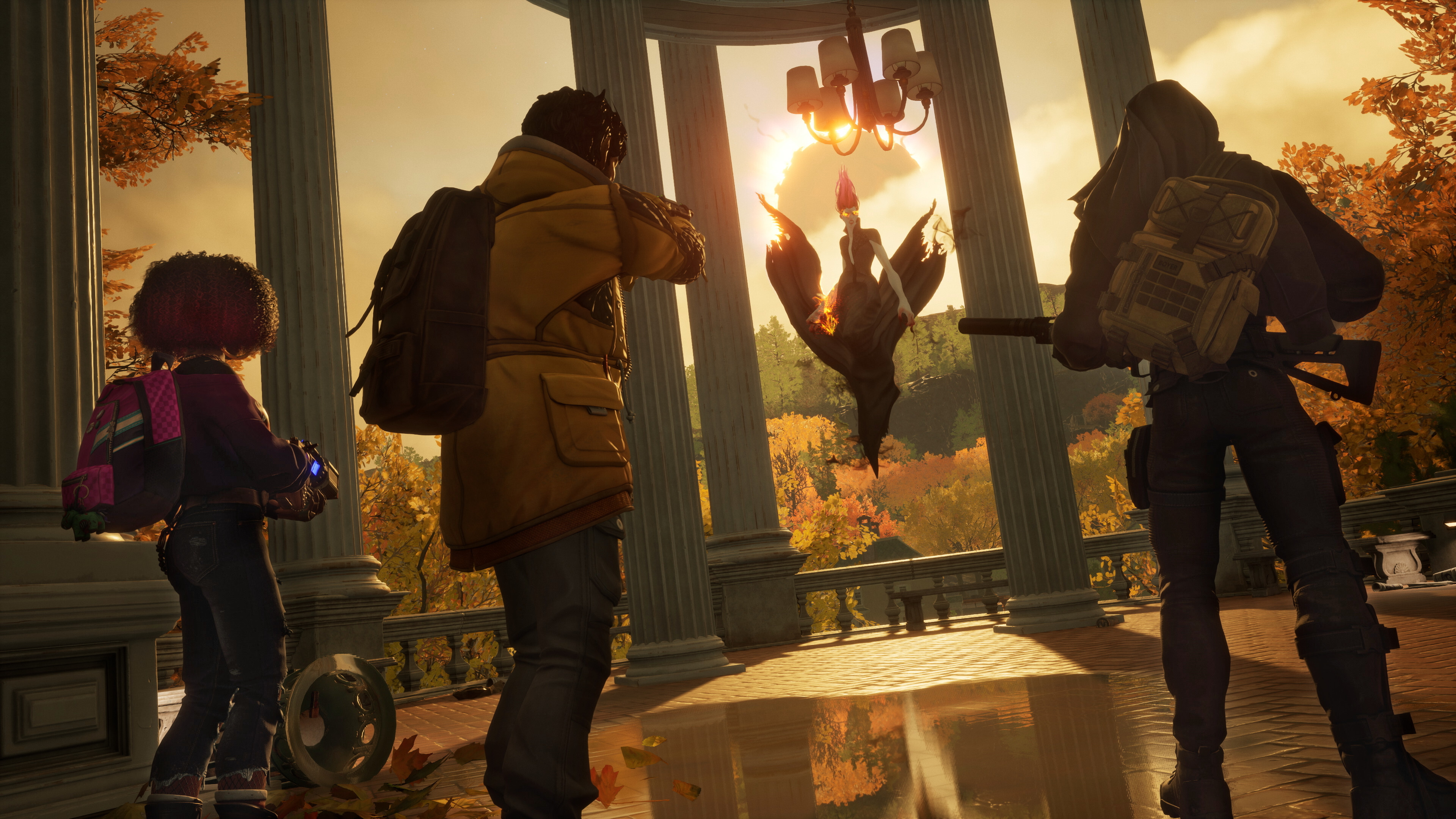
Redfall
Gaming
15 Video Games That Promised More Than They Actually Delivered
The Worst Call of Duty Games In History intro cropped processed by imagy
Call of Duty
The Worst Call of Duty Games In History
Will Smith in After Earth
TV Shows & Movies
15 Famous Movies That Take Themselves Way Too Seriously
Top Fantasy
TV Shows & Movies
Top 15 Fantasy Films of All Time
Lilia Worlds Patch
League of Legends
LoL Patch 26.20: This Is The Worlds Patch
Jaws
TV Shows & Movies
15 Famous Movies With Terrible Sequels
Better Call Saul 2015
Galleries
15 Best TV Shows That Never Won an Emmy
EU KIDS Act
Gaming
The EU’s KIDS Act Could Kill Games in the Name of "Child Safety"
Terms of Endearment
TV Shows & Movies
15 Classic Movies That Get Better Every Time You Watch Them
Once Upon a Time Regina Mills
TV Shows & Movies
15 TV Shows That Ruined Their Own Best Characters
So bad theyre good
TV Shows & Movies
Glorious Trainwrecks: 25 Movies That Are So Bad They're Good
  • All Gaming
  • Videos
  • News
  • Home

Subscribe to our Newsletter

Sign up for selected EarlyGame highlights, opinions and much more

About Us

Discover the world of esports and video games. Stay up to date with news, opinion, tips, tricks and reviews.
More insights about us? Click here!

Links

  • Affiliate Links
  • Privacy Policy
  • Impressum and Disclaimer
  • Advertising Policy
  • Our Editorial Policy
  • About Us
  • Authors
  • Ownership

Partners

  • Kicker Logo
  • Efg esl logo
  • Euronics logo
  • Porsche logo
  • Razer logo

Charity Partner

  • Laureus sport for good horizontal logo

Games

  • Gaming
  • Entertainment
  • Creators
  • TV Shows & Movies
  • EA FC
  • Fortnite
  • League of Legends
  • Codes
  • Mobile Gaming
  • Videos
  • Call of Duty
  • Rocket League
  • APEX
  • Reviews
  • Galleries
  • News
  • Your Future
  • Lootday
  • Guides

Links

  • Affiliate Links
  • Privacy Policy
  • Impressum and Disclaimer
  • Advertising Policy
  • Our Editorial Policy
  • About Us
  • Authors
  • Ownership
  • Copyright 2026 © eSports Media GmbH®
  • Privacy Policy
  • Impressum and Disclaimer
  • Update Privacy Settings
English
English
  • English
  • German
  • Spanish
  • EarlyGame india