




























Some stories don’t ask for sympathy. They ask you to pay attention. These films explore disability not as a single defining trait, but as part of a life shaped by relationships, ambition, frustration, and quiet resilience.
The Other Sister turns what could have been a typical inspirational disability story into something messier and more complicated, following Carla, a young woman with an intellectual disability who wants independence, love, and a normal life. Juliette Lewis commits fully to the role without condescending to it, creating a character who feels real rather than symbolic. The movie refuses to sand down the rough edges of family dynamics or pretend that good intentions automatically lead to good outcomes. What starts as a feel-good premise becomes something closer to an honest look at how families struggle with letting go. | © Buena Vista Pictures
Regarding Henry turns a ruthless corporate lawyer into a gentle stranger after a brain injury wipes away everything that made him successful and cruel. Harrison Ford plays Henry as two completely different people, showing how trauma can strip away the worst parts of someone's personality, along with their memory. The movie asks whether becoming kinder is worth losing everything you worked for, even when that work involved destroying other people's lives. What makes it unusual is how it treats disability as a path to redemption rather than just a tragedy. | © Paramount Pictures
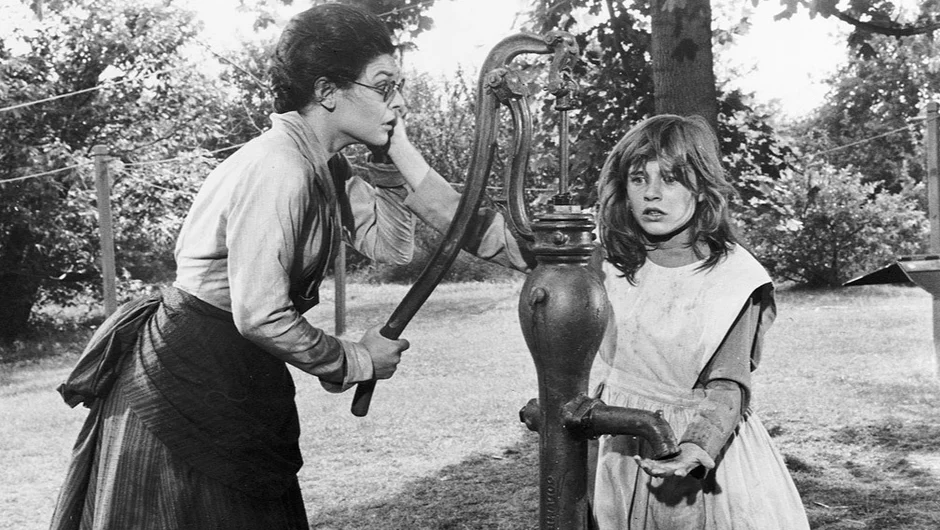
The Miracle Worker turns what could have been a gentle inspiration story into something much more physical and confrontational. Anne Bancroft and Patty Duke spend most of the film in an actual battle of wills, with Duke's Helen Keller fighting against every attempt at communication while Bancroft's Annie Sullivan refuses to give up or go easy on her. The famous water pump scene works because it comes after an hour of genuine struggle, not because the movie tells you it should be meaningful. Both actresses earned Oscars for performances that feel more like athletic competitions than typical Hollywood drama. | © United Artists
Awakenings builds entire emotional foundation on a medical miracle that everyone knows cannot last. Robin Williams plays the doctor who discovers that L-DOPA can temporarily wake patients from decades-long catatonic states, but the drug's effects are cruelly temporary. The film finds its power in watching Robert De Niro and others experience a brief window of normal life before the medicine stops working. What could have been manipulative feels earned because it never pretends the awakening is permanent. | © Columbia Pictures
Temple Grandin turns a biographical drama into something that feels like experiencing the world through different eyes. The HBO film uses visual techniques and sound design to show how Grandin's autism shapes her perception, making cattle chutes and slaughterhouses into places of geometric beauty and sensory overload. Claire Danes disappears into the role completely, capturing both Grandin's social struggles and her revolutionary approach to animal welfare. The movie succeeds because it never treats autism as something to overcome or fix, just as a different way of seeing problems that everyone else missed. | © HBO
My Left Foot builds its entire story around Daniel Day-Lewis painting and typing with his toes, and somehow that never feels like a gimmick or cheap inspiration. The film follows Christy Brown's real journey from a kid trapped in his own body to an artist who could make people laugh, rage, and fall in love through pure force of personality. Day-Lewis disappears so completely into the role that you forget you're watching an actor contort himself into cerebral palsy rather than just watching Christy be Christy. What could have been a typical overcome-the-odds story instead becomes something messier and more honest about disability, creativity, and what it actually takes to be seen as a whole person. | © Miramax Films
Children of a Lesser God builds an entire story around the idea that love can bridge any gap, then spends two hours showing exactly why that might not be true. William Hurt plays a hearing teacher who falls for Marlee Matlin's deaf janitor, but their relationship keeps hitting the same wall: he wants to fix her, and she refuses to be fixed. The movie never treats deafness as something that needs solving, which was rare enough in 1986 to feel revolutionary. Matlin won the Oscar not just for breaking barriers, but for playing a character who demands to be met on her own terms. | © Paramount Pictures
What's Eating Gilbert Grape turns a small Iowa town into a pressure cooker where Gilbert shoulders every burden while his own life slowly disappears. Johnny Depp plays the grocery store clerk trapped between caring for his intellectually disabled brother, Arnie, and his severely obese mother, all while dreams of escape feel more impossible each day. The movie works because it never treats Arnie's disability as inspiration or tragedy, just as one complicated piece of a family barely holding together. Leonardo DiCaprio's performance as Arnie feels so natural and unforced that you forget you're watching someone act. | © Paramount Pictures
The Diving Bell and the Butterfly locks you inside the mind of a man who can only move one eyelid, and somehow makes that claustrophobic experience feel expansive rather than depressing. Julian Schnabel films from Jean-Dominique Bauby's perspective as he learns to communicate by blinking at letters, turning what could have been a medical drama into something that feels more like poetry about memory and imagination. The movie refuses to make Bauby a saint or a victim. Instead, it shows how someone can build an entire inner world when the outer one shrinks to almost nothing. | © Miramax Films
Coming Home builds its entire story around the idea that Vietnam changed everything, then proves it by putting Jane Fonda's conservative military wife in the same space as Jon Voight's paralyzed veteran who has every reason to hate her husband. The film earns its emotional weight by letting both characters discover that their assumptions about duty, love, and what makes someone whole were never as solid as they thought. Voight's performance as Luke never asks for pity or tries to make his disability inspirational. Instead of neat resolutions, Coming Home ends with the messier truth that some wounds reshape people in ways that can't be undone or easily explained. | © United Artists
Born on the Fourth of July turns Tom Cruise's all-American movie star image into the exact weapon the story needs. Ron Kovic goes from gung-ho patriot to wheelchair-bound veteran questioning everything he once believed, and Cruise sells both sides of that transformation without flinching from the ugliness. Oliver Stone films the whole thing like a fever dream of American idealism curdling into something much harder to swallow. The movie works because it lets Kovic's rage feel messy and uncomfortable instead of noble. | © Universal Pictures
The Theory of Everything turns Stephen Hawking's life into a love story first and a disability story second, which is exactly what makes it work. Eddie Redmayne's physical transformation captures the progression of ALS without ever making Hawking feel like a medical case study or inspiration porn. The film finds its real power in showing how Jane and Stephen's relationship changes as his body fails, but his mind soars, treating both the science and the marriage as equally complex puzzles. Most biopics about brilliant people forget to make them human, but this one never lets you forget that genius lives inside a fragile body. | © Focus Features
Forrest Gump turns intellectual disability into a vehicle for sweeping through decades of American history, with Tom Hanks playing a man whose simple worldview somehow places him at the center of every major cultural moment. The film's approach feels both sincere in its affection for Forrest and questionable in its use of his condition as a plot device to comment on everything from Vietnam to Apple Computer. Hanks commits fully to the character's childlike earnestness, but the movie works better as a nostalgic fantasy than as any kind of realistic portrayal of disability. What sticks is how Forrest's unshakeable optimism cuts through the cynicism of every era he stumbles through. | © Paramount Pictures
One Flew Over the Cuckoo's Nest makes a mental hospital a battlefield between rebellion and control, with Jack Nicholson's McMurphy challenging every rule Nurse Ratched has built to keep her patients quiet and compliant. The film refuses to romanticize mental illness or turn McMurphy into a simple hero, showing how his defiance helps some patients while ultimately destroying him. What makes it devastating is how clearly it shows that the system designed to help these men is actually crushing them. The lobotomy scene hits harder than any horror movie because it represents the complete victory of institutional power over the human spirit. | © United Artists
Rain Man turned Dustin Hoffman's meticulous performance as an autistic savant into a mainstream breakthrough that Hollywood rarely manages with disability stories. The film works because it never pretends Charlie Babbitt is a good person, letting Tom Cruise play him as genuinely selfish and frustrated rather than noble, which makes his gradual understanding feel earned instead of inevitable. Hoffman commits completely to Raymond's rhythms and restrictions, creating a character who feels specific rather than symbolic. The road-trip structure gives both brothers time to exist as people rather than as lessons. | © MGM/United Artists
Some stories don’t ask for sympathy. They ask you to pay attention. These films explore disability not as a single defining trait, but as part of a life shaped by relationships, ambition, frustration, and quiet resilience.