































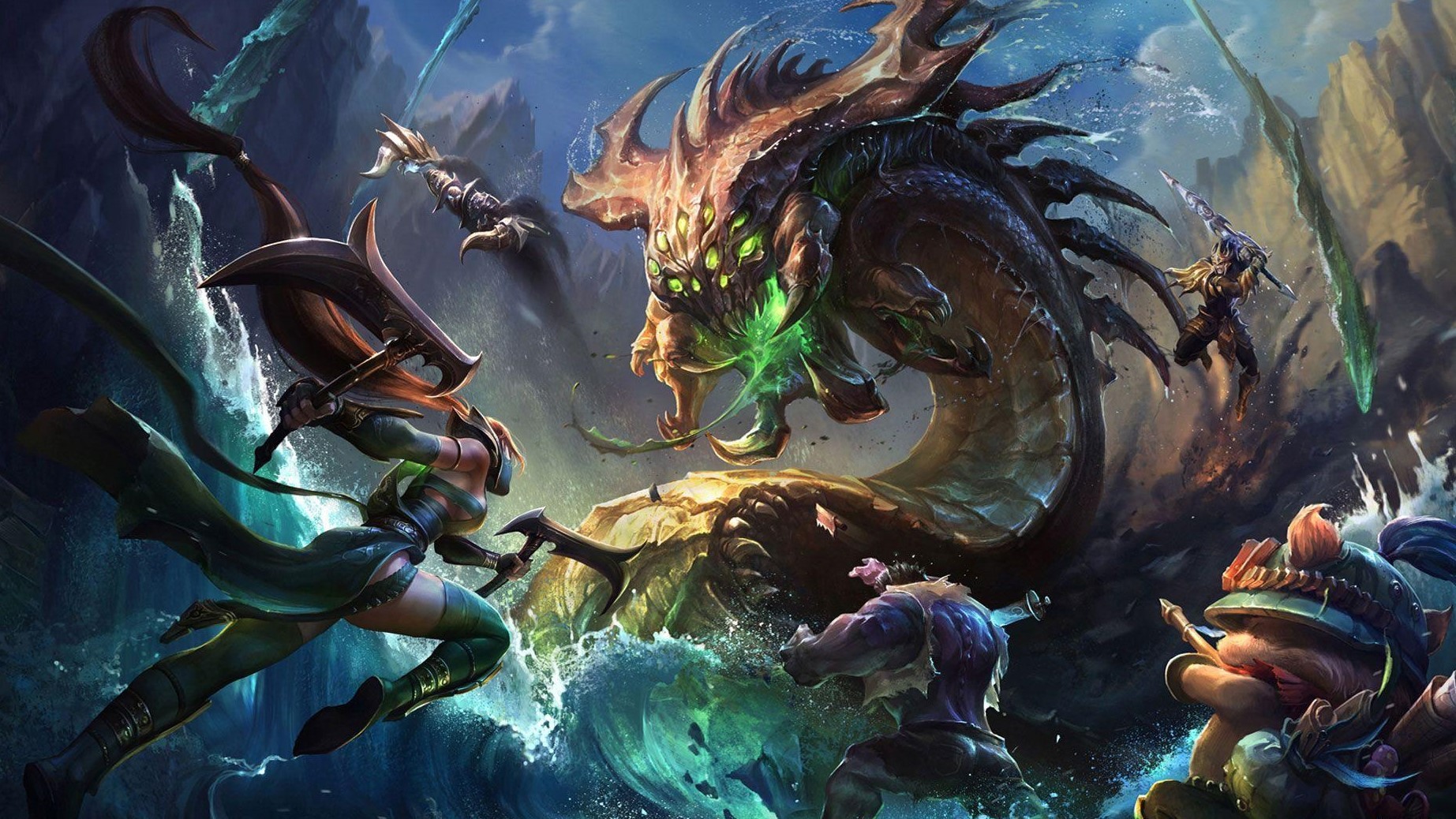





Surrendering in League of Legends is, in a way, simply teamwork.

Surrender votes are one of the most emotional topics in League of Legends. For some players, early FF votes are pure loser mentality, while others see refusing to surrender in a lost game as almost a form of hostage-taking. But a recent Reddit thread adds an important point to the discussion: surrendering is not just a button, it is a cooperative decision. And that is exactly why many FF votes fail, not because of the system, but because of how players use them.
FF Is a Vote, Not a Single-Player Button
The most important idea is simple: if you want to surrender, you need your team. In League, one player does not decide when the game is over. You need agreement, and you are not going to get that agreement if you insult your teammates, steal CS, play passive-aggressively, or start a new FF vote every few minutes.
That is where many Solo Queue games fall apart. Some players treat surrendering like a personal exit button. The moment they stop having fun or lose lane, they expect the entire team to go along with them. If the team says no, frustration quickly turns into spite: less focus, less teamwork and more pressure in chat.
But a failed surrender vote is not permission to stop playing. If the team does not give up, the goal remains the same: win or at least keep trying. If you soft-int afterward or only farm side waves, you basically prove why the others did not want to cooperate with you.
Timing Is Almost Everything
The best point from the discussion is about timing. Starting an FF vote the second it comes off cooldown while your team is preparing a good play is almost always the wrong moment. If three teammates are moving to shut down the 8/0 enemy carry, nobody is going to throw away a possible comeback chance just because one player has already mentally left the game.
It is very different if that same attempt fails two minutes later, your team gets collapsed on, and the enemy gets Baron. Then the emotional and strategic context has changed completely. A surrender vote after a lost fight can feel like a realistic assessment. A surrender vote in the middle of an active comeback chance feels like a sign that you no longer want to play.
That makes FF timing almost its own solo queue skill. If you really want out, you have to read the moment. Is the game truly over? Or is the team only behind but still has shutdowns, scaling, vision setup, or one clear next fight? Many votes fail not because everyone else is delusional, but because the vote comes at the worst possible time.
“Never FF” Is Not Always Wrong
The Never-FF crowd gets mocked a lot, but it has a real argument. Surrendering is a guaranteed loss. Playing on is not. Especially in Solo Queue, games are thrown all the time: Baron throws, pointless chases, bad Elder setups, and overforced base dives. A game that looks lost can open up again through one major mistake.
That does not mean every game should be played out for 40 minutes. Some games are truly over. If every lane is lost, one player is clearly griefing, and every teamfight explodes in two seconds, surrendering can be the reasonable choice. But “hard” is not the same as “unplayable.”
Many players also underestimate how much there is to learn from losing games. Playing from behind is a real skill. If you end every difficult game immediately, you get less practice at holding waves, looking for picks, or defending with limited vision.
But “No FF” Can Be Selfish Too
At the same time, it is just as wrong to reject every surrender vote by default. If four players clearly see no realistic path forward and one person keeps the game going purely on principle, that does not feel like teamwork. It feels like stubbornness.
It becomes especially problematic when players vote no to punish someone. “The troll should suffer with us” is understandable, but it does not fix anything. You may not only waste the troll’s time but also the time of the three other players who simply want to move on.
Surrendering is therefore not only a question of win rate. It is also a question of game quality. Ranked should be competitive, but nobody gains much from sitting through 15 extra minutes of a completely broken game where nobody is seriously cooperating anymore.
The Best Solution Is Better Communication
In the end, the discussion shows that League does not only have a surrender problem. It has a mentality problem. Both extremes are bad: spamming FF after every mistake and toxic Never-FF out of spite. The reasonable space is somewhere in between: keep trying while there are real chances, and agree to end the game when there is no meaningful path left.
The simplest solution is almost boring: stay calm, keep playing, and choose the right moment. A normal "We can try one more fight, then maybe FF” often works better than five tilt votes and chat flame. If you want cooperation, you have to behave cooperatively.
So yes, surrendering really is teamwork. Not because giving up is always right. But because the decision only works when five players read the game state in at least a somewhat similar way. If you want to convince your team, do not just hammer the FF button. Give them a reason to agree with you.