








































Survival: Fountain of Youth pairs exploration and rewarding progression with frustrating combat and a workload best shared with friends.
The promise of finding the Fountain of Youth is what drew me to Survival: Fountain of Youth. Surviving on Caribbean islands, far from civilization and following the trail of a mystery, sounded considerably more appealing than building yet another cabin. Then came the missing materials, the trips to collect them, and the animals determined to make those trips difficult. Eternal life could wait; I had a shopping list to finish first.
Odinsoft's game has enough ideas to carve out a place in a crowded genre, though its problems keep it well below the best survival games out there. I'd put it near the top of the genre's B tier: it gives you reasons to keep exploring, offers interesting progression, and becomes a considerably better adventure when you can split the workload. Unfortunately, the combat seems determined to drive you off the island.
| Rating | 6/10 (Single-Player) / 7/10 (Co-op) |
|---|---|
| Platforms | PC, PS5, Xbox Series X/S |
| Price | $27.99 |
Chopping Down a Tree Takes Time, Just Not in the Usual Way
One of its more unusual design choices involves gathering resources. In single-player, collecting wood doesn't require you to watch your character hit a trunk over and over. The action has a time cost, and carrying it out advances the in-game clock. You get your resources without spending several minutes watching the process.
On paper, I appreciate someone sparing us another afternoon of hitting a tree. In practice, though, I was torn. Part of the appeal of these games lies in doing the work yourself, in feeling the effort that turns an empty patch of land into a shelter. Handling it through a time skip is convenient, but it also makes that connection with your surroundings feel a little less tangible.
Considering how many materials you have to manage, I understand the decision. Traditional gathering could make an experience that already demands considerable organization even more laborious. The system works for anyone who would rather focus on deciding what they need and how much time they can afford to spend getting it. I liked it as an alternative, but it never quite replaced the satisfaction of gathering things with my own hands.
The List of Materials Only Gets Longer
The real grind becomes apparent as you progress. There's a clear progression in the resources you use and the things you can craft, but gaining access to new materials doesn't free you from collecting the old ones. Each step adds more demands without doing much to ease the ones you already had.
Keeping basic resources useful can help tie a crafting system together. Here, though, it too often sends me across the map to find that one missing ingredient. I don't mind preparing for an expedition; I mind interrupting what I was doing to repeat a journey whose only reward is getting back to my original plan.
That friction is especially noticeable when you're playing alone and every errand falls to you. The game speeds up the actual gathering but retains much of the legwork involved in reaching the resources. Its approach only solves part of the problem: you can skip swinging the axe and still waste too much time between one task and the next.
An Island Worth Exploring, With Room for More Imagination
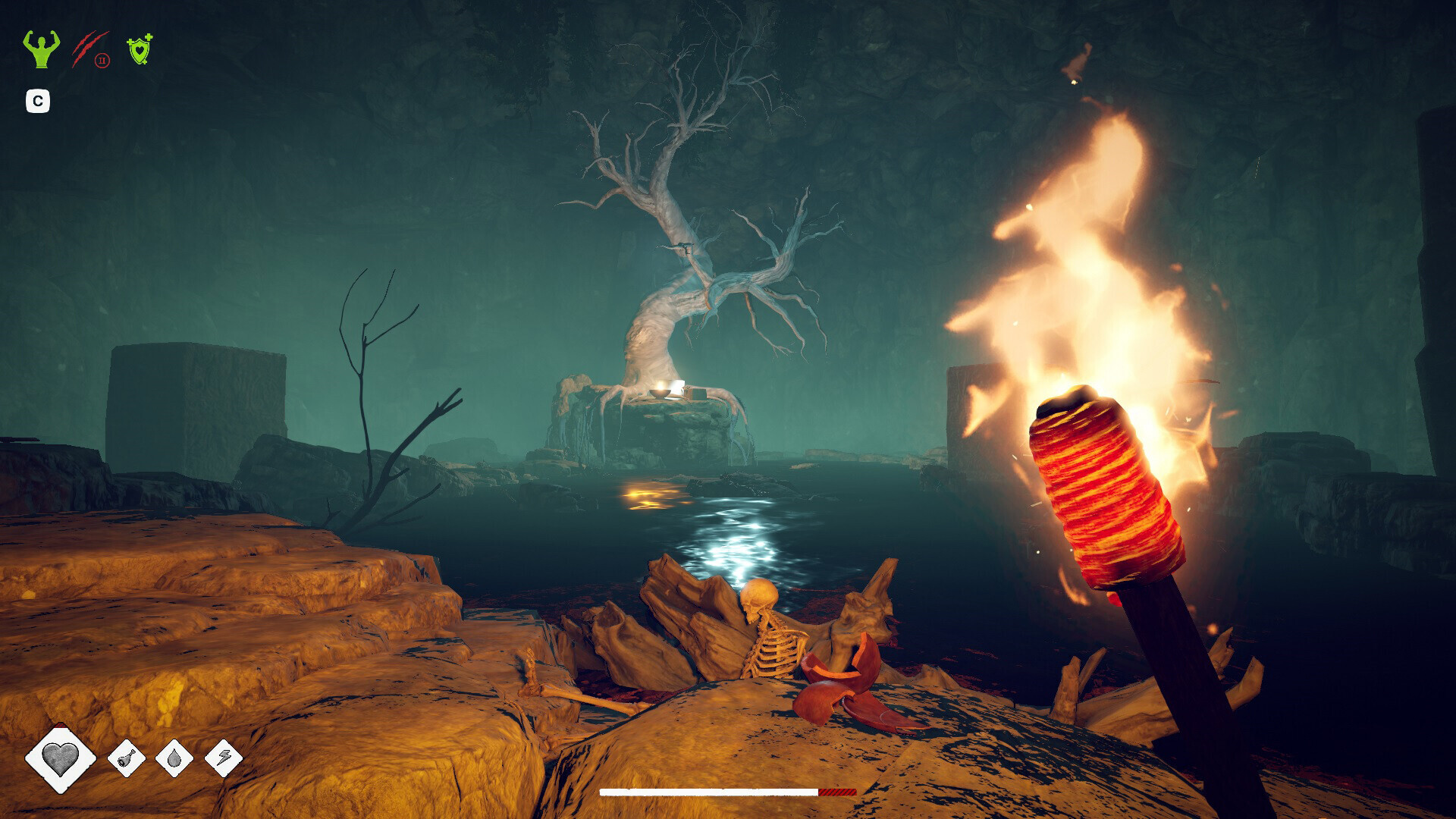
One incentive that does work for me is earning survival points through the knowledge left by the islands' former inhabitants. Exploration offers rewards beyond filling your inventory. Discovering what they left behind helps improve your character and makes me want to keep investigating.
That connection between discovery and progression is one of my favorite things about Survival: Fountain of Youth. It gives you a reason to stray from your usual route and fits the premise that initially caught my attention. Alongside finding the next source of materials, I want to discover something that makes me wonder what lies ahead.
That's exactly why I would have welcomed a greater emphasis on fantasy. The Fountain of Youth gives the game an extraordinary promise to play with, yet most of the experience remains focused on the more mundane concerns of survival. I understand wanting to preserve the harshness of being stranded in a hostile environment. Still, I think there was room to do more with that mythical element and give the game a stronger identity among its genre peers.
Learning Does More Than Make You Work Faster
Improving skills through practice reminded me of Valheim, though here I was particularly interested in the tangible benefits. Progression can mean using fewer resources or increasing your output, rather than simply speeding up a task. Those advantages are easy to understand and appreciate in a game where so much of your effort goes toward acquiring what you need to move forward.
I also enjoyed learning through books. These improvements are particularly well suited to co-op, where each player's abilities can contribute to the group's efforts. Progression feels more meaningful when you can use it to coordinate with others and divide responsibilities.
Friends Make the Chores Easier
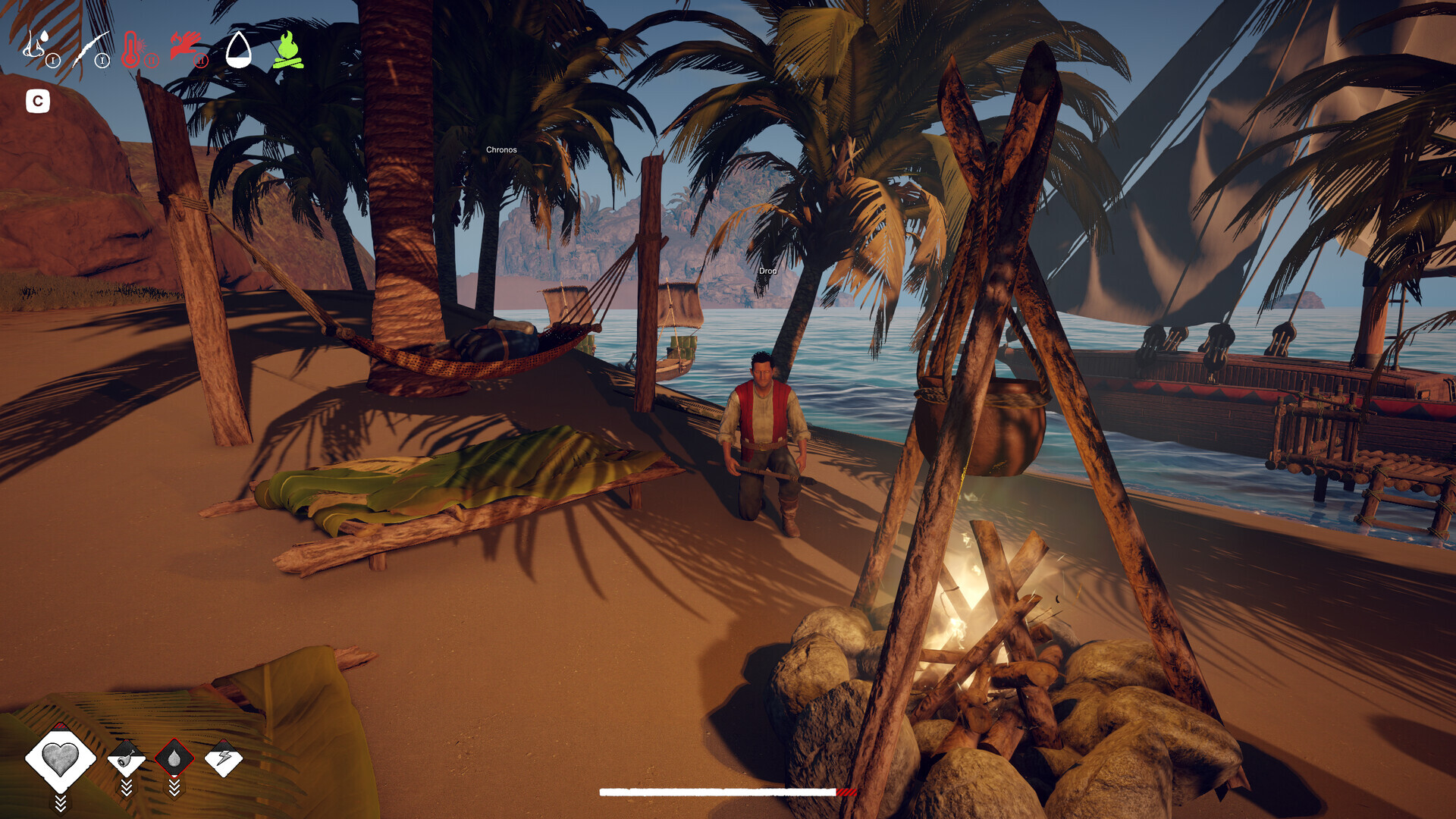
I'd recommend playing with others, mainly for a very practical reason: splitting up lets you cover more ground and gather different resources at the same time. What can become a string of pending supply runs in single-player is much more manageable when you aren't solely responsible for keeping everyone stocked up.
Co-op also changes how actions work: gathering and crafting happen instantly and consume energy, replacing the time cost used in single-player. The free update supports two to four players on Steam, though it currently includes only the campaign's first three regions; the remaining two are planned for later.
My preference for this mode comes from how it eases the problems that bothered me most when playing alone. Sharing the chores leaves more room to enjoy exploration and character progression. There's still repetitive work to do, but it no longer falls entirely on one person's shoulders.
Combat Needs More Tools Than a Spear
The combat is atrocious. I struggle to put it more gently because this is where the game feels least equipped to give me satisfying ways to respond. I miss having a dodge and the ability to block with a spear: defensive options that would give me more room to maneuver and more variety when dealing with attacks.
Instead, I end up relying too heavily on the interrupt attack, whose cooldown feels endless against certain creatures. When an animal is fast, that wait becomes especially frustrating. Some of the smaller early enemies gave me more trouble with their speed than threats such as eagles or boars.
I don't need an intricately designed combat system in a game focused on survival, but I do need one that supports the rest of the adventure. Here, encounters can turn a routine outing into a nuisance that isn't much fun to deal with either. The wildlife should make me think about how I move around the island; too often, it just makes me wish I had better ways to defend myself.
Verdict: 6/10 (Single-Player) / 7/10 (Co-op)
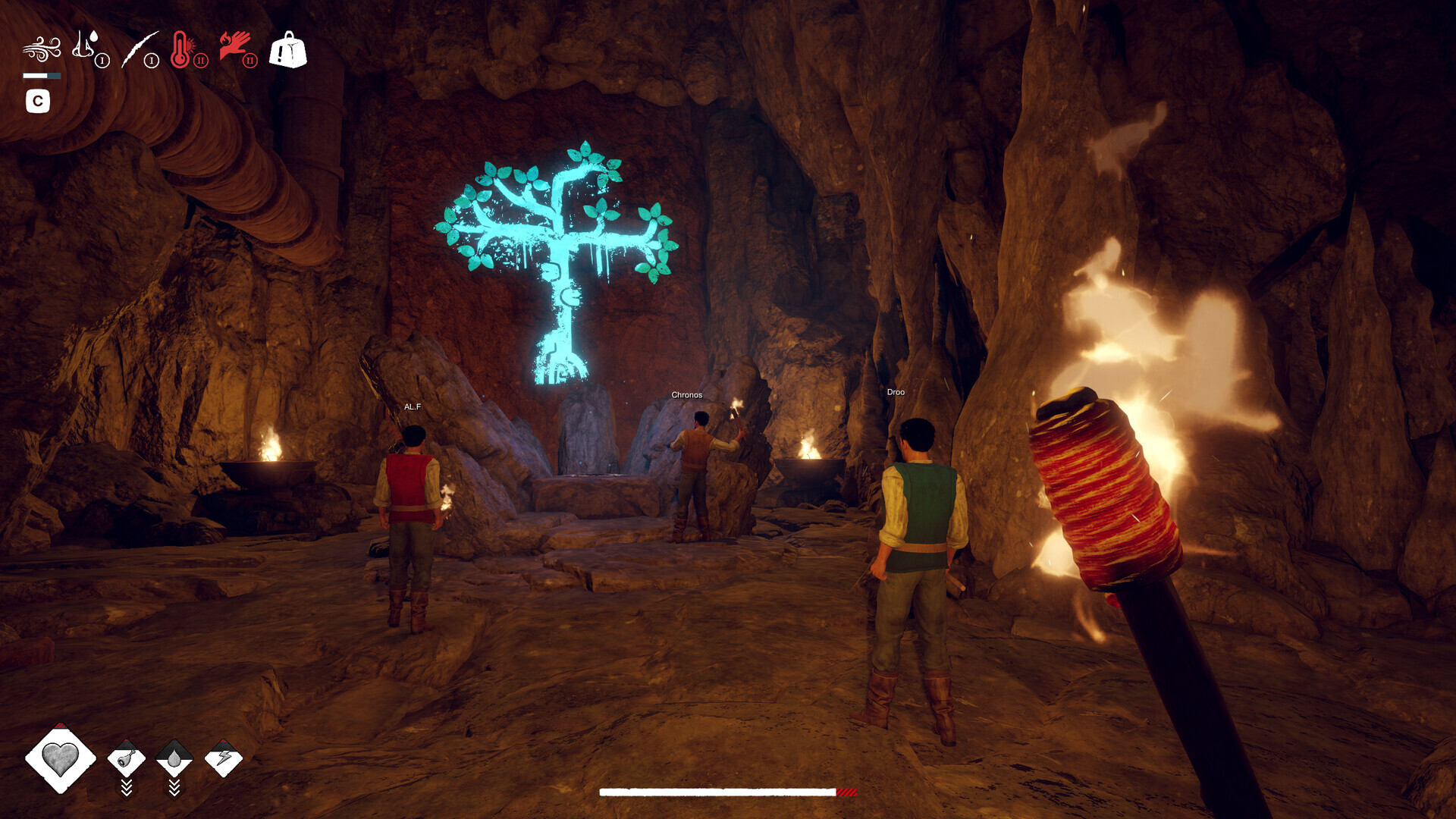
Survival: Fountain of Youth leaves me with an appealing premise, reasons to explore, and a skill system that rewards effort, but also too many supply runs and combat that needs work. I would have liked it to embrace its fantasy elements more fully and let progression ease some of its demands. Even with those limitations, it has enough appeal for survival fans willing to put up with its rough edges, especially if they can share the chores. My score is 6/10 in single-player and 7/10 in co-op: searching for eternal life is much easier to enjoy when someone helps you gather the wood.