
















• Lootday.com logo
  • Join today to claim your daily loot
English
    • News
    • Guides
    • Gaming
      • Codes
      • League of Legends
      • Lootday
    • Creators
    • Entertainment
    • Careers
    • Lootday
    • EarlyGame+
  • Login
  • Homepage My List Settings Sign out
  • News
  • Guides
  • Gaming
    • All Gaming
    • Codes
    • League of Legends
    • Lootday
  • Creators
  • Entertainment
  • Careers
  • Lootday
  • EarlyGame+
Game selection
Kena
Gaming new
Enterianment CB
ENT new
Influencer 5229646 640
TV Shows Movies Image
TV shows Movies logo 2
Fifa stadium
Fc24
Fortnite Llama WP
Fortnite Early Game
LOL 320
Lo L Logo
Codes bg image
Codes logo
Smartphonemobile
Mobile Logo
Videos WP
Untitled 1
Cod 320
Co D logo
Rocket League
Rocket League Text
Apex 320
AP Ex Legends Logo
DALL E 2024 09 17 17 03 06 A vibrant collage image that showcases various art styles from different video games all colliding together in a dynamic composition Include element
Logo
Logo copy
GALLERIES 17 09 2024
News 320 jinx
News logo
Lootday bg
Guides
More EarlyGame
Logo copy

Galleries

Lootday bg

lootday

News

News

Codes bg image

Codes

Razer blackhsark v2 review im test

Giveaways

  • Copyright 2026 © eSports Media GmbH®
  • Privacy Policy
  • Impressum and Disclaimer
 Logo
English
  • English
  • German
  • Spanish
  • EarlyGame india
  • Homepage
  • Gaming

These Video Games Should Never Have Had A Sequel (Part 2)

1-20

Ignacio Weil Ignacio Weil
Gaming - August 11th 2026, 17:00 GMT+2
F E A R 2

1. F.E.A.R. 2: Project Origin (2009)

Monolith’s second F.E.A.R. game was less startling than the original, yet it still understood that paranormal horror needs space, anticipation, and the occasional school corridor nobody wants to enter. F.E.A.R. 3 changed studios and built its campaign around cooperative play, pairing Point Man with the supernatural Paxton Fettel. The asymmetrical abilities were inventive, but another player is effectively a portable night-light. Publisher pressure toward louder action and co-op stripped away the isolation, leaving a competent shooter whose title promised an emotion it rarely produced. | © Monolith Productions

Cropped The Sims 3

2. The Sims 3 (2009)

An entire neighborhood lived around your household in The Sims 3. Neighbors aged, careers progressed, romances imploded, and Create-a-Style ensured every sofa could become a regrettable shade of leopard print. The Sims 4 launched without that open world, Create-a-Style, pools, ghosts, or toddlers, trading simulation breadth for stronger building tools and more expressive Sims. Years of free updates and paid expansions filled many gaps, but the sequel’s fragmented lots and enormous catalog never fully restored the sense that one interconnected town was carrying on without you. | © Electronic Arts

Cropped Dragon Age Origins

3. Dragon Age: Origins (2009)

Six origin stories, tactical party combat, political bargaining, and a genuinely flexible final act made Dragon Age: Origins feel like BioWare had emptied the whole fantasy cupboard. Its immediate follow-up was built in roughly sixteen months. Dragon Age II responded with a voiced hero, faster combat, and an intimate decade-long story in Kirkwall, but the cost appeared in repeated caves, recycled warehouses, cut quests, and waves of enemies materializing from rooftops. The companions deserved their later cult following; the production schedule deserved a trial at The Hague. | © BioWare

Saints Row 2

4. Saints Row 2 (2008)

Stillwater could support a prison break, a septic-truck diversion, and a scene of startling cruelty without feeling as though three different games had collided. Saints Row 2 balanced gangster drama and lunacy better than its reputation as a mere GTA alternative suggests. The Third was polished, successful, and frequently hilarious, but Steelport felt thinner and the escalating absurdity became the franchise’s only available gear. Superpowers, alien invasions, trips to Hell, and an ill-fated reboot followed. Once restraint became the enemy, every sequel had to shout over the last one. | © Volition

Cropped Fable 2

5. Fable 2 (2008)

Albion was at its most inviting in Fable II, where heroic destiny comfortably shared space with property prices, pub games, questionable marriages, and a dog more emotionally persuasive than most RPG companions. Fable III rushed players from revolution to monarchy, replacing conventional menus with the Sanctuary and much of character growth with the Road to Rule. Its final political act had fascinating ideas, but abrupt time jumps and an economy-heavy endgame undercut them. The crown looked impressive; wearing it felt like discovering the royal treasury was another spreadsheet. | © Lionhead Studios

STAR WARS The Force Unleashed

6. Star Wars: The Force Unleashed (2008)

Starkiller’s journey was extravagant fan fiction with enough conviction to make pulling a Star Destroyer from the sky feel reasonable. Crucially, it also had an ending. The Force Unleashed II brought him back as a possible clone, narrowed his motivation to finding Juno, and sprinted through a campaign of roughly five hours across only a handful of locations. Dual lightsabers and improved combat could not hide the repeated enemies, thin plot, or cliffhanger that LucasArts never resolved. The Force was still unleashed; the script appeared to have escaped entirely. | © LucasArts

Cropped Crackdown

7. Crackdown (2007)

Green agility orbs turned Crackdown into a perfect compulsion disguised as an open-world shooter. Every rooftop promised a slightly better jump, and dismantling Pacific City’s gangs in any order let players create their own superhero patrol route. Crackdown 2 returned to virtually the same city, added mutant Freaks, and replaced criminal hierarchies with repetitive beacon activations. Four-player chaos supplied easy fun, but the copy-and-corrupt approach made the sequel resemble a hastily modified save file. A long-delayed third game later confirmed that bigger explosions were never the missing ingredient. | © Realtime Worlds

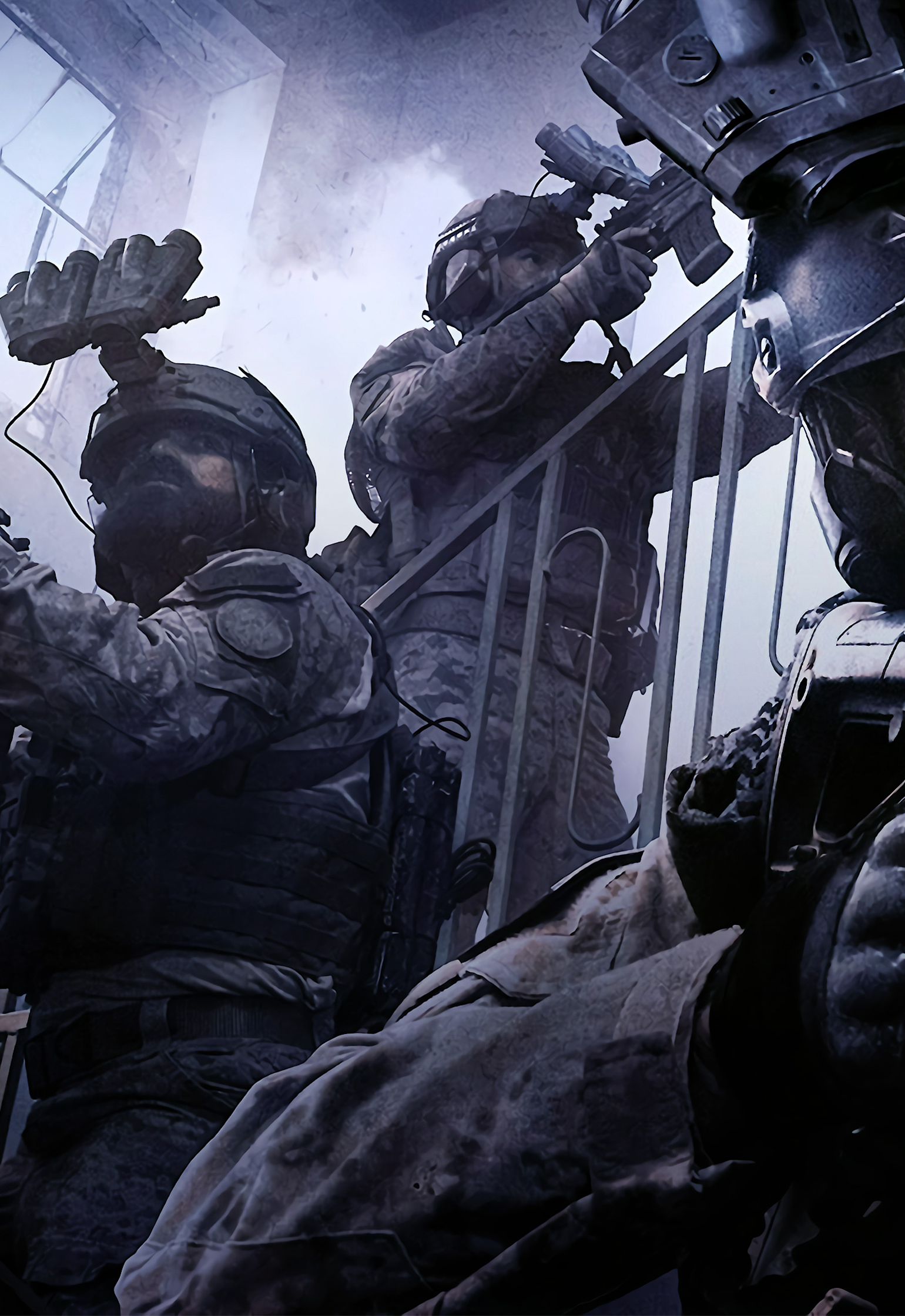
Call of Duty 4 Modern Warfare

8. Call of Duty 4: Modern Warfare (2007)

The shock of Modern Warfare came from how controlled it could be. Its nuclear detonation did not reward heroism, the AC-130 mission presented killing through a chilling screen, and the campaign ended before its ideas became wallpaper. Modern Warfare 2 is a landmark sequel with brilliant multiplayer and unforgettable set pieces, but it also began the escalation toward invasions, betrayals, airport atrocities, and global spectacle as routine franchise fuel. The original made modern war feel destabilizing; its successors increasingly treated destabilization as the annual fireworks budget. | © Infinity Ward

Cropped Supreme Commander

9. Supreme Commander (2007)

Most strategy games ask players to manage a battlefield; Supreme Commander asks them to manage a continent and politely provides a strategic zoom so they do not lose it. Its scale, flowing economy, experimental units, and multi-front wars created an RTS identity nobody else was attempting. Supreme Commander 2 shortened matches, simplified resources, introduced a conventional research tree, and reduced the logistical sprawl to reach a broader audience. The result was approachable and perfectly playable, but making the series resemble its competitors removed the main reason anyone had commissioned this particular commander. | © Gas Powered Games

Halo 3

10. Halo 3 (2007)

“Finish the Fight” was unusually honest marketing. Halo 3 concluded the Human-Covenant war, resolved the original trilogy’s major conflicts, and sent Master Chief into stasis with Cortana—an ending open enough for imagination but satisfying enough for retirement. Halo 4 woke him for a more intimate story about Cortana’s deterioration, one of 343 Industries’ strongest narrative ideas, while surrounding it with new Promethean enemies and dense Forerunner mythology. Later games repeatedly changed direction, leaving the continuation feeling less like a planned saga than a series of expensive attempts to rediscover a finished one. | © Bungie

Cropped Kingdom Hearts 2

11. Kingdom Hearts 2 (2005)

Sora, Riku, and Kairi finally returned to the same beach at the end of Kingdom Hearts II. Organization XIII had fallen, Roxas and Naminé found peace, and the emotional business begun in the first game felt complete. Then a message in a bottle arrived, apparently carrying several handheld titles, time travel, replicas, ancient Keyblade lore, mobile-game homework, and another version of Xehanort. Many later entries contain terrific combat and affecting moments, but extending the saga transformed a strange yet followable Disney adventure into continuity that requires diagrams, footnotes, and possibly a semester abroad. | © Square Enix

Cropped Advance Wars Dual Strike

12. Advance Wars: Dual Strike (2005)

Dual Strike treated turn-based warfare like a Saturday morning cartoon with alarmingly sophisticated logistics. Its colorful commanders, tag-team powers, new units, and generous collection of modes made it a maximalist celebration of the original continuity. Days of Ruin rebooted everything into a post-apocalyptic drama, discarding the cast and bright identity while introducing tighter balance and clever mechanics of its own. It is an excellent strategy game, which complicates the complaint; as a follow-up, however, it traded away the personality that allowed Advance Wars to make tanks, missiles, and mass destruction feel improbably cheerful. | © Intelligent Systems

STAR WARS Battlefront

13. Star Wars: Battlefront (2004)

Pandemic’s first Battlefront finally allowed players to be the expendable soldier sprinting beneath the famous heroes. Its sequel then added playable Jedi, space combat, new classes, more planets, and the 501st Legion campaign, improving almost every obvious weakness without losing the accessible chaos. In other words, Star Wars: Battlefront II is exactly the sequel most games hope to receive. Later reboots introduced their own controversies, particularly the second EA game’s launch economy, but blaming the original for continuing would require pretending one of the most beloved Star Wars multiplayer games never happened. | © Pandemic Studios

Parasite Eve II

14. Parasite Eve II (1999)

Aya Brea’s second adventure moved closer to traditional survival horror while preserving the biological nightmares, cinematic confidence, and RPG systems that distinguished Parasite Eve. The next installment arrived on PSP as The 3rd Birthday, replacing measured exploration with squad-based shooting and an Overdive mechanic that let Aya possess soldiers across the battlefield. Mechanically, it could be inventive; narratively, its tangled time travel, identity twists, and treatment of Aya alienated many longtime fans. The franchise returned after a long absence only to make its own heroine feel like a visitor. | © Square

Shenmue II

15. Shenmue 2 (2001)

Fans waited eighteen years to step out of the cave where Shenmue II ended, and Shenmue III rewarded that patience by taking another very small step toward the destination. Yu Suzuki preserved the slow rhythms, awkward conversations, training routines, and obsessive detail of the Dreamcast games, but he also preserved their pacing as though two decades of design had not passed. Worse, the story barely advanced and concluded with another cliffhanger. Shenmue II absolutely needed an ending; what it did not need was an expensive intermission that sent everyone back to waiting. | © Sega AM2

Cropped Banjo Tooie

16. Banjo-Tooie (2000)

Banjo-Tooie was already the “more” sequel: larger worlds, interconnected objectives, additional transformations, split-up moves, first-person eggs, and enough collectibles to threaten local storage regulations. Rare’s next major console entry did not try to go larger. Nuts & Bolts instead removed most traditional abilities and built its challenges around constructing vehicles. The editor was clever and years ahead of the build-anything trend, but attaching Banjo and Kazooie to it felt like replacing a beloved platforming duo with licensed hood ornaments. A good experiment became a bad reunion. | © Rare

Cropped Deus Ex

17. Deus Ex (2000)

The original Deus Ex hands players a conspiracy and then permits them to break into it through vents, passwords, explosives, social manipulation, or wonderfully clumsy improvisation. Invisible War attempted to preserve that freedom while designing simultaneously for PC and Xbox. Tiny levels, frequent loading screens, a universal ammunition system, simplified interfaces, and reduced mechanical depth made its world feel compressed rather than reactive. The sequel still contains ambitious choices and worthwhile ideas, but following one of gaming’s most expansive immersive sims with something visibly constrained was cybernetic self-sabotage. | © Ion Storm

Cropped Diablo 2

18. Diablo 2 (2000)

Diablo II made compulsive repetition feel like a sacred ritual: descend, kill, loot, compare numbers, and discover that sunrise happened several hours ago. Its classes, itemization, atmosphere, and expansion established expectations that lasted for a generation. Diablo III launched with always-online congestion, the infamous Error 37, a brighter tone, and an auction house—including real-money trading—that distorted the hunt for equipment. Blizzard eventually removed the marketplace and rebuilt the game through Loot 2.0 and Reaper of Souls, but redemption required dismantling many of the sequel’s defining launch decisions. | © Blizzard North

Flat Out 2 2006

19. FlatOut 2 (2006)

Racing cleanly in FlatOut 2 was technically possible, but it missed the point. Bugbear’s sequel perfected a rowdy mixture of heavy handling, destructible tracks, aggressive opponents, and ragdoll minigames that treated the driver as specialized sporting equipment. Years later, FlatOut 3: Chaos & Destruction handed the series to another studio and returned with broken physics, erratic AI, ugly presentation, and handling that made every vehicle feel actively opposed to asphalt. The title promised chaos and delivered it, just not in any location where functional game design could be found. | © Bugbear Entertainment

Cropped Duke Nukem 3 D

20. Duke Nukem 3D (1996)

Duke’s sunglasses were already unfashionable long before Duke Nukem Forever finally arrived. Announced soon after Duke Nukem 3D, the project spent roughly fourteen years changing engines, missing release windows, and accumulating expectations no shooter could survive. The finished game combined dated jokes with linear levels, awkward platforming, long load times, and a two-weapon limit borrowed from newer shooters it otherwise seemed determined to mock. Duke Nukem 3D captured a loud, adolescent moment in PC gaming; its sequel preserved the adolescence and misplaced everything that had made the moment exciting. | © 3D Realms

1-20

Success has a nasty habit of looking like an invitation, especially when publishers spot a potential franchise. Yet some video games told complete stories, exhausted their best ideas, or simply belonged to a moment no follow-up could recreate. The sequels that followed ranged from unnecessary retreads to spectacular disasters that dragged beloved names through the mud. These games should have ended after one—and left us remembering the good times.

This is part 2 of the list. If you think we missed any, why not check out part 1?
  • Facebook X Reddit WhatsApp Copy URL

Success has a nasty habit of looking like an invitation, especially when publishers spot a potential franchise. Yet some video games told complete stories, exhausted their best ideas, or simply belonged to a moment no follow-up could recreate. The sequels that followed ranged from unnecessary retreads to spectacular disasters that dragged beloved names through the mud. These games should have ended after one—and left us remembering the good times.

This is part 2 of the list. If you think we missed any, why not check out part 1?
Related News

More
Hollow Knight
Gaming
15 Video Games You Can Play on a Regular Office PC
Mark Wahlberg
Entertainment
15 Beloved Character Actors Who Always Play the Exact Same Persona
Fear Street Part One 1994 2021
TV Shows & Movies
15 Best Scary Movies on Netflix
Bewitched
TV Shows & Movies
15 TV Shows That Successfully Replaced a Lead Actor
Cropped Zodiac
TV Shows & Movies
15 Great Movies That Received Zero Oscar Nominations
Space 1999
TV Shows & Movies
15 Sci-Fi TV Shows with the Absolute Best Spaceship Designs
Angelina Jolie Girl Interrupted
TV Shows & Movies
25 Women That Changed Hollywood Forever
Prototype
Gaming
15 Video Games That Have Almost Zero Haters
Cropped Manchester by the Sea
TV Shows & Movies
15 Movies You Can’t Handle Twice
Satisfactory
Gaming
15 Video Games With Near-Perfect Scores Everywhere
Henry cavill as the witcher
Entertainment
15 TV Shows Ruined by a Cast Change
Subnautica 2018
Gaming
These Video Games Should Never Have Had A Sequel (Part 1)
  • All Gaming
  • Videos
  • News
  • Home

Subscribe to our Newsletter

Sign up for selected EarlyGame highlights, opinions and much more

About Us

Discover the world of esports and video games. Stay up to date with news, opinion, tips, tricks and reviews.
More insights about us? Click here!

Links

  • Affiliate Links
  • Privacy Policy
  • Impressum and Disclaimer
  • Advertising Policy
  • Our Editorial Policy
  • About Us
  • Authors
  • Ownership

Partners

  • Kicker Logo
  • Efg esl logo
  • Euronics logo
  • Porsche logo
  • Razer logo

Charity Partner

  • Laureus sport for good horizontal logo

Games

  • Gaming
  • Entertainment
  • Creators
  • TV Shows & Movies
  • EA FC
  • Fortnite
  • League of Legends
  • Codes
  • Mobile Gaming
  • Videos
  • Call of Duty
  • Rocket League
  • APEX
  • Reviews
  • Galleries
  • News
  • Your Future
  • Lootday
  • Guides

Links

  • Affiliate Links
  • Privacy Policy
  • Impressum and Disclaimer
  • Advertising Policy
  • Our Editorial Policy
  • About Us
  • Authors
  • Ownership
  • Copyright 2026 © eSports Media GmbH®
  • Privacy Policy
  • Impressum and Disclaimer
  • Update Privacy Settings
English
English
  • English
  • German
  • Spanish
  • EarlyGame india