









































Archaeologists in Germany have uncovered a nearly 2,000-year-old Roman temple beneath a forest floor.
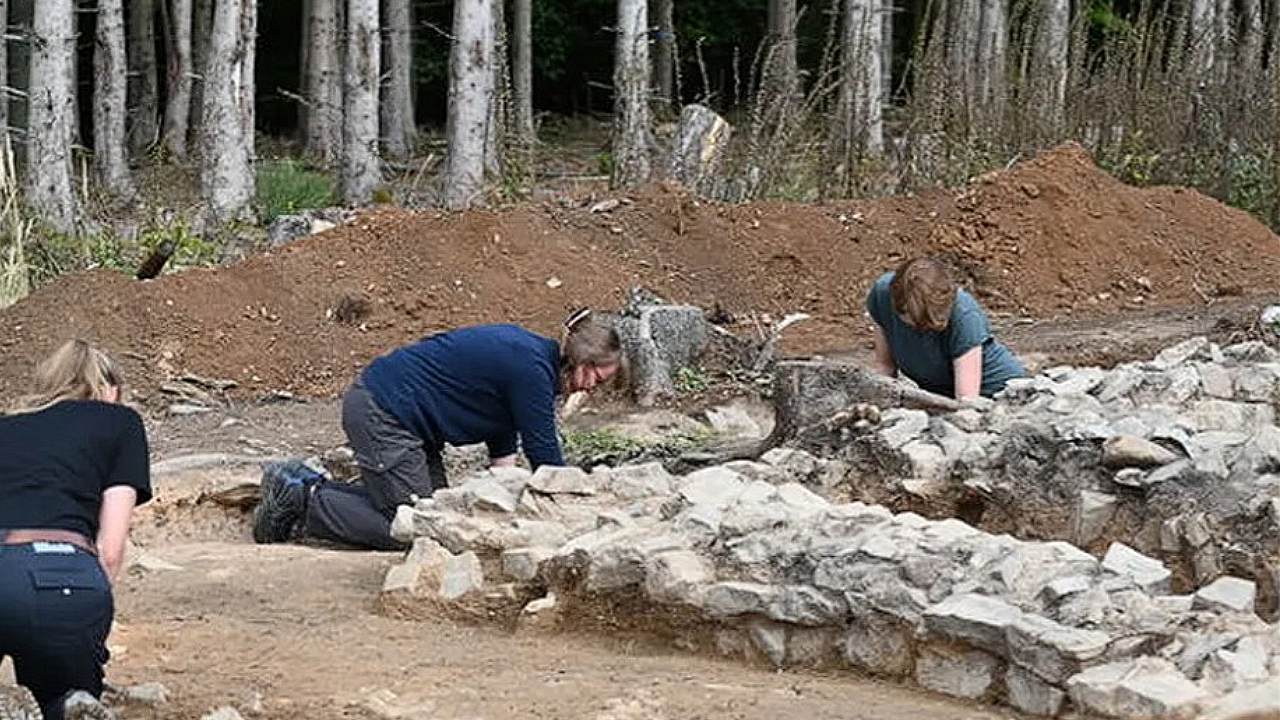
A forest in Germany's Taunus Mountains has given up a remarkable archaeological secret. Near the historic Kapersburg Roman fort, researchers have discovered the remains of an ancient temple believed to have been dedicated to Mars, the Roman god of war.
The discovery was made during excavations of a Roman settlement in Hesse, located just north of Frankfurt. Archaeologists have been investigating the site since 2024, uncovering buildings and artifacts that offer a vivid glimpse into the daily lives of Roman soldiers and the civilians who lived alongside them.
A Roman Temple Was Hidden Just Inches Below the Ground
The rectangular temple measures approximately 16 feet (five meters) long. At its center, researchers identified a smaller chamber surrounded by thick stone walls where religious ceremonies likely took place.
Several discoveries support the theory that the building was dedicated to Mars. Archaeologists found inscriptions referencing the god, alongside fragments of a statue that may have depicted him. They also uncovered a statuette of Victoria, the Roman goddess of victory, recognizable by her wings, palm branch, and laurel wreath.
Mars and Victoria were frequently worshipped together, particularly among Roman soldiers. The finds offer valuable clues about the religious beliefs of the garrison stationed at Kapersburg.
The temple formed the heart of a civilian settlement known as a vicus, where soldiers' families, craftspeople, and merchants lived. Researchers believe the settlement housed up to 700 civilians, while roughly 160 soldiers were stationed at the nearby fort.
The Forest Helped Preserve the Ancient Settlement
One reason the discovery is so remarkable is the pristine condition of the remains. The surrounding woodland protected the archaeological layers from heavy agricultural machinery, which often destroys ancient stonework.
Dr. Kai Mückenberger, a state archaeologist and coordinator for the Roman frontier, explained that the site contains unusually well-preserved layers because the land was never plowed over the centuries.
The fort remained occupied for around 150 years before being abandoned in the middle of the third century. Recent digs have also revealed evidence of bustling workshops, including traces of metalworking, along with renovations made to the settlement right before it was deserted.
Researchers are now deciphering inscriptions on a votive stone recovered inside the temple, which could unlock even more forgotten history about the garrison.
What do you think about this discovery? Let us know in the comments!
