


























The German Youth Protection Agency is warning against the “Junkofication” trend, which mocks victims of sexual violence.
Memes are an important part of pop culture and arguably the most viral internet phenomenon. They shape our sense of humor, and we often even incorporate them into our everyday language. However, a new report by the German Youth Protection Agency shows that meme culture also has its dark side and that these “jokes” often cross clear boundaries. The report addresses the trend of “junkofication” – a trend that is clearly misogynistic.
“Junkofication” – Who Was Junko Furuta?
In its report, the German Youth Protection Agency describes the trend of “Junkofication” as an example of “how misogyny and anti-feminism are spilling over from fringe online scenes onto mainstream platforms like TikTok, Instagram, and others.”
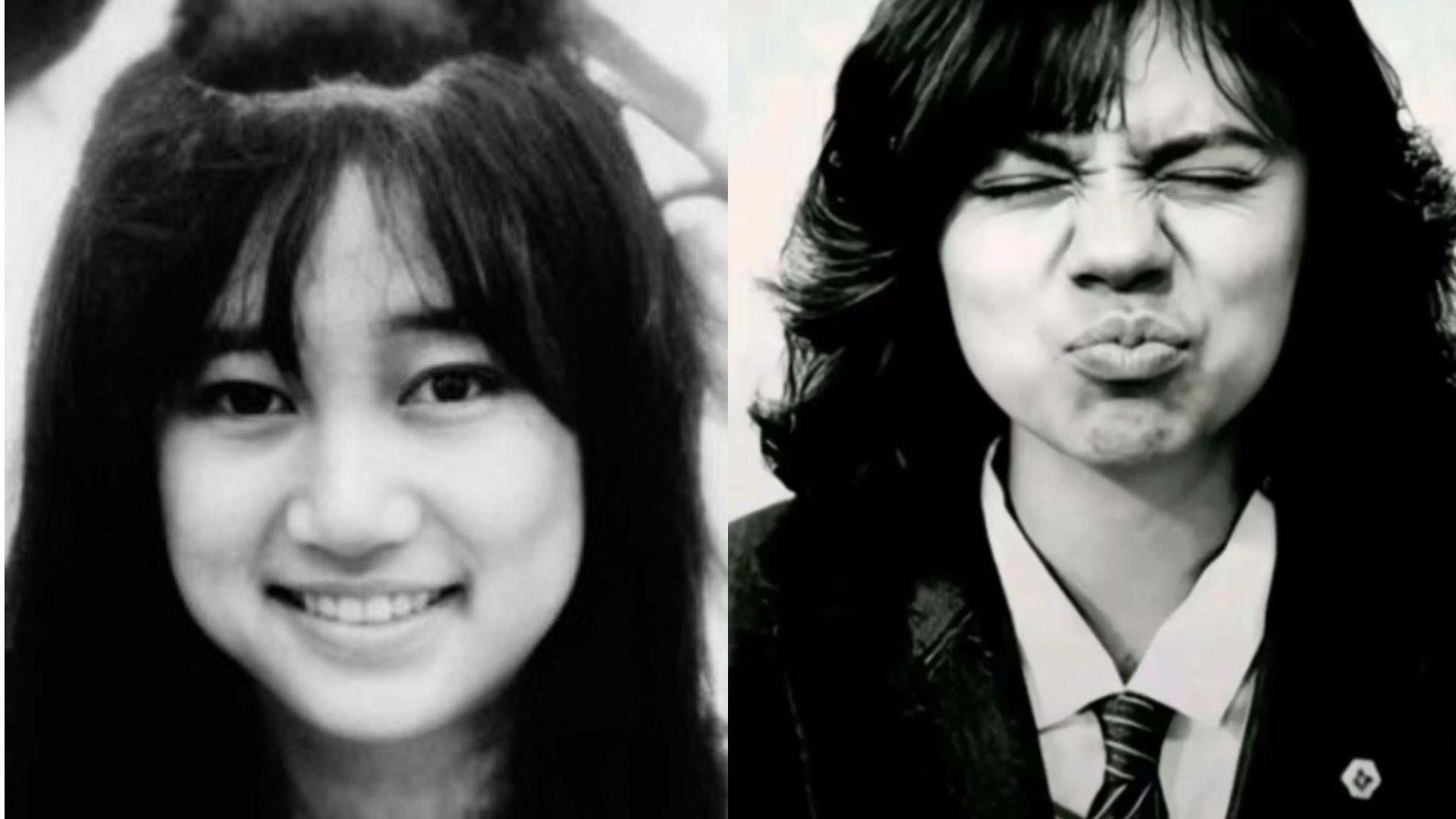
The term refers to Junko Furuta, a young Japanese woman who was murdered in 1989. The 17-year-old was kidnapped by four high school students in late 1988 and was raped and brutally tortured for 44 days. After she died from shock caused by the severe physical abuse, her killers placed her body in a tire barrel and filled it with concrete.
Due to its brutality, Junko’s story is one of the most well-known criminal cases worldwide. Because of their young age, the perpetrators received only a short prison sentence, which led to public outrage. Some of them later reoffended.
The online trend of “Junkofication” mocks Junko’s story of suffering through images, memes, and AI-generated videos. Her ordeal is alluded to in sharepics or videos, in which “real footage is used, edited, and placed in new contexts.” According to jugendschutz.net, this is not only a “tasteless transgression of boundaries, but also an expression of a misogynistic and anti-feminist ideology, which in some cases is also far-right.”
The trend originally emerged as a reaction by far-right circles to “Kirkification", an online trend that mocked the right-wing populist influencer Charlie Kirk. Kirk was shot and killed at a public event in September 2025.
Beyond the far-right scene, “Junkofication” content is also used for ragebait and trolling, with the aim of deliberately provoking others and thereby gaining attention.
The Portrayal Of Junko Furuta’s Suffering, Disguised As “Dark Humor”
“Junkofication” takes various forms, each of which is equally distasteful and mocking toward victims of sexual violence.
In many cases, Junko is linked to the pedophile criminal Jeffrey Epstein. For example, the two are portrayed as lovers, even though in reality they are a perpetrator and a victim. “Epstein Island”—a place where numerous women and children were abused—is also often used online as a hook for “jokes” and “memes.”
Other content places Junko’s tragic story within the context of popular media franchises such as Roblox, GTA, or Fortnite. For example, she is depicted as a dancing Roblox character surrounded by shirtless men who are meant to symbolize her murderers. Such posts are captioned with phrases like “My raping squad.” This also makes the disturbing content more accessible to a young audience.
Although the abuse Junko endured is not shown graphically, allusions are made and coded references are used. For example, she is often depicted with grapes, which in online slang are frequently symbolic of rape.
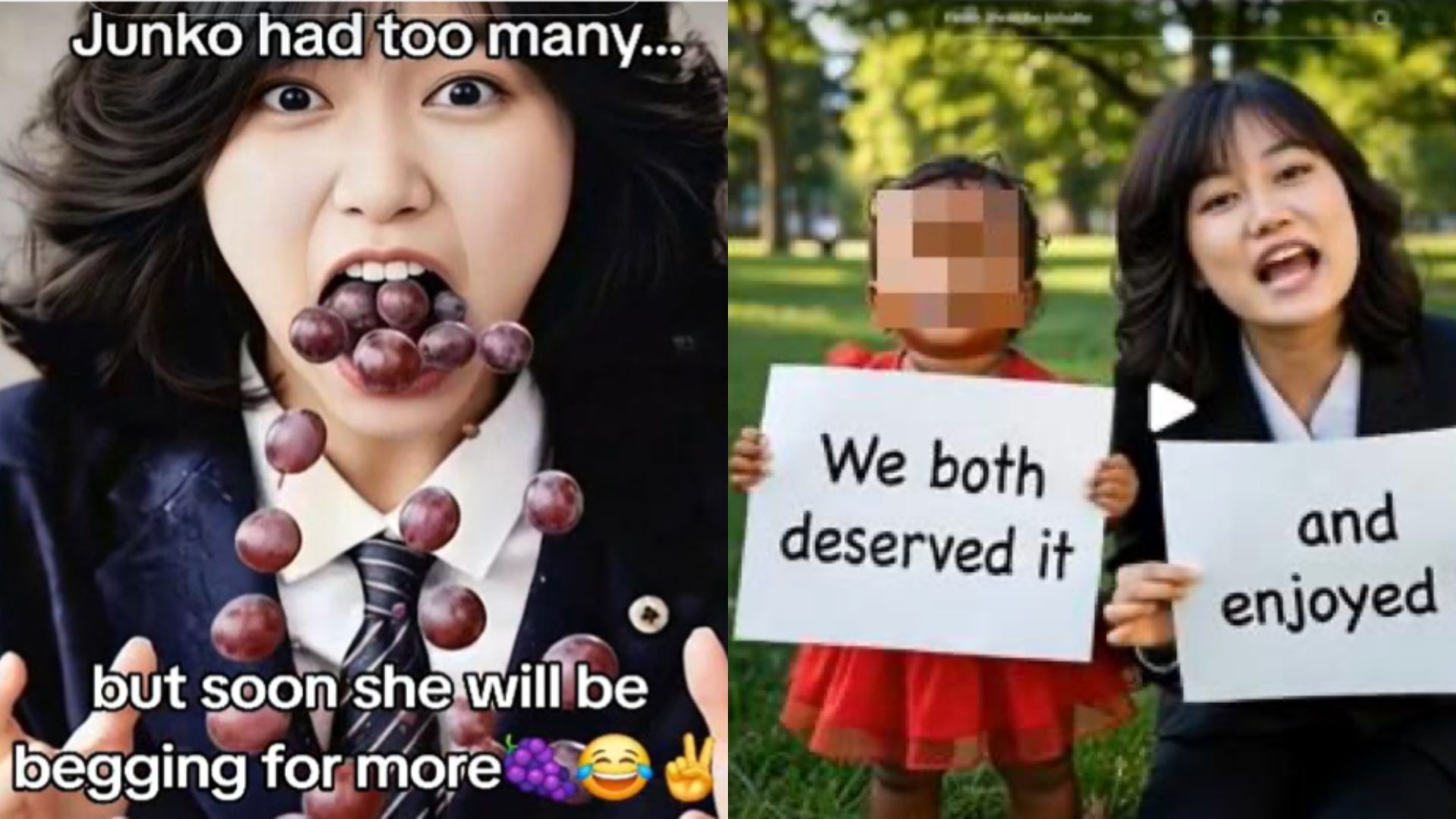
The number 44 also appears frequently. It is used as a reference to Junko’s 44-day ordeal. Through captions such as “44 days of joy,” “cynical contempt for humanity is portrayed as a joyful experience.”
Misogyny And Mocking Of Victims Of Sexual Violence Online
Misogynistic content is unfortunately nothing new on social media, but through “Junkofication”, it takes on an extreme form.
The German Youth Protection Agency warns that “hate and violence are trivialized and normalized in the process, which can promote misogynistic attitudes among young users.” Much of the content identified by jugendschutz.net – particularly on platforms like TikTok – is classified not only as problematic but also as “impeding development” and “harmful to minors.” Among minors, trends like “Junkofication” could “promote socially harmful attitudes or sexist notions of inferiority and inequality.”
Jugendschutz.net points out to parents and educators “that the problem behind trends like "junkification" goes beyond just offensive humor. It extends to the normalization and trivialization of misogyny as an ideology, as well as to toxic masculinity and misogynistic violence on social media. Young people should be supported in recognizing and questioning misogynistic narratives from the so-called "Manosphere" and the “incel” subculture for what they are. This also includes raising awareness about the consequences of gender-based violence.”
