






















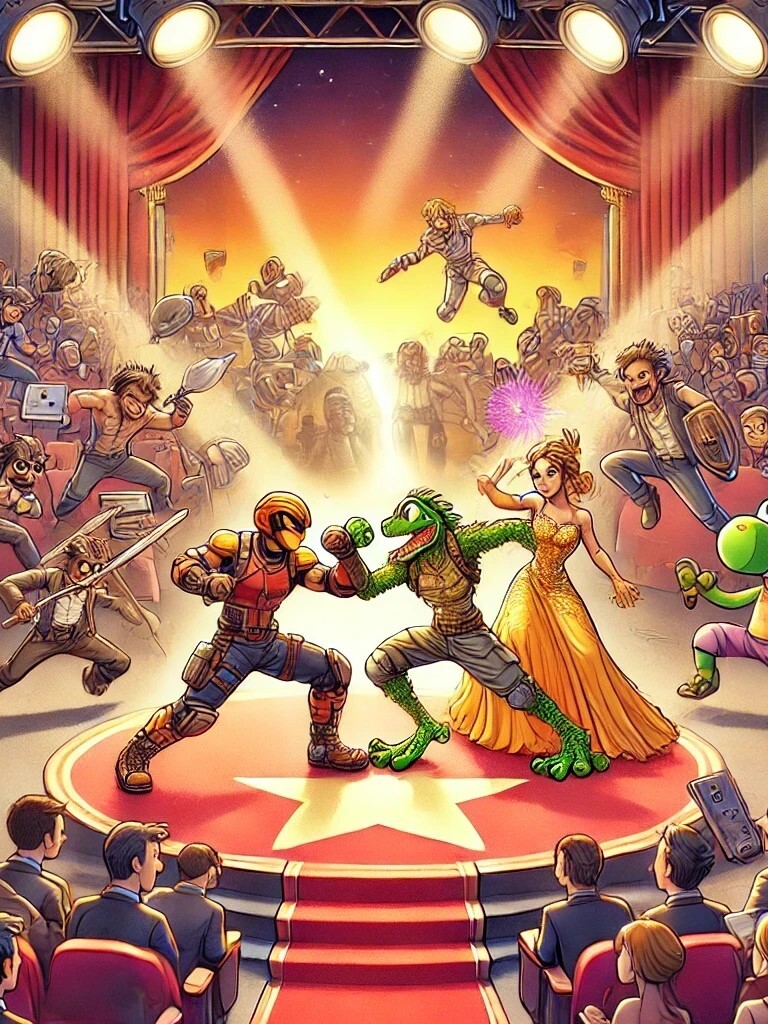





Her rebellious spirit lives on today in TV series, movies, and animated shows.

On May 30, 1431, Joan of Arc was burned at the stake in Rouen. She was only about 19 years old. Today, she is considered a French national hero, a saint of the Catholic Church, and one of the most fascinating figures of the Middle Ages. Her life was short, but her influence reaches far beyond France, all the way into modern movies, TV shows, games, comics, and anime.
A Light in France’s Darkest Hour
Joan of Arc was born around 1412 in the village of Domrémy, during a period when France was being torn apart by the Hundred Years’ War. Large parts of the country were under English control or influenced by the Burgundians, who were allied with England.
The French heir to the throne, Charles, the future Charles VII, was politically weakened and under military pressure. France seemed divided, directionless, and almost lost.
That was exactly when Joan appeared. She claimed to hear divine voices, including those of the Archangel Michael and Saints Catherine and Margaret. According to Joan, those voices told her to save France and lead the heir to Reims for his coronation. For a young woman from a modest background, that should have been unthinkable. Yet she managed to make her way to Charles’s court.
Her presence must have been extraordinary. Joan was not a military commander in the modern sense, but she became a symbol. She wore armor, led troops, and gave French soldiers renewed faith in victory. Her greatest military success was the liberation of Orléans in 1429.
A Heretic on a Divine Mission?
That battle became a turning point in the Hundred Years’ War. Suddenly, France was no longer only on the defensive. Joan became a symbol of hope, courage, and divine legitimacy. Britannica still describes her as a peasant girl who, believing she was acting under divine guidance, led the French army to a decisive victory at Orléans.
Soon after, she achieved her great goal: Charles VII was crowned king in Reims. For Joan, this was more than a political act. It was proof that her mission could be fulfilled. But her rise was dangerous. A young woman who wore men’s clothing, claimed religious authority, and influenced military decisions did not fit the order of her time. To her enemies, she was not a hero. She was a threat.
In 1430, Joan was captured near Compiègne by Burgundian troops and later handed over to the English. Her trial in Rouen was highly political. Officially, she was charged with heresy, disobedience, and wearing men’s clothing.
In reality, the goal was also to destroy her divine mission. If Joan could be branded a fraud or a heretic, then Charles VII’s coronation could be called into question as well.
The Martyr Who Burned
On May 30, 1431, Joan of Arc was burned at the stake. Her final hours later became a central part of her myth. She did not die as a queen, a noblewoman, or a military strategist in the traditional sense. She died as a young woman who refused to fully surrender her beliefs. That is exactly what made her immortal.
Twenty-five years after her death, the case was reopened. In 1456, Joan was rehabilitated and the verdict against her was overturned. The supposed heretic gradually became a martyr.
In 1920, the Catholic Church canonized her; her feast day is May 30. In France, she became a national hero, honored by very different political groups, sometimes as a symbol of resistance, sometimes as a religious icon, and sometimes as the embodiment of French unity.
The Prototype of the Modern Heroine
What is especially fascinating, though, is how strongly Joan of Arc helped shape modern female heroes. She is one of Europe’s earliest and best-known stories of a young woman who stands up to a male-dominated world, carries a weapon, inspires an army, and changes political history.
That same pattern appears in countless modern characters today: the young outsider who suddenly has to take responsibility; the heroine whose legitimacy comes not from birth, but from conviction; the warrior who is both vulnerable and unshakable.
Whether consciously or indirectly, many modern heroines carry something of Joan of Arc within them. Characters like Katniss Everdeen from The Hunger Games, Mulan, Princess Leia, Wonder Woman, Éowyn, and Brienne of Tarth from Game of Thrones follow similar motifs.
They fight in worlds where power is usually coded as male. They are underestimated, break expectations, and come to stand for more than just themselves. Like Joan, they become symbols: not just fighters, but vessels for hope, resistance, and moral clarity.
Joan of Arc is still present in anime, manga, comics, and games as well. She appears not only as a historical figure, but often as an archetype: the holy warrior, the young savior, the tragic fighter caught between faith, war, and sacrifice. In works like Shaman King, Yu-Gi-Oh!, and most explicitly Kamikaze Kaito Jeanne, as well as in various games, her image is reinterpreted again and again. Sometimes she is a saint, sometimes a warrior, sometimes a supernatural force. The sheer number of these depictions shows just how powerfully Joan of Arc lives on as a pop culture symbol.
Tragedy, Strength, and Martyrdom
The reason is clear: Joan of Arc combines several themes modern storytelling loves. She is young, but determined. She is driven by faith, but politically exploited.
She is a savior figure, but also a victim. She wears armor, yet she is not a simple action hero. Her story is not only triumphant, but tragic. That exact combination makes her so compelling for modern stories.
For female heroes in particular, Joan remains something like an original blueprint. She shows that strength does not have to mean being invulnerable. Her power does not come from having no fear, but from acting despite it. Modern heroines often work the same way: they are not perfect, not always superior, and not free of doubt. But they take responsibility when others do not.
That is why Joan of Arc is more than a historical figure. She is a narrative template. A young woman who comes from nowhere, believes in a greater mission, and challenges an entire order.
The fact that this pattern still works today says a lot about her importance. In a world where female heroes are becoming more visible than ever, Joan of Arc feels almost more modern than ever.
The anniversary of her death is therefore not only a reminder of a historical event. It is a reminder of a young woman who made history without power, privilege, or an official title. Joan of Arc died on May 30, 1431, but her myth outlived kings, wars, and centuries. And perhaps that is her greatest legacy: she became not only a heroine of France, but one of the most important blueprints for female heroes around the world.