






















• EarlyGame PLUS top logo
  • Join to get exclusive perks & news!
English
    • News
    • Guides
    • Gaming
      • Codes
      • League of Legends
    • Entertainment
      • TV & Movies
    • Careers
    • EarlyGame+
  • Login
  • Homepage My List Settings Sign out
  • News
  • Guides
  • Gaming
    • All Gaming
    • Codes
    • League of Legends
  • Entertainment
    • All Entertainment
    • TV & Movies
  • Careers
  • EarlyGame+
Game selection
Kena
Gaming new
Enterianment CB
ENT new
TV Shows Movies Image
TV shows Movies logo 2
Fifa stadium
Fc24
Fortnite Llama WP
Fortnite Early Game
LOL 320
Lo L Logo
Codes bg image
Codes logo
Smartphonemobile
Mobile Logo
Videos WP
Untitled 1
Cod 320
Co D logo
Rocket League
Rocket League Text
Apex 320
AP Ex Legends Logo
DALL E 2024 09 17 17 03 06 A vibrant collage image that showcases various art styles from different video games all colliding together in a dynamic composition Include element
Logo
Logo copy
GALLERIES 17 09 2024
News 320 jinx
News logo
More EarlyGame
Esports arena

Polls

Razer blackhsark v2 review im test

Giveaways

Rocket league videos

Videos

Valorant Tournament

Events

  • Copyright 2026 © eSports Media GmbH®
  • Privacy Policy
  • Impressum and Disclaimer
 Logo
English
  • English
  • German
  • Spanish
  • EarlyGame india
  • Homepage
  • Gaming

Top 15 Most Evil Corporations in Video Games

1-15

Ignacio Weil Ignacio Weil
Gaming - February 28th 2026, 15:00 GMT+1
Cropped The Board The Outer Worlds

15. The Board – The Outer Worlds (2019)

A colony that treats oxygen like a subscription is already halfway to villainy, and Halcyon takes that idea to its cruelest conclusion. The Board doesn’t just exploit workers – it designs the entire system so people can’t stop working, even when they’re sick, hungry, or one bad day away from being “reassigned.” Entire towns get rationed, abandoned, or quietly erased from the books the moment profits wobble, because compassion doesn’t show up on quarterly reports. The real sting is how clean it all looks on paper: smiling slogans, friendly speeches, and policies that turn human beings into inventory. That’s why the corporate horror hits so hard in The Outer Worlds: the suffering isn’t an accident, it’s the plan. | © Obsidian Entertainment

Cropped Armacham Technology Corporation F E A R

14. Armacham Technology Corporation – F.E.A.R. (2005)

Armacham Technology Corporation is the type of company that hears “impossible” and immediately asks, “How much can we weaponize it?” The nightmare in F.E.A.R. is driven by their choices: secret programs, brutal experimentation, and a corporate willingness to treat people like disposable test material if it gets results. When consequences start piling up, they don’t pull the plug – they tighten security, bury evidence, and send in cleanup crews to make sure the public never learns what was done behind locked doors. Their evil isn’t a single mistake; it’s an entire culture built around control, denial, and escalation. By the time everything collapses, it feels less like a haunting and more like a bill finally coming due. | © Monolith Productions

Cropped Aesir Corporation Max Payne

13. Aesir Corporation – Max Payne 2: The Fall of Max Payne (2003)

In Max Payne 2: The Fall of Max Payne, evil doesn’t always kick in a door – it owns the building and decides who gets to walk out of it. The city’s violence feels personal at street level, but the rot has money behind it, and that’s where Aesir thrives. Their power comes from being untouchable: influence that smooths over scandals, connections that keep inconvenient truths buried, and enough financial gravity to make everyone else orbit them. They don’t need to commit every crime directly to benefit from the ecosystem of corruption they help sustain. Aesir’s villainy is the kind that stays spotless in public while the mess happens somewhere out of view, paid for and quietly encouraged. | © Remedy Entertainment

Cropped Faro Automated Solutions Horizon Zero Dawn

12. Faro Automated Solutions – Horizon Zero Dawn (2017)

Some legacies are statues and scholarships; this one is an extinction-level cautionary tale with a brand name attached. In Horizon Zero Dawn, Faro Automated Solutions embodies corporate evil at its most catastrophic: chasing profit and prestige through autonomous war tech until the consequences become unstoppable. The real horror is how preventable it feels – hubris dressed up as innovation, shortcuts justified by confidence, and an obsession with control even after the disaster is clearly unfolding. FAS doesn’t just wreck the world; it leaves humanity rebuilding from ashes while the truth gets tangled in secrecy, ego, and damage control. It’s the nightmare scenario of a tech empire believing it can outsmart consequences, right up until consequences rewrite history. | © Guerrilla Games

Cropped Night Corp Cyberpunk 2077

11. Night Corp – Cyberpunk 2077 (2020)

Night Corp doesn’t need flashy atrocities to feel evil – it thrives on subtle control. In a city built on exploitation, the company’s alleged influence is the kind that rewires people and politics from the shadows, turning citizens into pieces on a board they never agreed to play on. The evil here is manipulation: nudges, pressure, quiet interventions that make “free will” feel like marketing copy. Night Corp’s presence is unsettling because you rarely get a clear confession, just the creeping sense of systems being tuned behind the curtain. In Cyberpunk 2077, that’s often the worst kind of corporate villain – one that can change your life without ever raising its voice. | © CD Projekt Red

Cropped Union Aerospace Corporation Doom

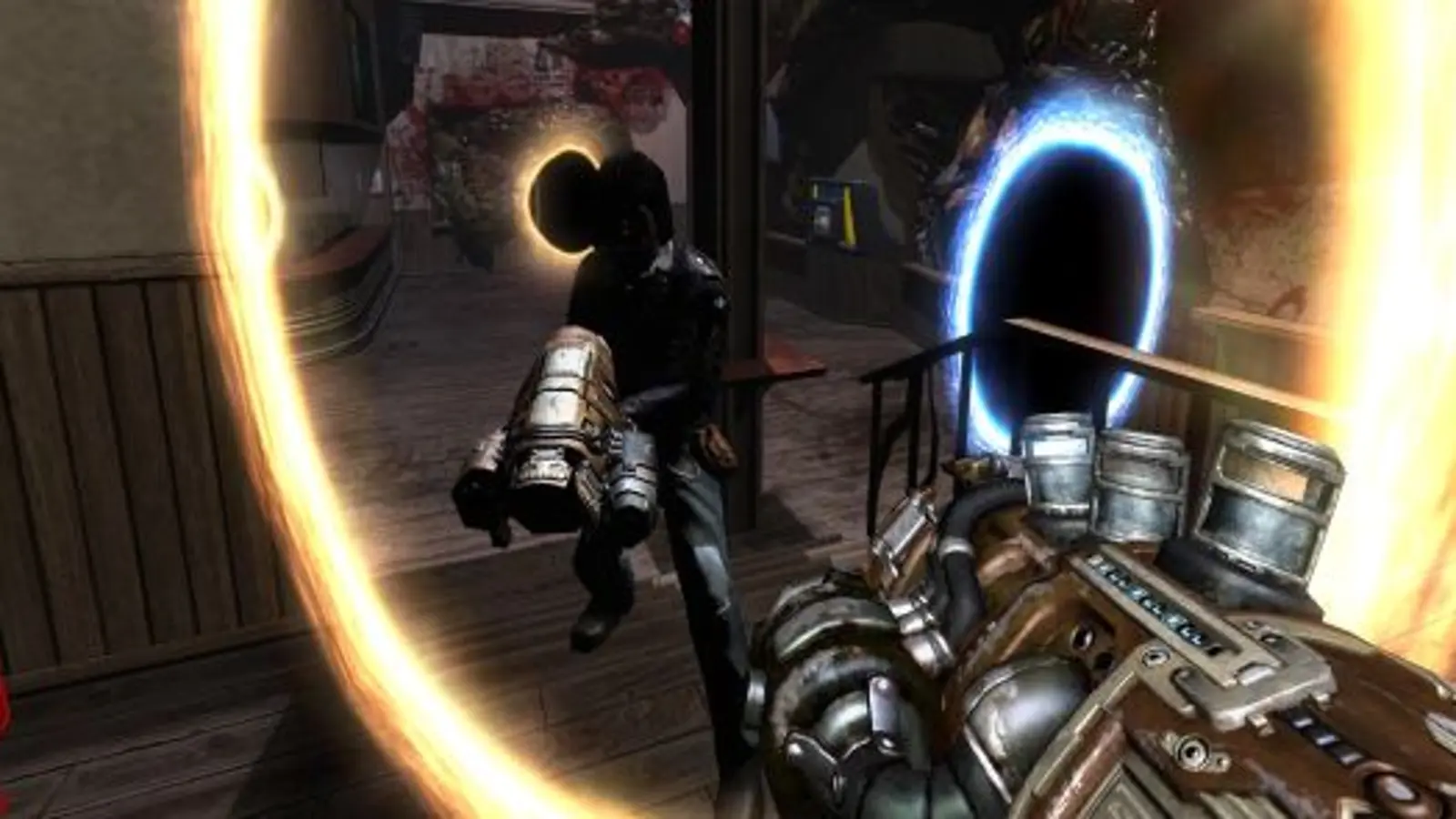
10. Union Aerospace Corporation – DOOM 3 (2004)

Every warning sign on Mars reads like a confession, especially in DOOM 3, where “research” is treated as a license to ignore reality’s boundaries. The evil here is reckless ambition: experiments pushed past safety, staff treated as replaceable, and containment protocols that feel more like corporate theater than protection. It’s the kind of operation where problems are documented, downplayed, and then repeated – because stopping would mean admitting the whole project was wrong. Union Aerospace Corporation thrives in that gap between arrogance and accountability, betting that consequences can be managed after the breakthrough is secured. When hell finally opens, it doesn’t feel like bad luck; it feels like inevitability manufactured by a company that kept choosing results over lives. That’s why UAC remains one of gaming’s most infamous corporate villains. | © id Software

Cropped Versa Life Deus Ex

9. VersaLife – Deus Ex (2000)

VersaLife’s evil comes wrapped in the language of medicine, which makes it hit harder. It’s a biotech giant implicated in conspiracies where disease, treatment, and control blur into the same pipeline – health as leverage, not a public good. In Deus Ex, the company’s work ties into horrifying outcomes: experimentation, secrecy, and the sense that human lives are acceptable losses for a “better” world designed by the people holding the patents. VersaLife isn’t just sinister because it has labs; it’s sinister because it can claim to be helping while engineering suffering in the background. That cold corporate doublespeak is exactly why it remains such an iconic villain. | © Ion Storm

Cropped Hyperion Borderlands

8. Hyperion – Borderlands 2 (2012)

Pandora is full of monsters, but the most relentless one comes with customer service and a spotless logo. In Borderlands 2, the cruelty isn’t just physical – it’s institutional: propaganda that reframes oppression as “order,” violence packaged as corporate necessity, and whole populations treated like obstacles to be cleared. Handsome Jack’s brand of control bleeds into everything, turning technology into enforcement and morality into a punchline the company tells while pulling the trigger. Hyperion doesn’t merely want to win; it wants to define who counts as a hero and who deserves to be erased, then market that story until everyone repeats it. That smug certainty – evil that believes it’s entitled to everything – is what makes the corporation unforgettable. And by the time you’re fighting back, you’ve already seen how far they’re willing to go to keep their grip. | © Gearbox Software

Cropped Abstergo Industries Assassins Creed

7. Abstergo Industries – Assassin’s Creed (2007)

History becomes a weapon the moment a corporation can edit it, monetize it, and erase the parts that threaten its control. Abstergo’s public face is squeaky-clean – pharma, tech, “innovation” – but Assassin’s Creed peels that mask back to reveal a machine built for manipulation. They don’t just study the past; they abduct people, strap them into the Animus, and harvest memories like data, all while quietly advancing a bigger agenda. The evil isn’t only the brutality – it’s the arrogance of deciding the world needs “order” and then engineering consent through surveillance, propaganda, and coercion. Abstergo feels iconic because it’s corporate villainy with a mission statement: control the story, and you control the future. | © Ubisoft Montreal

Cropped Vault Tec Fallout

6. Vault-Tec – Fallout 3 (2008)

A smiling mascot and a cheerful thumbs-up are a perfect cover when you’re selling fear as a lifestyle upgrade. Vault-Tec didn’t build shelters to save people so much as to own them – locking families underground, cutting them off from the truth, and turning whole communities into controlled experiments. Some vaults were designed to fail, others to fracture society from the inside, and plenty were stocked with rules meant to break human beings slowly instead of killing them fast. The wasteland is brutal, sure, but Fallout 3 makes a strong case that the real evil started long before the bombs: it started with clipboards, contracts, and a company that treated survival like a lab trial. | © Bethesda Game Studios

Ryan Industries Bio Shock

5. Ryan Industries – BioShock (2007)

A city under the sea sounds like a dream – until you realize it was built to prove a philosophy, not to protect human beings. Ryan Industries bankrolls Rapture with the promise of freedom, then tightens the noose the second that freedom threatens Andrew Ryan’s control. The corporation’s evil shows up in the way it enables everything that poisons the city: unchecked commerce, ruthless privatization, and a culture where people become products the moment they stop being profitable. BioShock turns that ideology into body horror through Plasmids and social collapse, but the rot starts earlier – with a company that treats compassion as weakness and dissent as something to be crushed. Rapture doesn’t just fall apart; it’s pushed. | © Irrational Games

Cropped Shinra Electric Power Company Final Fantasy VII 2

4. Shinra Electric Power Company – Final Fantasy VII (1997)

You can almost hear the planet groan every time another reactor flares to life. Shinra doesn’t just take resources – it siphons the world’s lifeblood, turning Mako into energy, weapons, and leverage, no matter what it does to everything living. In Final Fantasy VII, their evil is both industrial and personal: environmental destruction scaled up into policy, militarized enforcers treated like branding, and human experimentation pushed to monstrous extremes. When people get in the way, Shinra’s solution is force, spectacle, and “necessary sacrifices” that conveniently protect the bottom line. They’re unforgettable because they make exploitation look normal – until you see the crater it leaves behind. | © Square

Aperture Science Portal

3. Aperture Science – Portal (2007)

The pitch is playful: do a few tests, grab some cake, help science. Then the walls start talking, the rooms get deadlier, and you realize Aperture Science has been chewing through human lives like disposable lab supplies. Their evil is built into the culture – endless experimentation without consent, safety treated as an obstacle, and a smug belief that progress excuses anything. Portal makes it darkly funny, but the jokes land because the cruelty is real: people pushed until they break, “volunteers” trapped, and a facility that keeps running even after it should’ve been shut down forever. With GLaDOS as the voice of that system, Aperture becomes iconic corporate villainy: innovation with no brakes and no conscience. | © Valve

Cropped Black Mesa Half Life

2. Black Mesa – Half-Life (1998)

One bad decision can ruin the world, and Black Mesa makes it repeatedly with the confidence of a facility that assumes it’ll never be held accountable. The company’s evil isn’t cartoonish – it’s the cold, familiar kind: reckless experimentation, militarized secrecy, and a willingness to gamble with forces they barely understand because the breakthrough might be priceless. When the Resonance Cascade detonates reality, the response isn’t honesty or rescue – it’s containment, cover-up, and letting soldiers “solve” the problem by erasing witnesses. Half-Life sells Black Mesa as a place where curiosity got corrupted by funding, ego, and fear of consequences, and that combination turns science into a mass casualty event. It’s villainy by institutional momentum. | © Valve

Cropped Umbrella Corporation Resident Evil

1. Umbrella Corporation – Resident Evil (1996)

A pharmaceutical giant that “cures” the world is terrifying when the cure is just a marketing layer over bioweapons. Umbrella’s evil is direct, deliberate, and repeatable: secret labs, human experimentation, engineered viruses, and outbreaks treated like acceptable losses so long as the data is valuable. When things go wrong, the company doesn’t confess – it buries evidence, sacrifices employees, and lets entire cities burn to protect itself. Resident Evil turned Umbrella into the gold standard for villain corporations because it’s not a one-time catastrophe; it’s a business model built on creating monsters and then pretending the monsters were an accident. The lab coats are clean, the hands are not. | © Capcom

1-15

Evil in video games doesn’t always kick down the door – it drafts a policy, stamps it “approved,” and calls the disaster a rollout. These companies weaponize science, security, and “innovation” until entire cities, planets, or timelines end up paying the bill.

What follows is a tour of gaming’s most infamous boardrooms: the brands you recognize on sight, the logos that make your stomach drop, and the executives who treat morality like a rounding error. If you want to keep going afterward, we’ve got “Most Evil Villain Groups in Video Games” and “Most Evil Corporations in Movies and TV Shows,” too.

  • Facebook X Reddit WhatsApp Copy URL

Evil in video games doesn’t always kick down the door – it drafts a policy, stamps it “approved,” and calls the disaster a rollout. These companies weaponize science, security, and “innovation” until entire cities, planets, or timelines end up paying the bill.

What follows is a tour of gaming’s most infamous boardrooms: the brands you recognize on sight, the logos that make your stomach drop, and the executives who treat morality like a rounding error. If you want to keep going afterward, we’ve got “Most Evil Villain Groups in Video Games” and “Most Evil Corporations in Movies and TV Shows,” too.

Related News

More
Banana Fish
TV Shows & Movies
15 Best Anime With No Skippable Episodes
Emily Blunt
Entertainment
15 Of The Longest Celebrity Marriages In Hollywood
Bella Thorne
Entertainment
15 Famous Celebrities Who Came Out As Bisexual
Hans Landa
Entertainment
15 Most Psychologically Dangerous Characters Of All Time
Jean Dujardin the artist cropped processed by imagy
Entertainment
The Oscar Curse: 15 Actors Who Seemed to Disappear After Winning an Academy Award
Cropped Kena Scars of Kosmora
Gaming
Sony’s February 2026 State of Play Was Great: Here’s Every New Game Announced
Cropped Cillian Murphy Oppenheimer
Entertainment
15 Celebrities With the Most Private of Private Lives
Jamie Dornan
Entertainment
25 Most Handsome Actors of Our Time
Cropped goodnight mommy 2014
TV Shows & Movies
15 Best International Movies of All Time
Nioh 3
Gaming
15 Best Soulslike Games to Play While You Wait for The Duskbloods
Felicity huffman desperate housewives cropped processed by imagy
Entertainment
15 Disney Actors With the Longest Prison Sentences
The Legend of Zelda Phantom Hourglass 2007 cropped processed by imagy
Gaming
The 15 Best Legend of Zelda Games of All Time
  • All Gaming
  • Videos
  • News
  • Home

Subscribe to our Newsletter

Sign up for selected EarlyGame highlights, opinions and much more

About Us

Discover the world of esports and video games. Stay up to date with news, opinion, tips, tricks and reviews.
More insights about us? Click here!

Links

  • Affiliate Links
  • Privacy Policy
  • Impressum and Disclaimer
  • Advertising Policy
  • Our Editorial Policy
  • About Us
  • Authors
  • Ownership

Partners

  • Kicker Logo
  • Efg esl logo
  • Euronics logo
  • Porsche logo
  • Razer logo

Charity Partner

  • Laureus sport for good horizontal logo

Games

  • Gaming
  • Entertainment
  • TV Shows & Movies
  • EA FC
  • Fortnite
  • League of Legends
  • Codes
  • Mobile Gaming
  • Videos
  • Call of Duty
  • Rocket League
  • APEX
  • Reviews
  • Galleries
  • News
  • Your Future

Links

  • Affiliate Links
  • Privacy Policy
  • Impressum and Disclaimer
  • Advertising Policy
  • Our Editorial Policy
  • About Us
  • Authors
  • Ownership
  • Copyright 2026 © eSports Media GmbH®
  • Privacy Policy
  • Impressum and Disclaimer
  • Update Privacy Settings
English
English
  • English
  • German
  • Spanish
  • EarlyGame india