
























• EarlyGame PLUS top logo
  • Join to get exclusive perks & news!
English
    • News
    • Guides
    • Gaming
      • Codes
      • League of Legends
    • Creators
    • Entertainment
    • Careers
    • EarlyGame+
  • Login
  • Homepage My List Settings Sign out
  • News
  • Guides
  • Gaming
    • All Gaming
    • Codes
    • League of Legends
  • Creators
  • Entertainment
  • Careers
  • EarlyGame+
Game selection
Kena
Gaming new
Enterianment CB
ENT new
Influencer 5229646 640
TV Shows Movies Image
TV shows Movies logo 2
Fifa stadium
Fc24
Fortnite Llama WP
Fortnite Early Game
LOL 320
Lo L Logo
Codes bg image
Codes logo
Smartphonemobile
Mobile Logo
Videos WP
Untitled 1
Cod 320
Co D logo
Rocket League
Rocket League Text
Apex 320
AP Ex Legends Logo
DALL E 2024 09 17 17 03 06 A vibrant collage image that showcases various art styles from different video games all colliding together in a dynamic composition Include element
Logo
Logo copy
GALLERIES 17 09 2024
News 320 jinx
News logo
More EarlyGame
Esports arena

Polls

Razer blackhsark v2 review im test

Giveaways

Rocket league videos

Videos

Valorant Tournament

Events

  • Copyright 2026 © eSports Media GmbH®
  • Privacy Policy
  • Impressum and Disclaimer
 Logo
English
  • English
  • German
  • Spanish
  • EarlyGame india
  • Homepage
  • TV Shows & Movies

The 50 Greatest Science Fiction Movies of All Time

1-50

Ignacio Weil Ignacio Weil
TV Shows & Movies - March 27th 2026, 22:00 GMT+1
Cropped Equilibrium

50. Equilibrium (2002)

The best dystopian stories usually find a way to make control feel normal before they reveal how monstrous it really is. That is exactly what happens here, in a world where emotion has been outlawed and obedience has become a civic duty. The sterile architecture, rigid rituals, and chemically enforced calm give the film a distinct identity beyond its obvious action influences. Once Equilibrium starts peeling back that order, it turns into a sharp, cold-blooded thriller about what happens when a person rediscovers feeling in a system built to crush it. For years it lived in the shadow of bigger sci-fi hits, but its cult reputation makes perfect sense. | © Dimension Films

Cropped Logans Run

49. Logan's Run (1976)

A future built around pleasure, youth, and total comfort sounds inviting until the cost of that arrangement becomes impossible to ignore. The film understands that a polished society can be just as frightening as a ruined one when every part of life is carefully managed and every question has been designed out of the system. There is real visual fascination in the domed city, with all its soft colors and seductive surfaces hiding something cruel underneath. Once the story escapes that controlled environment, the emotional stakes start to deepen in surprising ways. That is why Logan’s Run still holds up as more than just a stylish relic from seventies science fiction. | © MGM

Cropped A Boy and His Dog

48. A Boy and His Dog (1975)

A Boy and His Dog does not waste time trying to be noble or polished, and that roughness is part of its charm. The movie throws you into a brutal post-apocalyptic wasteland where survival has stripped away most illusions about decency, making the humor feel as dark as the world itself. Its telepathic relationship at the center gives the story an offbeat energy that keeps it from blending in with other end-of-the-world movies. Even when it turns ugly, weird, or deliberately unpleasant, the film feels completely committed to its own nasty vision. A lot of later wasteland sci-fi clearly owes this one a debt, even if few ever matched its bite. | © LQ/Jaf Productions

Cropped The War of the Worlds

47. The War of the Worlds (1953)

Long before alien invasion movies became routine blockbuster material, this one already understood how terrifying total helplessness could look on screen. The Martian machines arrive with a kind of unstoppable confidence, and the film presents them less as curiosities than as a force humanity cannot reason with or slow down. That gives the destruction real weight, especially because the world being attacked still feels recognizably ordinary. There is Cold War fear all over The War of the Worlds, but also genuine awe in the way it imagines contact with something far beyond human control. More than seventy years later, the movie still feels alive in all the right ways. | © Paramount Pictures

Cropped Upstream Color

46. Upstream Color (2013)

Trying to describe this movie too literally almost feels like missing the point. Upstream Color works through sensation, fractured memory, and emotional residue, asking the audience to experience the story rather than solve it in a neat straight line. Shane Carruth builds a hypnotic rhythm out of broken connections, strange imagery, and intimate confusion, and somehow it never collapses under the weight of its own ambition. What stays with you is not just the puzzle, but the feeling of people losing control over their own identities and trying to find each other through the damage. That gives the film a haunting power that goes well beyond its mystery. | © ERBP

Cropped Alphaville

45. Alphaville (1965)

Nothing about this world is sold through flashy futurism, and that choice is exactly what makes it so unnerving. Godard turns ordinary modern spaces into a cold dystopia where language has been flattened, feeling has become suspect, and logic is treated like a weapon. The result is a film that feels like noir, political satire, and speculative fiction all at once without ever settling into something easy. Watching Alphaville now, what stands out is how completely it trusts ideas, mood, and alienation to do the heavy lifting. It remains one of the boldest examples of science fiction made through style and thought rather than spectacle. | © Athos Films

Cropped The Time Travelers Wife

44. The Time Traveler's Wife (2009)

Time travel can be used for spectacle, for paradox games, or for wild genre plotting, but this film goes in a more intimate direction. The science fiction hook matters, yet the real engine of the story is the pain of loving someone whose life keeps slipping out of sequence. Moments that should feel stable are always threatened by absence, delay, or the cruel knowledge that time will not cooperate. That emotional structure gives The Time Traveler’s Wife a melancholy edge that separates it from more mechanical takes on the concept. At its best, it plays like a romance shaped by sci-fi rules instead of a sci-fi story pretending to be romantic. | © Warner Bros.

Cropped Predestination

43. Predestination (2014)

Some movies built around time travel are so focused on being clever that they forget to leave any emotional mark behind. This one never makes that mistake. Beneath all the paradoxes, loops, and identity shifts, Predestination is a deeply unsettling story about fate, selfhood, and the impossibility of escaping certain forms of pain. Ethan Hawke and Sarah Snook give the material enough gravity that the twists land as more than just screenwriting tricks. By the end, the film feels less like a puzzle you solved than a trap you watched snap shut. That is a big reason it remains one of the strongest sci-fi thrillers of the 2010s. | © Sony Pictures

Cropped Tron

42. Tron (1982)

What once looked futuristic in an almost abstract way now feels strangely prophetic. The digital world imagined here is not realistic in any literal sense, but that glowing universe of grids, programs, and corporate control still has a visual pull that modern effects-heavy movies rarely match. There is a clean simplicity to the story, which helps the imagery take center stage without the film feeling empty. More importantly, Tron transformed computer space into a cinematic myth, giving audiences a vision of virtual reality before that language had fully entered pop culture. Its influence became clearer with time, and that only adds to its legacy. | © Walt Disney Pictures

Cropped Starship Troopers

41. Starship Troopers (1997)

What looked to some people like a loud bug-shooting action movie was always doing something sharper underneath the surface. Paul Verhoeven turns militarism, propaganda, and blind patriotism into pure spectacle, then dares the audience to enjoy it long enough to notice how poisonous it all is. That balancing act is why Starship Troopers has only grown in stature over the years, especially once viewers stopped judging it as straightforward heroism. The effects still hold up, the satire still bites, and the shiny recruitment-poster energy is part of the joke, not a contradiction. Under all the chaos, this is one of the smartest and nastiest studio sci-fi films of the nineties. | © TriStar Pictures

Cropped Timecrimes

40. Timecrimes (2007)

Everything starts small here, and that is what makes the escalation so effective. A quiet domestic setting, one suspicious sight, one choice made at the wrong moment, and suddenly the film is pulling the viewer into a tightly wound nightmare of repetition and consequence. The beauty of Timecrimes is how little it needs in order to become nerve-racking, because the tension comes from structure and perspective rather than flashy scale. Each new turn forces you to rethink what you just saw, but the story never loses its nasty sense of momentum. It is still one of the smartest examples of low-budget science fiction done exactly right. | © Karbo Vantas Entertainment

Cropped Fifth Element

39. The Fifth Element (1997)

There is no mistaking this movie once it starts moving, because every frame feels like it was designed to be bigger, louder, stranger, and more playful than the norm. The future here is crowded, colorful, ridiculous, and somehow coherent enough to carry both screwball comedy and operatic sci-fi adventure at the same time. That tonal gamble should have been a disaster, yet The Fifth Element keeps winning because Luc Besson commits to the excess without hesitation. Bruce Willis brings just enough grounded energy to stop the whole thing from floating away into pure style. For all its weird costumes, flying traffic, and comic-book chaos, the film still feels oddly confident rather than random. | © Columbia Pictures

Cropped They Live

38. They Live (1988)

They Live does not dress up its message in complicated mythology or polished world-building, and that bluntness is exactly what gives it power. John Carpenter takes consumer culture, class control, and media manipulation, then strips them down into images so simple they become impossible to forget once you have seen them. The famous sunglasses premise could have turned into a one-note gimmick, but the film keeps finding fresh ways to make that idea feel funny, eerie, and uncomfortably direct. Even the fistfight has become part of its legend because it fits the movie’s scrappy, unapologetic attitude. Plenty of sci-fi is more expensive and more elegant, but very little hits with this much raw force. | © Universal Pictures

Cropped Primer

37. Primer (2004)

Most movies about time travel eventually pause to make sure the audience is comfortable, but this one refuses to do that. Shane Carruth throws viewers into technical language, overlapping motives, and increasingly unstable cause-and-effect without softening the experience into something easy to digest. That is the challenge and the thrill of Primer, a film that trusts complexity enough to let confusion become part of the atmosphere. Beneath all the diagrams and timelines, there is also a strong sense of ambition curdling into secrecy and distrust. It is dense, demanding, and sometimes deliberately slippery, but few science fiction films capture the danger of invention with this much unnerving precision. | © THINKFilm

Cropped Coherence

36. Coherence (2013)

Dinner-party tension is already enough to fuel a good thriller, so adding fractured reality on top of that turns the whole setup into something deliciously unstable. The film makes brilliant use of limited space, naturalistic performances, and creeping paranoia, letting every small conversation feel like it might open a door to something far worse. What makes Coherence stand out is how quickly it becomes unsettling without ever losing its human scale. Nobody is delivering grand speeches about the universe, and that restraint helps the story feel more believable as it grows stranger. By the time the possibilities start multiplying, the movie has already trapped you in its logic. | © Oscilloscope Laboratories

Cropped The Fly

35. The Fly (1986)

At first, the tragedy sneaks in almost politely. Jeff Goldblum gives Seth Brundle such intelligence, awkward charm, and nervous excitement that the disaster feels personal long before the horror becomes explicit. That emotional foundation is what makes The Fly so devastating, because the transformation is not just physical collapse but the destruction of a person who still seems aware, at least for a while, of what he is losing. Cronenberg directs the film with enough restraint that each new stage lands harder than the last. Plenty of horror-sci-fi hybrids are memorable for their effects, but this one lingers because it is also heartbreak wrapped in decay. | © 20th Century Fox

Cropped Videodrome 1

34. Videodrome (1983)

Body horror rarely feels this prophetic. David Cronenberg takes television, desire, violence, and media addiction, then fuses them into a nightmare where the boundary between flesh and signal starts to dissolve in front of your eyes. The images are grotesque, but they are never grotesque just for shock value, because Videodrome is always pushing toward something more disturbing than gore alone. It asks what happens when technology does not merely influence people, but rewires their appetites and identities from the inside. Decades later, the film still feels ahead of its time in the worst possible way, which is exactly why it remains so effective. | © Universal Pictures

Cropped The Thing

33. The Thing (1982)

Isolation horror works best when nobody can fully trust what they are looking at, and this film understands that at a brutal level. The Antarctic setting is cold enough on its own, but what turns the screw is the idea that the enemy can imitate anyone, which makes every glance, pause, and accusation feel loaded. That is where The Thing earns its greatness, not just in the famous practical effects, but in the paranoia eating away at the group from within. The creature is horrifying, yet the collapse of trust is even worse because there is no clean way to fight it. Very few sci-fi horror movies feel this bleak and this airtight. | © Universal Pictures

Cropped Dark City

32. Dark City (1998)

Night never seems to end here, and that permanent darkness gives the whole film a dreamlike unease from the opening minutes onward. The city itself feels manufactured, shifting, and hostile, as though reality were being rearranged by unseen hands just outside human understanding. That atmosphere would already be enough to make the movie memorable, but Dark City also has real thematic weight in the way it connects memory, identity, and control. It is noir, cosmic mystery, and philosophical science fiction folded into the same haunted space. The result is a film that still feels singular, especially now that audiences have caught up with how ambitious it really was. | © New Line Cinema

Cropped Sunshine

31. Sunshine (2007)

The mission itself is simple enough on paper: carry humanity’s last hope toward a dying sun and pray nothing goes wrong on the way there. What makes the film special is how quickly that setup stops feeling like conventional space adventure and starts becoming something heavier, stranger, and more spiritual. Danny Boyle gives Sunshine a scale that feels enormous, but the real tension comes from the crew slowly cracking under pressure, guilt, and impossible responsibility. Visually, it is one of the most stunning sci-fi movies of its era, full of blinding light and overwhelming silence that make space feel both beautiful and hostile. Even with its divisive final stretch, the movie remains a haunting experience that is much harder to shake than many cleaner, safer genre entries. | © Fox Searchlight Pictures

Cropped Robo Cop

30. RoboCop (1987)

You can watch it as an action movie, a corporate satire, a media parody, or a story about a man clawing his way back from total erasure, and somehow it works on every level. Verhoeven loads the film with outrageous violence and deadpan humor, but the real trick is how much feeling survives beneath all that steel and cynicism. Murphy’s reconstruction into RoboCop is not framed as triumph so much as a theft, and that gives the movie a melancholy edge that deepens with every rewatch. The fake commercials, the executive vultures, and the urban decay are all part of a future that feels cruelly transactional. It is thrilling, funny, ugly, and far more emotionally grounded than its premise suggests. | © Orion Pictures

Cropped The Prestige

29. The Prestige (2006)

Obsession is the real engine here, not magic. What begins as professional rivalry turns poisonous in increasingly ugly ways, and the film understands that ambition becomes terrifying when pride matters more than decency, love, or reason. Christopher Nolan structures The Prestige like one of its own illusions, constantly redirecting attention while quietly laying out the truth in plain sight. The science fiction angle arrives through the side door, but once it does, it changes the moral scale of everything that came before it. That is what gives the movie its lasting sting: beneath the elegance and cleverness, this is a very cold story about the cost of wanting to be extraordinary. | © Warner Bros.

Cropped Minority Report

28. Minority Report (2002)

Before most Hollywood blockbusters started obsessing over predictive technology, surveillance, and personalized advertising, this one was already staring straight at that future. Steven Spielberg builds a sleek world that feels advanced without losing its grime, making the city look lived-in rather than polished for display. The murder-prevention premise is already strong, but Minority Report gets sharper the deeper it digs into free will, state power, and the danger of treating probability like moral certainty. Tom Cruise gives the story enough urgency to keep it moving as a thriller, while the ideas underneath remain uncomfortably relevant. That combination is why the film still feels smart instead of merely flashy. | © DreamWorks Pictures

Cropped Tenet

27. Tenet (2020)

Some movies invite you to relax into the ride, while others practically dare you to keep up. Tenet belongs firmly in the second category, turning espionage spectacle into a puzzle of reversed momentum, shifting perspective, and timelines that feel like they are attacking each other in real time. The scale is huge, the set pieces are extraordinary, and the whole thing moves with the confidence of a film that knows confusion can be part of the thrill. At the same time, there is something admirably stubborn about how little it simplifies itself for comfort. Whether people found it exhilarating or maddening, Tenet never played small, and that alone makes it stand out in modern studio sci-fi. | © Warner Bros.

District 9 msn

26. District 9 (2009)

Nothing about the opening stretch feels particularly glamorous, and that roughness is part of why the movie hits so hard. The fake-documentary texture, bureaucratic cruelty, and casual racism give the world an ugly plausibility that makes the sci-fi premise feel immediate rather than distant. Once District 9 starts escalating into body horror, action, and full political nightmare, it never loses sight of the fact that the core story is about segregation and dehumanization. Sharlto Copley’s transformation works because the film lets panic, selfishness, and reluctant empathy collide in messy human ways. It is angry, inventive, and still one of the most hard-hitting science fiction films of the century so far. | © TriStar Pictures

Cropped Looper

25. Looper (2012)

A premise this good can coast for a while on pure concept alone, but the film goes further by giving its time-travel mechanics a hard, bruised emotional core. The hitman setup is already grimly clever, yet what makes Looper memorable is how quickly it becomes a story about consequence, identity, and the possibility of breaking violent cycles before they harden into fate. Rian Johnson keeps the world dirty and tactile, which helps the speculative elements feel grounded instead of abstract. Somewhere in the middle of all that, Looper also finds room for melancholy, especially in the way it treats older and younger versions of the same life as enemies who still understand each other too well. It is sharp genre entertainment with more feeling than it initially lets on. | © TriStar Pictures

Cropped Moon

24. Moon (2009)

The loneliest science fiction films often work because they strip the genre back to one face, one problem, and one terrible realization. That is exactly the space this story occupies, with Sam Rockwell carrying nearly the entire emotional weight through exhaustion, confusion, and the slow collapse of certainty. The beauty of Moon lies in how modest it looks on the surface while quietly building something devastating underneath. It does not need huge action or giant revelations every ten minutes, because the horror comes from isolation and the way corporate logic reduces a person to a function. By the end, the film feels intimate, sad, and far more cutting than its small scale first suggests. | © Sony Pictures Classics

Cropped Metropolis

23. Metropolis (1927)

Even now, the imagery can make your jaw drop. Massive industrial machines, towering cityscapes, rigid class divisions, and bodies swallowed by systems much larger than themselves all come together in a film that still looks astonishingly ambitious. There is no need to make excuses for Metropolis as merely influential or important for its time, because it remains powerful on its own terms as a vision of modernity turned into myth. The story is broad, emotional, and openly symbolic, but that scale is exactly what gives it so much force. Nearly a century later, Metropolis still feels like one of the foundational dreams from which so much science fiction cinema emerged. | © UFA

Cropped Children of Man

22. Children of Men (2006)

Hopelessness hangs over every frame here, but the film never confuses despair with emptiness. Alfonso Cuarón imagines a world collapsing not through one giant explosion, but through slow institutional rot, public numbness, and the death of any believable future. That grim foundation makes the central miracle in Children of Men feel almost shocking, not because it is sentimental, but because the story has earned how fragile hope would look in such a place. The long takes are often what people remember first, and fairly so, but the movie’s real strength is how completely lived-in its nightmare feels. Very little modern sci-fi has matched its mixture of urgency, sorrow, and political clarity. | © Universal Pictures

Cropped Planet of the Apes

21. Planet of the Apes (1968)

The setup is simple enough to hook anyone, but the reason the film lasts is because it keeps getting stranger, harsher, and more unsettling as it goes. What starts as a survival story slowly becomes a brutal inversion of human arrogance, with every new revelation stripping away another layer of assumed superiority. The ape society is memorable for the makeup and world-building, of course, but Planet of the Apes also works because it is angry in a very controlled way. It turns power, dogma, and fear of difference into something that still feels pointed without losing its pulpy adventure energy. That famous ending earned its place in movie history, but the entire journey deserves just as much credit. | © 20th Century Fox

Cropped Stalker

20. Stalker (1979)

Patience is part of the experience here. The film moves with a deliberate, almost hypnotic slowness, forcing the viewer to pay attention to texture, silence, and the uneasy space between what the characters say they want and what they may actually deserve. The Zone is one of the greatest settings in science fiction because it never settles into something that can be fully explained, measured, or mastered. Instead, Stalker turns the journey through that landscape into something philosophical, spiritual, and quietly threatening all at once. It is not sci-fi built around spectacle or neat answers, but around doubt, desire, and the fear that your deepest wish might reveal something unbearable about you. | © Mosfilm

Cropped Gattaca

19. Gattaca (1997)

A lot of futuristic movies imagine control through machines, surveillance, or brute force, but this one understands how chilling quiet exclusion can be. The world feels elegant and polished on the surface, yet every part of it has been structured to rank human worth according to genetic luck. That is what gives Gattaca its lasting power: the science fiction is clean and restrained, but the cruelty underneath it is unmistakable. Ethan Hawke, Uma Thurman, and Jude Law all help sell a future where perfection has become another form of discrimination. Instead of overwhelming the audience with spectacle, the film wins through precision, melancholy, and the terrible logic of a system that believes it is only being efficient. | © Columbia Pictures

Cropped Total Recall

18. Total Recall (1990)

Memory is treated like a weapon here, which already gives the film more bite than the average action spectacle. Paul Verhoeven takes a slippery identity premise and packs it inside a movie full of violence, satire, and just enough narrative instability to keep you questioning what is real the whole way through. The Mars setting gives Total Recall a fantastic sci-fi texture, but the real pleasure comes from how gleefully it mixes paranoia with blockbuster excess. Arnold Schwarzenegger fits the tone perfectly, because his physical certainty makes the story’s uncertainty even more entertaining. Loud, funny, and deliberately disorienting, this is the kind of studio sci-fi that refuses to play it safe. | © TriStar Pictures

Cropped Her

17. Her (2013)

The future imagined here does not arrive with giant machines crashing through skylines or dystopian governments barking through screens. Instead, it slips into daily life so gently that the loneliness at the center of the story becomes even more painful. Joaquin Phoenix gives the film its tenderness, but Her really lands because Spike Jonze understands how intimacy can be both expanded and hollowed out by technology. The relationship at its center is strange, believable, and sad in ways that are hard to shake off afterward. For all its warm colors and soft design, the movie leaves behind a very sharp ache about connection, desire, and the limits of being understood. | © Warner Bros.

Cropped Annihilation

16. Annihilation (2018)

Not all great science fiction wants to be solved. Sometimes the most unsettling version of the genre is the one that lets mystery spread like an infection, altering everything it touches without offering the comfort of a neat explanation. That is exactly the territory this film occupies, moving through beauty, horror, grief, and transformation with the confidence of something that knows ambiguity can be more disturbing than clarity. The visual imagination in Annihilation is extraordinary, but what really lingers is its emotional core, especially the way self-destruction seems to haunt every character. It is cerebral without feeling cold, and eerie without relying on cheap obscurity. | © Paramount Pictures

Cropped Solaris

15. Solaris (1972)

There is almost nothing flashy about the way the film approaches science fiction, and that restraint is what makes it feel so profound. Space is not treated as a playground for adventure here, but as a place where memory, regret, and desire become impossible to keep at a safe distance. Tarkovsky uses Solaris to ask whether human beings truly want knowledge or whether they simply want their own emotions reflected back at them in a form they can survive. The result is haunting, intimate, and often quietly devastating rather than conventionally suspenseful. It is one of the greatest examples of sci-fi cinema as philosophical inquiry, without ever losing the emotional weight that makes those ideas matter. | © Mosfilm

Cropped Donnie Darko

14. Donnie Darko (2001)

Teenage alienation, suburban dread, apocalypse anxiety, and time-bending sci-fi do not sound like the easiest mix to pull off, yet the movie makes it feel weirdly natural. Part of that comes from the atmosphere, which is constantly uneasy without collapsing into total chaos, and part of it comes from Jake Gyllenhaal giving Donnie a restless, damaged energy that holds the whole thing together. Donnie Darko became a cult obsession for good reason, because it leaves just enough open for debate while still creating images and moods nobody forgets. The rabbit suit, the sense of fate closing in, the feeling that ordinary life is barely containing something much stranger underneath it all – it is a powerful combination. Few sci-fi dramas from its era feel this singular. | © Newmarket Films

Cropped Arrival

13. Arrival (2016)

Language has rarely felt this cinematic. Instead of treating alien contact as an excuse for war, panic, or spectacle first, the film makes communication itself the central source of tension, which gives everything a more intimate and intelligent shape. Amy Adams carries Arrival with a performance full of quiet intensity, grounding the larger ideas in grief, patience, and the painful beauty of understanding. The structure is one of the film’s great strengths, because what seems abstract at first gradually becomes deeply emotional once the full picture clicks into place. Thoughtful without becoming stiff, it is one of the rare modern sci-fi dramas that feels both elegant and genuinely moving. | © Paramount Pictures

Cropped Back to the Future

12. Back to the Future (1985)

Pure momentum can take a movie a long way, but what separates this one from lesser crowd-pleasers is how elegantly everything locks into place. The script is packed with setups, payoffs, reversals, and comic timing sharp enough to make the whole film feel almost effortless, even though it is clearly engineered with incredible precision. Somewhere in the middle of all that, Back to the Future also nails the emotional side of its premise, because the fantasy of seeing your parents before they became your parents is both funny and surprisingly loaded. Michael J. Fox brings exactly the right energy to keep the story nimble without losing its heart. That mix of adventure, comedy, and time-travel ingenuity is why the movie still feels so alive. | © Universal Pictures

Cropped Everything Everywhere All at Once

11. Everything Everywhere All at Once (2022)

At first it feels like total chaos, the kind of movie that throws so much at the screen you wonder whether it can possibly hold together. Then the emotional logic starts snapping into place. Beneath the absurd comedy, genre hopping, and multiverse madness, Everything Everywhere All at Once is really about family exhaustion, disappointment, and the desperate need to feel seen by the people closest to you. Michelle Yeoh gives it a center of gravity strong enough to carry every tonal swing the film attempts. That is why the movie lands as more than a clever concept machine: for all its wild invention, it hurts in very recognizable human ways. | © A24

Cropped Eternal Sunshine of the Spotless Mind

10. Eternal Sunshine of the Spotless Mind (2004)

Somewhere between romance, heartbreak, and speculative fiction, this movie found a tone that still feels impossible to imitate. The central concept is brilliant on its own, but what gives it real force is the way the story treats memory as messy, painful, embarrassing, and precious all at once. As Joel moves through the collapse of his own recollections, Eternal Sunshine of the Spotless Mind becomes less about clever invention and more about what people erase when they are trying to protect themselves. Jim Carrey and Kate Winslet make the emotional damage feel raw enough that the surreal structure never drifts away from lived feeling. It remains one of the most human science fiction films ever made. | © Focus Features

Cropped Inception

9. Inception (2010)

Dream logic usually falls apart when movies try to pin it down too neatly, but this one makes architecture, memory, and subconscious fear feel thrillingly concrete. Christopher Nolan builds a heist film inside a sci-fi premise and then keeps stacking layers until the audience is forced to think about time, guilt, and reality all at once. There is a real mechanical pleasure in watching Inception work, especially because the rules are complicated without killing the sense of wonder. Leonardo DiCaprio gives the spectacle a wounded emotional core that keeps the movie from becoming only an exercise in design. By the time it reaches its final image, the film has already earned the obsession it inspired. | © Warner Bros.

Cropped 12 Monkeys

8. 12 Monkeys (1995)

Paranoia hangs over every scene here, but it never settles into something simple or comfortable. Terry Gilliam turns time travel into a grimy, unstable experience where madness, memory, and prophecy keep bleeding into each other until the whole world feels contaminated. Bruce Willis gives the story enough battered humanity to keep it grounded, while Brad Pitt brings a volatile energy that stops 12 Monkeys from ever feeling too neat or predictable. The film is dense with dread, yet it still moves like a thriller instead of a lecture on paradox. That tension between fatalism and momentum is a huge part of what makes it so memorable. | © Universal Pictures

Cropped Ex Machina

7. Ex Machina (2014)

Clean rooms, polished glass, and carefully controlled conversations do a lot of the heavy lifting here. The movie understands that artificial intelligence becomes more unsettling when it is framed not as loud spectacle, but as something intimate, manipulative, and impossible to fully read. What makes Ex Machina so effective is how calmly it builds tension, letting power dynamics shift in tiny ways until the entire situation starts to feel poisonous. Alicia Vikander’s performance is crucial because she makes every line and gesture feel layered with intention. By the time the film reveals its full cruelty, it has already trapped the viewer inside its logic. | © A24

Cropped Interstellar

6. Interstellar (2014)

Space has rarely felt this overwhelming and this intimate in the same movie. The scale is cosmic, the ideas are huge, and the imagery often borders on the sublime, but what keeps the story anchored is the ache of separation running through it from start to finish. Interstellar is at its strongest when it remembers that all the physics, wormholes, and planetary terror only matter because of the people trying to endure them. Matthew McConaughey gives the film an emotional directness that helps balance out the grander theory-heavy stretches. Whatever people think of its explanations, the ambition and feeling behind it are impossible to dismiss. | © Paramount Pictures

Cropped The Matrix

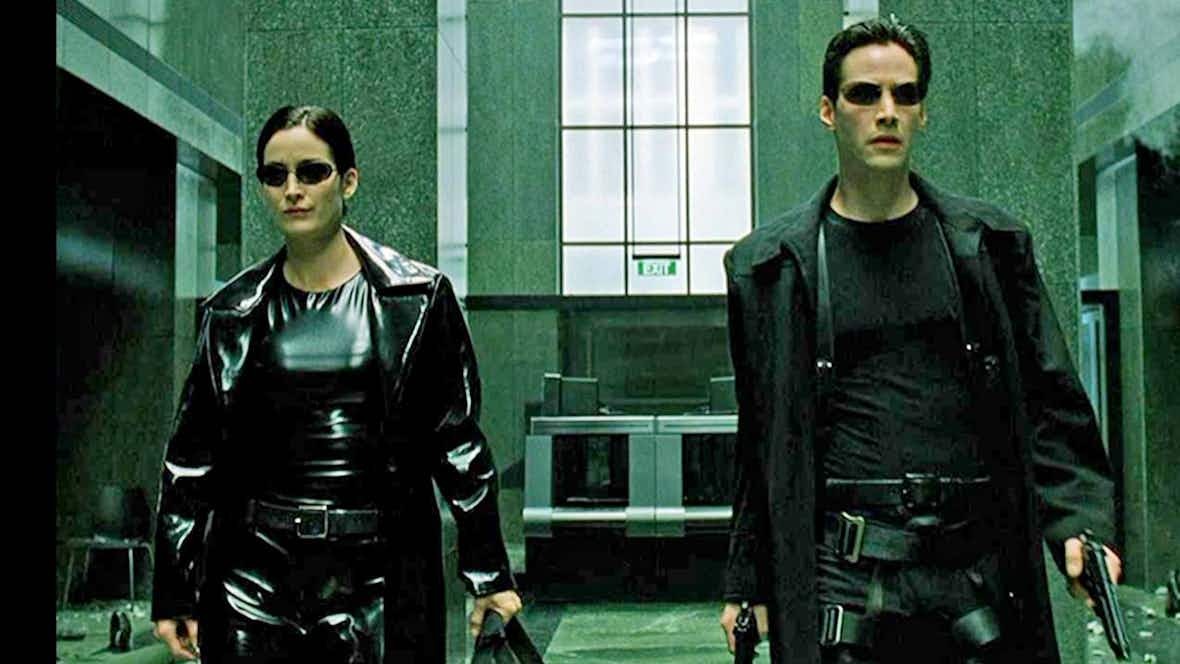
5. The Matrix (1999)

Every so often a film arrives that changes the visual language of mainstream sci-fi almost overnight. The action was revolutionary, the premise was instantly gripping, and the mix of cyberpunk anxiety, philosophy, and pop spectacle gave the whole thing a rare sense of confidence. Even now, The Matrix feels startlingly alive because it is not just selling cool ideas about simulated reality, but the thrill of waking up inside a lie and deciding to fight back. Keanu Reeves, Laurence Fishburne, and Carrie-Anne Moss all understand exactly the kind of mythic intensity the movie needs. Its influence became so widespread that people sometimes forget how electrifying it felt when it first hit. | © Warner Bros.

Cropped Brazil

4. Brazil (1985)

Bureaucracy is the real monster here, and Terry Gilliam turns paperwork, procedures, and administrative stupidity into something almost surreal in its ugliness. The world is funny in a vicious way, packed with absurd visual detail and institutional cruelty that keeps getting more suffocating the longer the story goes on. That is why Brazil never plays like a normal dystopian thriller, even when its nightmare vision becomes genuinely painful to watch. It is too strange, too bitter, and too imaginative to fit into something tidy. The film remains one of the sharpest attacks on dehumanizing systems ever smuggled into a science fiction movie. | © Universal Pictures

Cropped Blade Runner

3. Blade Runner (1982)

Rain, neon, smoke, exhaustion, moral decay – the film creates a future so complete that you can almost feel the damp air coming off the screen. Yet all that visual majesty would mean less if the story were not also wrestling with identity, memory, and the value of a life that has been treated as disposable. Blade Runner became more revered with time because audiences realized it was doing much more than building a beautiful world. Harrison Ford gives it a weary center, while Rutger Hauer brings a strange, tragic grandeur that lingers long after the plot ends. This is one of the rare science fiction movies where atmosphere and philosophy elevate each other instead of competing for attention. | © Warner Bros.

Cropped Alien

2. Alien (1979)

What starts as a workmanlike space mission gradually turns into one of the most effective nightmares ever put on film. Ridley Scott knows exactly how long to hold back, letting the ship, the crew, and the silence establish themselves before the horror fully shows its teeth. That patience is a huge reason Alien remains so powerful, because the fear comes as much from atmosphere and vulnerability as it does from the creature itself. The industrial look of the future makes everything feel dirty and believable, which only sharpens the terror once survival becomes the only thing left. Few sci-fi horror films have ever matched its precision. | © 20th Century Fox

Cropped 2001 Space Odyssey

1. 2001: A Space Odyssey (1968)

Nothing else in the genre feels quite this monumental. The film moves with a confidence that borders on hypnotic, refusing to rush its imagery or simplify its mysteries for the sake of easy consumption. Watching 2001: A Space Odyssey still feels like encountering science fiction on a scale that is bigger than plot alone, because Kubrick is chasing awe, terror, evolution, and silence all at once. The visual effects remain astonishing, but what truly gives the movie its power is the way it makes humanity seem both important and tiny within a much larger cosmic design. Decades later, it still stands there like a monolith of its own, impossible to ignore and impossible to fully exhaust. | © MGM

1-50

Science fiction has always been one of cinema’s best playgrounds because it can do almost anything at once. It can chase big ideas, build strange new worlds, and still hit with the kind of emotion that stays with you long after the credits roll.

The best sci-fi movies are not just about aliens, robots, or the future. They reflect the fears, hopes, and obsessions of the time they were made, which is exactly why the greatest science fiction films of all time still feel so powerful decades later.

  • Facebook X Reddit WhatsApp Copy URL

Science fiction has always been one of cinema’s best playgrounds because it can do almost anything at once. It can chase big ideas, build strange new worlds, and still hit with the kind of emotion that stays with you long after the credits roll.

The best sci-fi movies are not just about aliens, robots, or the future. They reflect the fears, hopes, and obsessions of the time they were made, which is exactly why the greatest science fiction films of all time still feel so powerful decades later.

Related News

More
Dark Angel
TV Shows & Movies
Top 25 TV Shows That Are So Bad They’re Actually Good
Half Life
Gaming
15 Best Video Games From the CD-Rom Era
Cropped Nier Automata
Gaming
Top 20 Video Games with the Most Complex Stories
Cropped sorcerer movie
Entertainment
Stephen King’s Favorite Movies of All Time
Birdman cropped processed by imagy
Entertainment
The 15 Richest Rappers in the World
The Seed Family Far Cry 5
Gaming
Top 15 Villain Groups in Video Games
Keira knightley pirates of the caribbean 2 cropped processed by imagy
Entertainment
Keira Knightley’s 15 Best Movie Roles, Ranked from Worst to Best
Monster
TV Shows & Movies
15 Best Completed Anime Series
Millie Bobby Brown
Entertainment
15 Celebrities Who Started Having Kids Young
Captain Marvel
Entertainment
Brie Larson’s Top 15 Movie Roles, Ranked from Worst to Best
Kinos Journey
Entertainment
15 Best Anime To Watch if You Like Frieren
Halo Combat Evolved 2001 cropped processed by imagy
Gaming
The 10 Greatest Plot Twists in Video Games
  • All TV & Movies
  • Home

Subscribe to our Newsletter

Sign up for selected EarlyGame highlights, opinions and much more

About Us

Discover the world of esports and video games. Stay up to date with news, opinion, tips, tricks and reviews.
More insights about us? Click here!

Links

  • Affiliate Links
  • Privacy Policy
  • Impressum and Disclaimer
  • Advertising Policy
  • Our Editorial Policy
  • About Us
  • Authors
  • Ownership

Partners

  • Kicker Logo
  • Efg esl logo
  • Euronics logo
  • Porsche logo
  • Razer logo

Charity Partner

  • Laureus sport for good horizontal logo

Games

  • Gaming
  • Entertainment
  • Creators
  • TV Shows & Movies
  • EA FC
  • Fortnite
  • League of Legends
  • Codes
  • Mobile Gaming
  • Videos
  • Call of Duty
  • Rocket League
  • APEX
  • Reviews
  • Galleries
  • News
  • Your Future

Links

  • Affiliate Links
  • Privacy Policy
  • Impressum and Disclaimer
  • Advertising Policy
  • Our Editorial Policy
  • About Us
  • Authors
  • Ownership
  • Copyright 2026 © eSports Media GmbH®
  • Privacy Policy
  • Impressum and Disclaimer
  • Update Privacy Settings
English
English
  • English
  • German
  • Spanish
  • EarlyGame india