

























• Lootday.com logo
  • Join today to claim your daily loot
English
    • News
    • Guides
    • Gaming
      • Codes
      • League of Legends
      • Lootday
    • Creators
    • Entertainment
    • Careers
    • Lootday
    • EarlyGame+
  • Login
  • Homepage My List Settings Sign out
  • News
  • Guides
  • Gaming
    • All Gaming
    • Codes
    • League of Legends
    • Lootday
  • Creators
  • Entertainment
  • Careers
  • Lootday
  • EarlyGame+
Game selection
Kena
Gaming new
Enterianment CB
ENT new
Influencer 5229646 640
TV Shows Movies Image
TV shows Movies logo 2
Fifa stadium
Fc24
Fortnite Llama WP
Fortnite Early Game
LOL 320
Lo L Logo
Codes bg image
Codes logo
Smartphonemobile
Mobile Logo
Videos WP
Untitled 1
Cod 320
Co D logo
Rocket League
Rocket League Text
Apex 320
AP Ex Legends Logo
DALL E 2024 09 17 17 03 06 A vibrant collage image that showcases various art styles from different video games all colliding together in a dynamic composition Include element
Logo
Logo copy
GALLERIES 17 09 2024
News 320 jinx
News logo
Lootday bg
Guides
More EarlyGame
Logo copy

Galleries

Lootday bg

lootday

News

News

Codes bg image

Codes

Razer blackhsark v2 review im test

Giveaways

  • Copyright 2026 © eSports Media GmbH®
  • Privacy Policy
  • Impressum and Disclaimer
 Logo
English
  • English
  • German
  • Spanish
  • EarlyGame india
  • Homepage
  • TV Shows & Movies

The 50 Greatest Science Fiction Movies of All Time

1-50

Ignacio Weil Ignacio Weil
TV Shows & Movies - June 23rd 2026, 18:30 GMT+2
Cropped Equilibrium

50. Equilibrium (2002)

Kurt Wimmer’s Equilibrium is the kind of glossy dystopian action movie that clearly watched The Matrix, took notes, and then asked, “What if feelings were illegal and everyone solved arguments with gun-fu?” Beneath the trench coats and cathedral-sized fascist architecture, though, there is a sincere pulp charge to Christian Bale’s performance as a regime enforcer slowly rediscovering emotion. It is blunt, stylish, sometimes ridiculous, and still weirdly satisfying. | © Dimension Films

Cropped A Boy and His Dog

49. A Boy and His Dog (1975)

Long before post-apocalyptic cinema became obsessed with wasteland cool, A Boy and His Dog wandered into the desert with a nasty grin, a talking telepathic dog, and almost no interest in behaving politely. Its future is ugly, horny, cynical, and built from the leftovers of American collapse. The film’s rough edges are part of the point: this is cult sci-fi as a bad dream told around a dying campfire. | © LQ/JAF

Cropped Logans Run

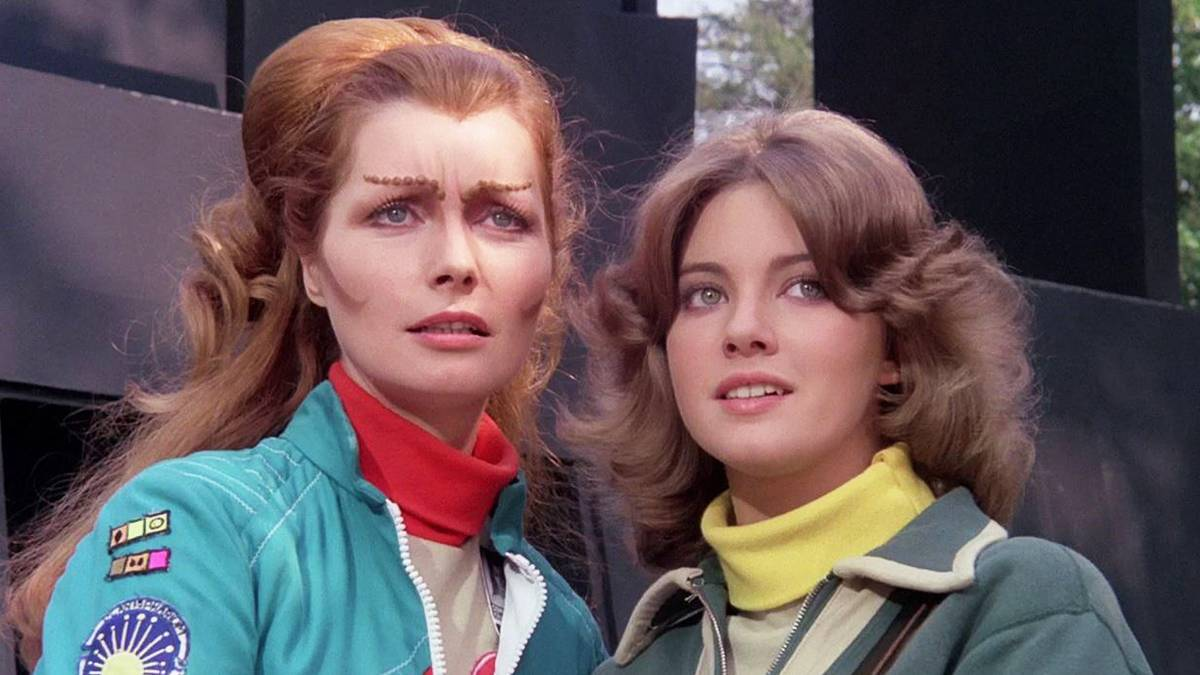
48. Logan's Run (1976)

Logan’s Run imagines a future where youth culture has won so completely that turning thirty is basically a death sentence, which remains one of cinema’s funniest and bleakest forms of birthday anxiety. The film’s world of domes, lasers, pleasure chambers, and suspiciously cheerful citizens has aged into retro-futurist camp, but its fear of disposable bodies still lands. It is shiny, strange, and more tragic than its plastic surfaces suggest. | © Metro-Goldwyn-Mayer

Cropped Upstream Color

47. Upstream Color (2013)

Shane Carruth’s Upstream Color does not explain itself so much as infect the viewer, which is appropriate for a film about parasites, identity, trauma, and emotional programming. Its story moves like memory after a concussion: fractured, intimate, and full of invisible connections. Amy Seimetz gives the film a raw human center, keeping it from floating away into pure puzzle-box abstraction. It is science fiction whispered through damaged nervous systems. | © ERBP

Cropped The War of the Worlds

46. The War of the Worlds (1953)

The original The War of the Worlds remains a gorgeous reminder that alien invasion cinema was already terrifying before cities had to be flattened in photorealistic CGI. Its Martian machines glide with eerie, almost religious menace, turning Cold War dread into Technicolor spectacle. The film streamlines H.G. Wells into something leaner and more American, but the panic feels universal: humanity suddenly discovering it is not the top predator. | © Paramount Pictures

Cropped The Time Travelers Wife

45. The Time Traveler's Wife (2009)

The Time Traveler’s Wife treats time travel less like a physics problem and more like a cruel medical condition, which gives its romance a built-in ache. Eric Bana’s Henry is not jumping through history for adventure; he is being torn out of his own life without warning, leaving Rachel McAdams’ Clare to love someone who can vanish mid-sentence. Its genre mechanics are soft, but the emotional premise is devastatingly sharp. | © New Line Cinema

Cropped Alphaville

44. Alphaville (1965)

Jean-Luc Godard did not need spaceships, ray guns, or elaborate sets to make Alphaville feel futuristic; he simply pointed his camera at modern Paris and made it look spiritually dead. The result is a noir disguised as science fiction, with Eddie Constantine wandering through a city ruled by logic, bureaucracy, and a computer that sounds like it smokes three packs a day. Cool, cryptic, and oddly funny, it weaponizes minimalism beautifully. | © Chaumiane Productions

Cropped Tron

43. Tron (1982)

Tron looked like nothing else in mainstream cinema, and even now its glowing digital landscapes have the strange beauty of technology dreaming about itself for the first time. The plot is basically a programmer’s feverish arcade myth, but the visual imagination is enormous: light cycles, identity discs, neon temples, and Jeff Bridges trapped inside a computer before most people understood what that meant. It is clunky in places, but historically electric. | © Walt Disney Productions

Cropped Predestination

42. Predestination (2014)

Predestination takes one of time travel’s most brain-melting paradoxes and turns it into a compact noir tragedy, anchored by a superb Sarah Snook performance that deserves far more casual recognition. The film begins like a procedural, folds into a confession, then tightens into something almost mythological. It is clever, yes, but the trick works because the emotional wound is not treated as decoration. The loop hurts before it impresses. | © Blacklab Entertainment

Cropped Timecrimes

41. Timecrimes (2007)

Nacho Vigalondo’s Timecrimes proves that a great time-loop movie does not need a massive budget; it needs a clean idea, a cruel sense of escalation, and a protagonist making one terrible decision after another. The film is lean enough to feel like a prank and nasty enough to feel like punishment. Every attempt to fix the timeline only makes the trap more elegant, more absurd, and more hopelessly human. | © Karbo Vantas Entertainment

Cropped Starship Troopers

40. Starship Troopers (1997)

Paul Verhoeven’s Starship Troopers is one of Hollywood’s funniest misread blockbusters, a fascist recruitment poster that keeps winking so hard it practically pulls a muscle. On the surface, it is all bug guts, square jaws, and military slogans; underneath, it is a savage joke about propaganda, nationalism, and beautiful people marching into meat grinders. The satire has only gotten sharper as audiences finally caught up with the bit. | © TriStar Pictures

Cropped They Live

39. They Live (1988)

John Carpenter’s They Live turns class rage into the greatest pair of sunglasses in movie history, which is both deeply silly and absolutely perfect. Roddy Piper’s drifter discovers that capitalism is literally alien mind control, and the film never softens that punchline. Its famous alley fight is absurdly long because stubborn men are absurdly hard to deprogram. Cheap, angry, quotable, and still depressingly current, it remains Carpenter’s bluntest weapon. | © Alive Films

Cropped Fifth Element

38. The Fifth Element (1997)

Luc Besson’s The Fifth Element is maximalist space opera dressed like a runway show after three energy drinks, and somehow the chaos coheres. Bruce Willis plays the exhausted everyman, Milla Jovovich becomes a divine pop-art weapon, and Gary Oldman turns villainy into performance jazz. The film’s future is loud, colorful, horny, commercial, ridiculous, and alive in every frame. It is not subtle, but subtlety would probably ruin it. | © Gaumont

Cropped Coherence

37. Coherence (2013)

Coherence begins with a dinner party and a passing comet, then slowly turns polite conversation into quantum paranoia. Its lo-fi approach is a gift: the lack of spectacle keeps the attention on fractured trust, duplicate selves, and the terrifying possibility that one small choice could make you replaceable. The cast’s naturalistic chaos makes the premise feel less like a puzzle and more like a social nightmare unfolding over wine glasses. | © Bellanova Films

Cropped Primer

36. Primer (2004)

Primer is famous for being complicated, but its real genius is how boringly plausible its miracle feels at first. Two engineers accidentally invent time travel in a garage, then immediately start treating it like a business opportunity, which may be the most realistic thing any sci-fi movie has ever suggested. Shane Carruth’s stripped-down style makes the confusion feel earned, not decorative. The movie does not hold your hand; it barely makes eye contact. | © ERBP

Cropped Videodrome 1

35. Videodrome (1983)

David Cronenberg’s Videodrome predicted a media-addicted future by making television feel wet, fleshy, erotic, and diseased. James Woods’ Max Renn is not a hero uncovering a conspiracy so much as a man willingly feeding himself to the signal. The film’s body horror remains unforgettable, but the sharper horror is psychological: screens reshaping desire until reality becomes negotiable. Long live the new flesh, unfortunately. | © Filmplan International

Cropped The Fly

34. The Fly (1986)

The Fly turns a teleportation accident into one of cinema’s most heartbreaking portraits of bodily collapse. Jeff Goldblum’s Seth Brundle begins as a charming eccentric and slowly becomes a genius trapped inside his own rotting experiment, while Geena Davis grounds the nightmare in grief rather than shock. Cronenberg’s gore is legendary, but the tragedy is what lingers. It is a monster movie where the monster knows exactly what he is losing. | © Brooksfilms

Cropped Dark City

33. Dark City (1998)

Alex Proyas’ Dark City feels like film noir trapped inside an alien laboratory, with every shadow hiding another manipulation. Its amnesiac hero, shifting architecture, and pale trench-coated overlords create a world where identity itself has become a test subject. The film arrived near The Matrix and got somewhat swallowed by history, but its mood is all its own: smoky, gothic, paranoid, and grandly artificial in the best possible way. | © New Line Cinema

Cropped The Thing

32. The Thing (1982)

John Carpenter’s The Thing remains almost unfairly effective because it attacks the most basic requirement for survival: trust. A group of men trapped in Antarctica discover that an alien organism can imitate any of them, and suddenly every glance becomes evidence. Rob Bottin’s creature effects are still grotesque miracles, but the film’s true engine is suspicion. The cold does not kill the characters first; paranoia gets there faster. | © Universal Pictures

Cropped Robo Cop

31. RoboCop (1987)

RoboCop is a cyberpunk action movie, a corporate satire, a Christ allegory, and a brutally funny news broadcast from a future that keeps refusing to stay fictional. Peter Weller’s performance gives the metal suit a wounded soul, while Paul Verhoeven makes every commercial, boardroom, and shootout feel poisoned by capitalism. It is violent enough to satisfy action fans and smart enough to make that satisfaction uncomfortable. Dead or alive, it still works. | © Orion Pictures

Cropped Sunshine

30. Sunshine (2007)

Danny Boyle’s Sunshine sends a crew toward the dying sun and finds terror not in deep space darkness, but in unbearable light. The film’s first stretch is almost devotional, full of scientific ritual, sacrifice, and awe at a star too vast to comprehend. Its final act gets messier and more divisive, but the sensory power remains immense. Few space movies make survival feel so spiritual, so physical, and so punishingly bright. | © Fox Searchlight Pictures

Cropped Minority Report

29. Minority Report (2002)

Steven Spielberg’s Minority Report is a chase thriller built around one of Philip K. Dick’s sharpest questions: what happens when law enforcement punishes intent before action? Tom Cruise runs through a sleek surveillance future that looked cool on release and now feels uncomfortably familiar. The gadgets are dazzling, but Spielberg keeps circling moral rot beneath the glass surfaces. It is blockbuster filmmaking with a guilty conscience and a very fast pulse. | © 20th Century Fox

Cropped The Prestige

28. The Prestige (2006)

Christopher Nolan’s The Prestige sneaks science fiction into a magician rivalry so elegantly that the genre twist feels like a final card hidden under the table. Hugh Jackman and Christian Bale turn obsession into a duel of ruined lives, while the Nikola Tesla material gives the film its uncanny charge. It is not about whether the trick can be done; it is about what kind of person would pay the cost. | © Touchstone Pictures

District 9 msn

27. District 9 (2009)

Neill Blomkamp’s District 9 landed with the force of a news report from a world that had already failed its alien visitors. Using Johannesburg as more than a backdrop, the film channels apartheid history, xenophobia, militarized bureaucracy, and body horror through Sharlto Copley’s spectacularly unpleasant bureaucrat. The mockumentary texture gives the chaos a nasty immediacy. Its effects still impress, but the social disgust is what gives the movie teeth. | © WingNut Films

Cropped Tenet

26. Tenet (2020)

Tenet is Christopher Nolan at his most aggressively architectural, a spy movie where the plot does not unfold so much as reverse, collide, and reload itself from the other direction. John David Washington brings cool physical command to a film that often seems more interested in momentum than intimacy. The inverted action is genuinely dazzling, and the sheer audacity is part of the appeal. It is nonsense with rules, which is not the same as nonsense. | © Warner Bros. Pictures

Cropped Moon

25. Moon (2009)

Duncan Jones’ Moon understands that loneliness in science fiction is most powerful when the silence starts answering back. Sam Rockwell carries the film almost single-handedly, turning a lunar work assignment into a crisis of identity, labor, memory, and disposability. The retro production design keeps the movie tactile and human, closer to dusty model-work melancholy than sterile futurism. Its twist matters, but the sadness around it matters more. | © Liberty Films

Cropped Looper

24. Looper (2012)

Rian Johnson’s Looper gives time travel a grimy, criminal texture: not gleaming machines and equations, but contracts, shotguns, addiction, and men waiting to execute their future selves. Joseph Gordon-Levitt and Bruce Willis make the impossible casting conceit work through attitude more than resemblance. The film’s real surprise is how it shifts from clever noir mechanics into a story about cycles of violence. The ending hits because the logic becomes emotional. | © Endgame Entertainment

Cropped Children of Man

23. Children of Men (2006)

Alfonso Cuarón’s Children of Men imagines the end of humanity not as one grand explosion, but as a bureaucratic, militarized, exhausted decline. No children are being born, and the world has responded with borders, propaganda, detention camps, and numb survival. Clive Owen moves through the ruins like a man too tired for heroism, which makes his eventual purpose feel earned. Its long takes are famous; its despair is even harder to shake. | © Universal Pictures

Cropped Metropolis

22. Metropolis (1927)

Fritz Lang’s Metropolis is nearly a century old and still looks like the future having a nightmare about labor. Its towering city, underground workers, false Maria, and machine-god imagery shaped the visual language of science fiction before the genre had settled into modern form. The politics can be blunt, but the scale is astonishing. Every robot, megacity, and class-divided dystopia made afterward owes it some kind of debt. | © UFA

Cropped Stalker

21. Stalker (1979)

Andrei Tarkovsky’s Stalker moves at the speed of dread, prayer, mud, and exhaustion, which is exactly why it feels unlike almost any other science fiction film. Its forbidden Zone does not need monsters; it has silence, decay, and the promise of revealing what people truly desire. The journey becomes philosophical without losing its physical weight. Every puddle, tunnel, and ruined room seems to be judging the characters for entering. | © Mosfilm

Cropped Planet of the Apes

20. Planet of the Apes (1968)

Planet of the Apes could have been pure costume adventure, but its brilliance lies in how seriously it commits to the absurdity of its premise. Charlton Heston’s stranded astronaut finds a world where apes rule and humans are treated like animals, and the satire only grows sharper as the power structures become familiar. Then comes one of cinema’s great final images, a twist that turns pulp into apocalypse. | © APJAC Productions

Cropped Total Recall

19. Total Recall (1990)

Paul Verhoeven’s Total Recall is a muscle-bound identity crisis with mutant rebels, corporate villains, memory implants, and Arnold Schwarzenegger delivering existential panic like a man who can bench-press philosophy. The film’s genius is that its central question never stops buzzing: is Quaid a hero, a fantasy, or a consumer trapped inside the ultimate vacation package? It is lurid, hilarious, violent, and sneakier than its exploding heads would suggest. | © Carolco Pictures

Cropped Gattaca

18. Gattaca (1997)

Gattaca remains one of the cleanest and most elegant warnings about genetic determinism, partly because its future looks so calm. Andrew Niccol strips dystopia of clutter and builds a world where discrimination happens through polish, testing, and quiet administrative cruelty. Ethan Hawke’s Vincent is not rebelling with weapons; he is rebelling with borrowed identity and impossible discipline. The film’s power comes from how politely its society denies people a life. | © Columbia Pictures

Cropped Annihilation

17. Annihilation (2018)

Alex Garland’s Annihilation turns alien contact into cancer, grief, self-destruction, and one very unpleasant bear. The Shimmer is beautiful in a way that feels biologically wrong, mutating everything it touches until nature becomes both cathedral and crime scene. Natalie Portman’s restrained performance gives the film its haunted center, while the final stretch abandons easy explanation for pure sensory unease. It is less about invasion than transformation without consent. | © Paramount Pictures

Cropped Her

16. Her (2013)

Spike Jonze’s Her is gentle enough to feel romantic and sharp enough to sting. Joaquin Phoenix falls in love with an operating system voiced by Scarlett Johansson, but the film is not just about technology replacing intimacy; it is about how loneliness adapts to whatever tools are available. Its soft colors and near-future design hide a painful question: what if artificial intelligence grows faster than human need? | © Annapurna Pictures

Cropped Donnie Darko

15. Donnie Darko (2001)

Donnie Darko is suburban teen angst filtered through time loops, jet engines, sleepwalking, therapy, and a six-foot rabbit with nightmare eyes. Richard Kelly’s debut captures the feeling of being young, smart, mentally unwell, and convinced the universe is sending coded messages directly to you. The mythology can get messy, but the atmosphere is irresistible. It is science fiction as adolescent doom, and somehow also very funny. | © Flower Films

Cropped Solaris

14. Solaris (1972)

Tarkovsky’s Solaris is often called an answer to 2001: A Space Odyssey, but that makes it sound more combative than it feels. This is not a film about conquering space; it is about what the human mind smuggles into the cosmos. The sentient planet does not attack with lasers, but with memory, guilt, and impossible resurrection. Its slowness is not emptiness; it is grief stretching across an orbit. | © Mosfilm

Cropped Back to the Future

13. Back to the Future (1985)

Back to the Future makes time travel feel so clean, funny, and emotionally satisfying that it is easy to forget how tricky the machinery actually is. Robert Zemeckis and Bob Gale turn paradox into pure comic momentum, with Michael J. Fox giving Marty McFly the perfect mix of panic, charm, and teenage impatience. The DeLorean is iconic, sure, but the real engine is structure. Every setup pays off like clockwork. | © Universal Pictures

Cropped Arrival

12. Arrival (2016)

Denis Villeneuve’s Arrival treats first contact as a problem of language before it becomes a problem of war, which instantly separates it from louder alien-landing spectacles. Amy Adams gives a beautifully internal performance as a linguist learning that communication can alter the way time itself is understood. The film is cerebral without becoming cold, emotional without turning sentimental. Its final revelation reframes the whole story as an act of radical acceptance. | © FilmNation Entertainment

Cropped Eternal Sunshine of the Spotless Mind

11. Eternal Sunshine of the Spotless Mind (2004)

Michel Gondry and Charlie Kaufman turned memory erasure into one of cinema’s most painful love stories, though “love story” almost feels too tidy for something this bruised. Eternal Sunshine of the Spotless Mind understands that heartbreak is not a file you delete; it is architecture inside you. Jim Carrey and Kate Winslet make Joel and Clementine messy, incompatible, magnetic, and painfully human. The sci-fi idea is small; the emotional blast radius is enormous. | © Focus Features

Cropped Everything Everywhere All at Once

10. Everything Everywhere All at Once (2022)

Everything Everywhere All at Once throws multiverse theory, immigrant family drama, martial arts, tax stress, nihilism, hot dog fingers, and googly eyes into the same blender and somehow comes out emotionally precise. Michelle Yeoh gives the chaos its soul, while Ke Huy Quan turns kindness into an action strategy. The film’s maximalism is not random noise; it is a portrait of modern overload, where every possible life still leads back to one wounded family. | © A24

Cropped 12 Monkeys

9. 12 Monkeys (1995)

Terry Gilliam’s 12 Monkeys makes time travel feel dirty, unstable, and mentally corrosive. Bruce Willis plays James Cole like a man being dragged through destiny in restraints, while Brad Pitt’s manic performance adds just enough chaos to keep the conspiracy slippery. The film’s future is not sleek; it is bureaucratic, underground, and sick. Its closed-loop structure is merciless, turning memory into prophecy and prophecy into a trap already sprung. | © Universal Pictures

Cropped Inception

8. Inception (2010)

Inception is Christopher Nolan’s blockbuster brain maze, but its secret weapon is how cleanly it turns exposition into heist momentum. Dreams have rules, teams have roles, and grief keeps sabotaging the mission from inside Leonardo DiCaprio’s head. The folding city and rotating hallway became instant images, but the film’s real hook is emotional: a man trying to escape a memory he helped build. The spinning top did exactly what it needed to do. | © Warner Bros. Pictures

Cropped Interstellar

7. Interstellar (2014)

Interstellar swings for cosmic awe with no embarrassment, which is why its biggest moments feel so enormous. Christopher Nolan builds the film from wormholes, relativity, dust storms, frozen planets, and Hans Zimmer organ blasts, then roots the spectacle in a father-daughter wound. The science gives the story scale, but love gives it pressure. Not every line lands gently, yet the ambition is thrilling: a space epic that cries in IMAX. | © Paramount Pictures

Cropped Ex Machina

6. Ex Machina (2014)

Alex Garland’s Ex Machina locks three people in a sleek house and lets the future of artificial intelligence play out like a seduction, a job interview, and a prison break at the same time. Alicia Vikander’s Ava is delicate, unreadable, and terrifyingly strategic, while Oscar Isaac turns tech-bro genius into bottled entitlement. The film is elegant because it knows exactly what to withhold. Every glass wall becomes a moral trap. | © DNA Films

Cropped Brazil

5. Brazil (1985)

Terry Gilliam’s Brazil is bureaucracy as a nervous breakdown, a retro-futurist nightmare where paperwork kills, ducts crawl across ceilings, and fantasy is the only available form of rebellion. Jonathan Pryce’s Sam Lowry is not a revolutionary by nature; he is a dreamer trapped in a machine that digests mistakes and people with equal indifference. The film is absurd, hilarious, cruel, and visually overwhelming. Its future is ridiculous until it starts looking familiar. | © Embassy International Pictures

Cropped The Matrix

4. The Matrix (1999)

The Matrix did not just update cyberpunk for a new generation; it changed how action, philosophy, fashion, and digital anxiety could look on screen. Keanu Reeves’ Neo begins as a bored office worker and becomes a mythic glitch in the system, while the Wachowskis fuse anime, martial arts, hacker culture, and religious symbolism into one immaculate pop machine. Bullet time was the hook, but the existential unease is why it lasted. | © Village Roadshow Pictures

Cropped Alien

3. Alien (1979)

Ridley Scott’s Alien is a haunted-house movie in space, but that description almost undersells how perfectly it weaponizes design, silence, labor, and bodily violation. The Nostromo feels like a workplace before it feels like a tomb, which makes the horror more grounded when the creature begins picking people off. Sigourney Weaver’s Ripley emerges gradually, not as a chosen one, but as the only person still thinking clearly. Elegant, filthy, and terrifying. | © 20th Century Fox

Cropped Blade Runner

2. Blade Runner (1982)

Blade Runner gave science fiction one of its defining cityscapes: rain, neon, smoke, advertisements, crowded streets, and loneliness glowing through every frame. Harrison Ford’s Deckard moves through the story like a tired noir ghost, but Rutger Hauer’s Roy Batty steals immortality from the margins and turns it into poetry. The film’s questions about memory, labor, humanity, and artificial life have only deepened with time. Its future became everyone else’s visual vocabulary. | © The Ladd Company

Cropped 2001 Space Odyssey

1. 2001: A Space Odyssey (1968)

Stanley Kubrick’s 2001: A Space Odyssey still feels less like a conventional movie than a transmission from somewhere beyond cinema. It jumps from prehistoric violence to artificial intelligence to cosmic rebirth with an icy confidence that refuses to explain away the mystery. HAL 9000 remains terrifying because he is calm, not monstrous, and the Stargate sequence still makes human ambition feel tiny. Science fiction has gone further in plot, but rarely further in awe. | © Metro-Goldwyn-Mayer

1-50

Science fiction has always been cinema’s favorite excuse to ask terrifying questions with shiny machines, doomed astronauts, killer robots, impossible futures, and the occasional very confused time traveler. The greatest sci-fi movies do more than predict technology; they turn fear, wonder, politics, loneliness, and human ambition into images that stick in your brain for years. From silent-era nightmares to modern blockbusters with galaxy-sized budgets, these are the films that pushed the genre forward, rewired pop culture, and made the future look thrilling, dangerous, and strangely familiar.

  • Facebook X Reddit WhatsApp Copy URL

Science fiction has always been cinema’s favorite excuse to ask terrifying questions with shiny machines, doomed astronauts, killer robots, impossible futures, and the occasional very confused time traveler. The greatest sci-fi movies do more than predict technology; they turn fear, wonder, politics, loneliness, and human ambition into images that stick in your brain for years. From silent-era nightmares to modern blockbusters with galaxy-sized budgets, these are the films that pushed the genre forward, rewired pop culture, and made the future look thrilling, dangerous, and strangely familiar.

Related News

More
But Im a Cheerleader
Entertainment
The 15 Most Filmgirl Movies of All Time
Fight Club 1999
Entertainment
The 15 Most Filmbro Movies of All Time
Killers of the Flower Moon
TV Shows & Movies
15 Movies You Knew Were Masterpieces in 10 Minutes (Part 2)
Hugh Grant
Entertainment
15 Celebrities With Toxic Reputations on Set
Cropped The Gift
TV Shows & Movies
15 Films Where the Ending Rewrites the Entire Story
My Deer Friend Nokotan
TV Shows & Movies
15 Weird Anime You’ll Only Understand by Watching Them
Blazing Saddles
TV Shows & Movies
People Rewatch These 15 Movies More Than Anything Else
Superman
Entertainment
15 Movie Characters Who Are Basically Impossible To Kill
Death Becomes Her 1992
Entertainment
Meryl Streep's Top 15 Movies Ranked From Worst to Best
Cropped Dune Part Two
Entertainment
James Cameron Wants You To Watch These 18 Movies
Katamari Damacy 2004
Gaming
Brandon Sanderson’s 10 Favorite Video Games Of All Time
The Seed Family Far Cry 5
Gaming
Top 15 Villain Groups In Video Games
  • All TV & Movies
  • Home

Subscribe to our Newsletter

Sign up for selected EarlyGame highlights, opinions and much more

About Us

Discover the world of esports and video games. Stay up to date with news, opinion, tips, tricks and reviews.
More insights about us? Click here!

Links

  • Affiliate Links
  • Privacy Policy
  • Impressum and Disclaimer
  • Advertising Policy
  • Our Editorial Policy
  • About Us
  • Authors
  • Ownership

Partners

  • Kicker Logo
  • Efg esl logo
  • Euronics logo
  • Porsche logo
  • Razer logo

Charity Partner

  • Laureus sport for good horizontal logo

Games

  • Gaming
  • Entertainment
  • Creators
  • TV Shows & Movies
  • EA FC
  • Fortnite
  • League of Legends
  • Codes
  • Mobile Gaming
  • Videos
  • Call of Duty
  • Rocket League
  • APEX
  • Reviews
  • Galleries
  • News
  • Your Future
  • Lootday
  • Guides

Links

  • Affiliate Links
  • Privacy Policy
  • Impressum and Disclaimer
  • Advertising Policy
  • Our Editorial Policy
  • About Us
  • Authors
  • Ownership
  • Copyright 2026 © eSports Media GmbH®
  • Privacy Policy
  • Impressum and Disclaimer
  • Update Privacy Settings
English
English
  • English
  • German
  • Spanish
  • EarlyGame india