





































Pratchett's books are considered fantasy must-haves, but also offer a clever look at our world.
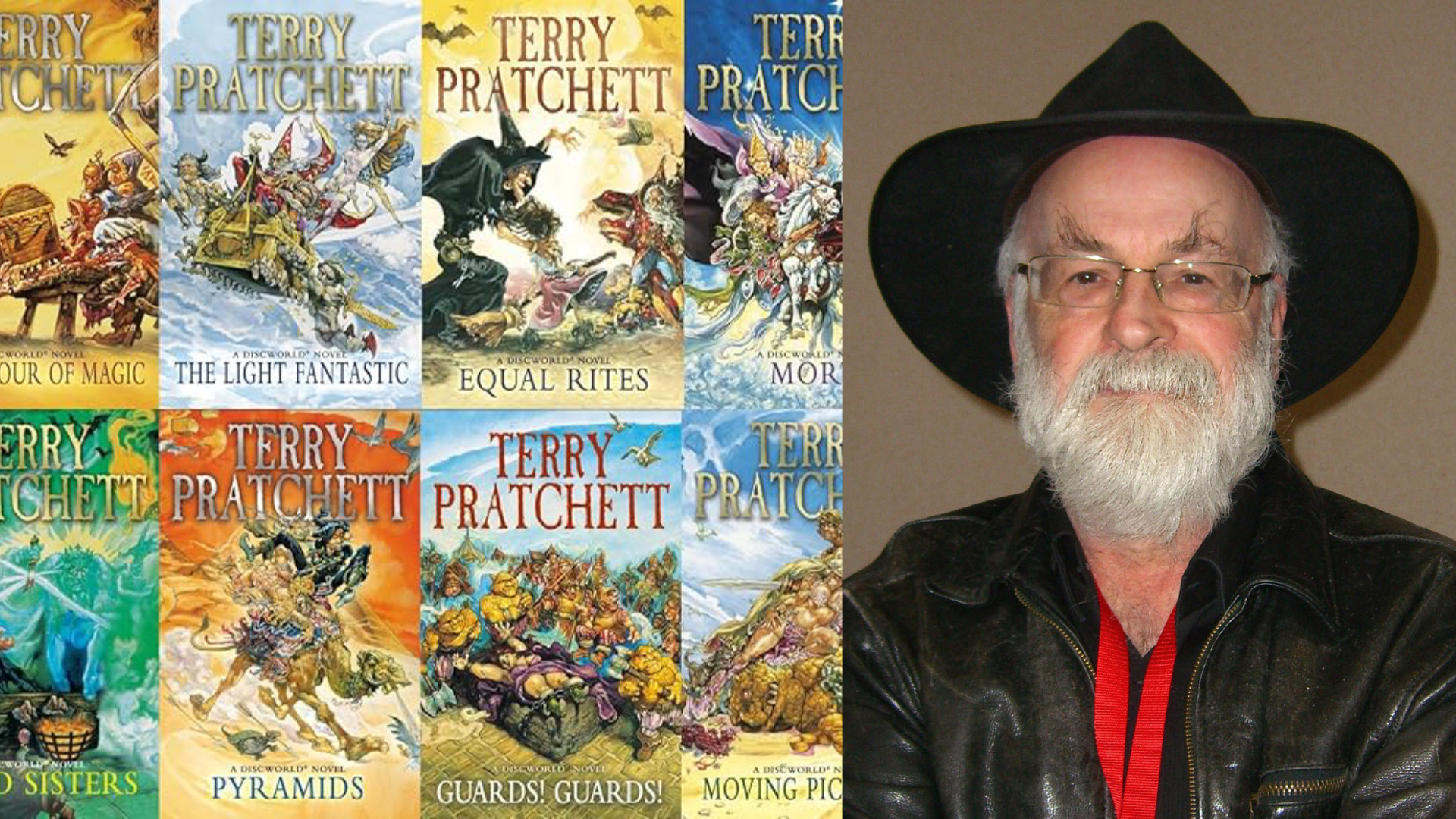
March 12 marks the anniversary of the death of Terry Pratchett, one of the most influential writers of modern fantasy literature. The British author, who died in 2015 at the age of 66, left behind far more than successful novels: his books became intelligent, satirical commentaries on society, politics, and the nature of being human.
Early Life and the Path to Writing
Terry Pratchett was born in 1948 in Beaconsfield, England. From an early age, he showed a passion for stories, myths, and science fiction. As a teenager, he published his first texts in school newspapers.
Rather than pursuing a traditional academic career, Pratchett became a journalist – an experience that would decisively shape his later writing style. His keen observation of everyday life, combined with dry British humor, became the hallmark of his literature. His first novel was published in the early 1970s, but his major breakthrough would not come until a decade later.
Discworld – Fantasy as Social Satire
In 1983, Pratchett published The Colour of Magic , thereby launching the legendary Discworld series. The idea was as absurd as it was brilliant: a flat world carried by four elephants on the back of a gigantic turtle serves as the stage for stories about people – not about magic.
Over the course of more than 40 novels, Discworld developed into a literary universe that analyzed social structures with sharp humor. Pratchett wrote about bureaucracies that take on a life of their own, power structures that require oversight, and religious fanaticism as well as media manipulation and social inequality. Questions of prejudice, racism, and scientific progress also found their place – never in a preachy way, but embedded in seemingly light, often hilarious stories.
Pratchett used fantasy not as an escape from reality but as a mirror of it. His characters – whether members of the City Watch, witches, or even the personified Death – posed fundamental moral questions, often hidden behind wordplay and absurd situations. It was precisely this combination of humor and humanism that made his works successful across generations.
Literature with Social Impact
Terry Pratchett’s significance reaches far beyond the fantasy genre. Many readers describe his books as their first introduction to political or philosophical questions. His stories made it clear that power always requires oversight and that moral action does not arise from grand ideologies, but from the everyday decisions of individuals.
Time and again, he demonstrated how fallible institutions can be and that social systems are only as just as the people who assume responsibility within them. Compassion was particularly important to him – not as a sentimental idea, but as the practical foundation of a functioning society.
The characters of the City Watch around Commander Sam Vimes are therefore often regarded today as literary examples of moral integrity within corrupt or overwhelmed systems. Pratchett’s humor remained consistently humane. Despite all the satire, his worldview was never cynical, but grounded in the belief that people can learn and act better.
Illness and a Public Fight
In 2007, Pratchett made public that he had been diagnosed with a rare form of Alzheimer’s disease. Instead of withdrawing from public life, he chose openness and became one of the most prominent voices in shaping society’s conversation about dementia.
He worked intensively to promote medical research into neurodegenerative diseases while also advocating for better care conditions and a more open social approach toward those affected. In addition, he publicly supported the right to assisted dying – a position that sparked intense ethical and political debates, particularly in the United Kingdom.
Social Engagement and His Legacy
Pratchett never saw himself as a partisan political author, yet his views were clearly shaped by humanist convictions. In his works as well as in interviews, he expressed clear skepticism toward authoritarian structures and warned against blind nationalism or ideological rigidity.
At the same time, he passionately advocated for science, education, and rational thinking. He saw humor as an effective tool against dogmatism, extremism, and societal self-assurance. His criticism was rarely aimed at individuals, but rather at ways of thinking that displace empathy and reason.
To this day, Terry Pratchett’s books have sold millions of copies and been translated into numerous languages. Yet his true legacy lies less in commercial success than in his cultural influence.
He showed that fantasy can be intelligent, political, and deeply human. Many modern authors draw inspiration from his style of storytelling, which combines entertainment with social reflection. His stories remind us that complex truths are often easiest to understand when we can laugh about them.