



















• Lootday.com logo
  • Join today to claim your daily loot
English
    • News
    • Guides
    • Gaming
      • Codes
      • League of Legends
      • Lootday
    • Creators
    • Entertainment
    • Careers
    • Lootday
    • EarlyGame+
  • Login
  • Homepage My List Settings Sign out
  • News
  • Guides
  • Gaming
    • All Gaming
    • Codes
    • League of Legends
    • Lootday
  • Creators
  • Entertainment
  • Careers
  • Lootday
  • EarlyGame+
Game selection
Kena
Gaming new
Enterianment CB
ENT new
Influencer 5229646 640
TV Shows Movies Image
TV shows Movies logo 2
Fifa stadium
Fc24
Fortnite Llama WP
Fortnite Early Game
LOL 320
Lo L Logo
Codes bg image
Codes logo
Smartphonemobile
Mobile Logo
Videos WP
Untitled 1
Cod 320
Co D logo
Rocket League
Rocket League Text
Apex 320
AP Ex Legends Logo
DALL E 2024 09 17 17 03 06 A vibrant collage image that showcases various art styles from different video games all colliding together in a dynamic composition Include element
Logo
Logo copy
GALLERIES 17 09 2024
News 320 jinx
News logo
Lootday bg
Guides
More EarlyGame
Logo copy

Galleries

Lootday bg

lootday

News

News

Codes bg image

Codes

Razer blackhsark v2 review im test

Giveaways

  • Copyright 2026 © eSports Media GmbH®
  • Privacy Policy
  • Impressum and Disclaimer
 Logo
English
  • English
  • German
  • Spanish
  • EarlyGame india
  • Homepage
  • Gaming

Top 20 Most Addictive Video Games Of All Time

1-20

Ignacio Weil Ignacio Weil
Gaming - October 2nd 2026, 18:30 GMT+2
Balatro

20. Balatro (2024)

Balatro has the dangerous energy of a game that looks like it should occupy twenty minutes and then politely steals the rest of the night. Poker hands are only the foundation; Jokers, multipliers, deck manipulation, Tarot cards, and increasingly absurd synergies turn every run into a little mathematical conspiracy. A build that looks doomed can suddenly explode into millions of points because three unrelated bonuses clicked together. Losing rarely feels final, either. It mostly feels like valuable evidence for the next run. | © LocalThunk

Call of Duty

19. Call of Duty series (2003)

A Call of Duty multiplayer match can be over before another game has finished explaining its crafting menu, and that speed has always been one of the franchise's sharpest weapons. Respawn, sprint, shoot, die, complain, respawn again. Then come weapon levels, attachments, challenges, camo grinds, killstreaks and ranked ladders, each giving the next match a purpose beyond simply winning. Even a terrible round creates its own excuse to continue, because surely you are not ending the evening after going 8–19. Basic human dignity demands another lobby. | © Activision

Rust

18. Rust (2018)

Logging out of Rust does not mean Rust has logged out of you. Your base is still sitting on the server, full of everything you spent hours gathering, while complete strangers are potentially deciding which wall looks cheapest to blow apart. That persistent threat turns ordinary resource gathering into something weirdly personal: sulfur matters because revenge matters, and a better door suddenly feels like a life priority. Alliances, betrayals, raids, rebuilds and server wipes keep resetting the drama before routine can fully settle in. | © Facepunch Studios

Diablo 2 msn

17. Diablo II (2000)

The corpse hits the floor, a pile of colored text appears, and for half a second nothing else in the world matters. Diablo II understood the psychological power of loot long before “loot game” became an entire category. Rare uniques, runes, charms and gear rolls gave repeated boss runs a slot-machine tension without making the combat itself feel secondary. Then a new item suggests a different character build, which means another character, another leveling run and another pile of equipment to chase. Sanctuary was supposedly being saved; mostly, everyone was hunting better boots. | © Blizzard Entertainment

Cropped Skyrim

16. The Elder Scrolls V: Skyrim (2011)

Nobody sits down with Skyrim intending to spend forty minutes collecting alchemical ingredients behind a mill. It simply happens. Bethesda built an RPG where almost every road contains a distraction, and those distractions keep branching into caves, ruins, Daedric quests, guild storylines and increasingly questionable inventory decisions. The main quest can sit untouched for days while the Dragonborn becomes a thief, buys a house and develops a deeply unnecessary obsession with smithing. Its greatest trick is making wandering around with no plan feel like excellent use of your time. | © Bethesda Game Studios

Cropped Satisfactory

15. Satisfactory (2019)

A functioning factory lasts roughly five minutes before the person who built it decides it is an embarrassing monument to inefficiency. That is Satisfactory in miniature. Conveyor belts become production lines, production lines expose bottlenecks, bottlenecks demand new machinery, and suddenly half the facility is being demolished because a splitter is facing the wrong direction. The first-person scale makes the obsession even stronger because players physically walk through the industrial monster they created. Finishing a project provides satisfaction, certainly, but noticing how much better it could be is usually more powerful. | © Coffee Stain Studios

Cropped Stardew Valley

14. Stardew Valley (2016)

Going to bed should be the natural stopping point in Stardew Valley. Instead, morning arrives, the crops are ready, a chicken needs attention, somebody in town has a birthday and those blueberries are finally worth harvesting. The calendar keeps dangling tiny obligations in front of the player until “one more day” becomes a dangerous phrase. Farming is only one part of the machinery, too: fishing, mining, friendships, festivals, upgrades and Community Center bundles all advance at slightly different speeds. Somehow, managing fictional chores becomes dramatically harder to abandon than the real ones. | © ConcernedApe

Cropped minecraft

13. Minecraft (2011)

“I just need more iron” may be one of gaming's most reliable lies. Mining for one resource in Minecraft leads to another cave, which leads to diamonds, which leads to better equipment, which makes that unfinished base suddenly worth expanding. Building works the same way: a hut becomes a house, the house needs storage, storage needs organization, and somebody inevitably decides the whole thing would look better with a functioning redstone door. Because Minecraft never dictates a single correct objective, players are free to manufacture their own obsessions—and they are remarkably good at it. | © Mojang Studios

The Sims

12. The Sims series (2000)

Give someone complete control over a tiny digital person's bathroom tiles and apparently an entire Sunday can disappear. The Sims turned domestic life into a playground where decorating, careers, romance, parenting and social catastrophe all compete for attention at once. Players might arrive intending to build a modest starter home and emerge three hours later adjusting the angle of a lamp nobody will ever notice. The simulation also refuses to behave perfectly, which helps. Carefully planned lives produce affairs, fires, grudges and terrible decisions, giving players fresh messes to fix—or deliberately make much worse. | © Electronic Arts

Tetris Effect

11. Tetris (1984)

Tetris needs no progression system, loot table, or daily reward to keep people trapped in its loop. The rules are brutally simple: fit falling pieces together, clear lines, survive as the speed climbs. That simplicity is exactly why the game gets under your skin; after a while, your brain starts spotting imaginary tetrominoes in shelves, windows and floor tiles. The so-called “Tetris effect” is real enough to have entered psychology, which feels appropriate for a game that can follow you long after the screen goes dark. | © Enhance

Cropped Subnautica

10. Subnautica (2018)

Subnautica weaponizes the sentence “I wonder what's down there.” Every extra meter beneath the surface brings stranger wildlife, rarer materials and the growing suspicion that something enormous has noticed you. Exploration feeds crafting, crafting unlocks vehicles, vehicles make deeper exploration possible, and new discoveries quietly pull the player farther from the comforting shallows. Even fear becomes motivational: hearing an unpleasant noise in the darkness should encourage retreat, yet curiosity keeps winning. Few survival games make progress feel so closely tied to violating your own perfectly sensible instinct to stay near the surface. | © Unknown Worlds Entertainment

Civilization

9. Civilization series (1991)

The famous “one more turn” problem is not marketing exaggeration; it is practically the operating system of Civilization. Ending a turn rarely resolves anything. A technology finishes, revealing another technology. A city completes a building and needs fresh orders. A neighboring empire moves troops suspiciously close to the border, which obviously cannot be left unanswered until tomorrow. Sid Meier's strategy series divides enormous historical ambitions into tiny, manageable decisions, ensuring there is almost never a clean exit point. You start by founding a city and eventually realize the sun has founded itself outside. | © 2K Games

Cropped Candy Crush

8. Candy Crush (2012)

Three matching candies should not have this much authority over adult decision-making, but Candy Crush Saga built an empire from exactly that premise. Levels are short, objectives are immediately readable and failures often leave the board looking tantalizingly close to victory. That near-miss feeling does a lot of work: losing with one jelly remaining practically writes the justification for another attempt. Limited moves, boosters and escalating puzzle gimmicks keep the familiar match-three format from becoming completely automatic. It was designed for spare minutes, which is precisely why those spare minutes have a habit of multiplying. | © King

Cropped Factorio

7. Factorio (2020)

The factory is never finished. It merely reaches increasingly sophisticated stages of being wrong. Factorio begins with manual mining and basic machines before escalating into sprawling networks of belts, inserters, trains, power systems and automated production chains. Every improvement makes another inefficiency easier to see, creating a marvelous cycle of solving problems that immediately manufactures new problems. The satisfaction comes not from reaching perfection but from watching chaos become organized—briefly. Then copper production falls behind, science packs stop flowing and an hour disappears because one conveyor belt clearly cannot be allowed to remain like that. | © Wube Software

Total War WARHAMMER

6. Total War series (2000)

Total War offers two separate ways to lose an evening and conveniently bolts them together. On the campaign map, armies move, economies grow, alliances collapse and provinces demand constant attention; once those decisions produce a war, the game shifts into real-time battles where hundreds or thousands of soldiers need commanding. Winning the battle only creates more campaign problems, because now there is territory to defend, casualties to replace and an enemy capital sitting temptingly nearby. Stopping after a turn feels unfinished. Stopping after a battle feels worse. Creative Assembly knew exactly what it was doing. | © Creative Assembly

Cropped rocket league

5. Rocket League (2015)

Five minutes is an extremely irresponsible match length. It sounds harmless enough to justify another game almost indefinitely, especially when Rocket League matches can swing on a single ridiculous goal in the final seconds. The rules are instantly understandable—cars hit ball into net—but mastery stretches into aerial control, positioning, boost management and mechanical techniques that can take hundreds of hours to learn. Improvement is visible in tiny increments, which makes practice unusually rewarding. Yesterday you missed every aerial; today you hit one cleanly. Obviously, science now requires another twelve matches to confirm the breakthrough. | © Psyonix

Rim World

4. RimWorld (2018)

A freezer malfunction in RimWorld can become a better story than the entire plot of another game. Colonists have moods, relationships, injuries, addictions and spectacularly bad timing, while the AI storyteller keeps throwing raids, illnesses, fires and other disasters at whatever stability the player has managed to construct. Survival matters, but attachment is the real hook. Once a colonist has survived three winters, lost a leg and married the settlement's cook, their next crisis feels weirdly important. Saving the colony stops being strategy and starts resembling responsibility for the world's least dependable extended family. | © Ludeon Studios

Cropped Fortnite

3. Fortnite (2017)

Fortnite learned early that the match itself did not have to carry the entire burden of keeping people interested. A round might end quickly, but outside it sit quests, cosmetics, Battle Pass rewards, rotating modes, map changes and whatever improbable crossover Epic has announced this week. That constant motion gives returning players something new to inspect even after hundreds of drops. Battle royale already creates a powerful “maybe this is the run” mentality; surrounding it with progression and social play made the loop considerably harder to escape. Victory Royale is merely one item on tomorrow's schedule. | © Epic Games

Cropped League of Legends

2. League of Legends (2009)

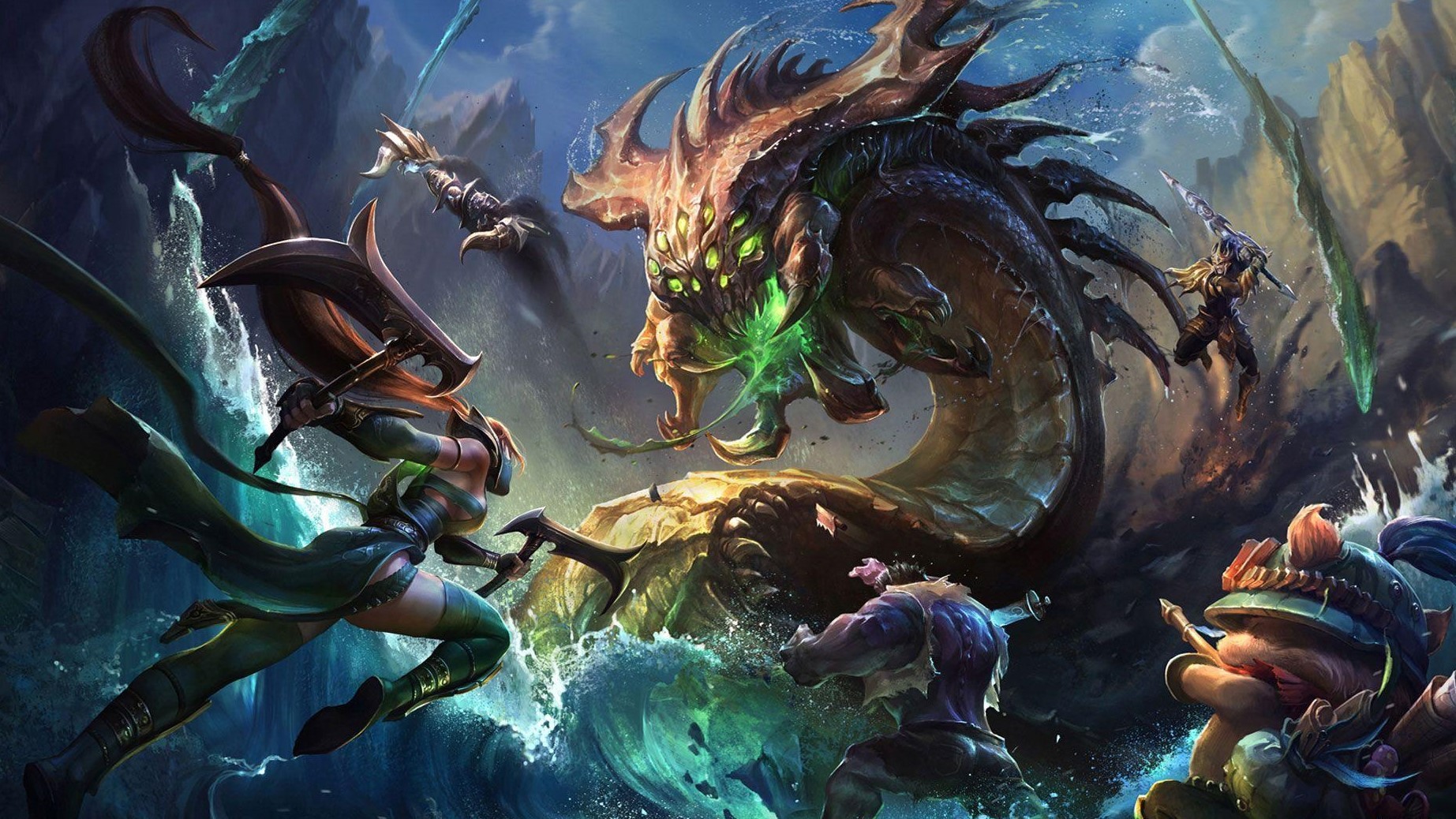
A bad League of Legends match can ruin your mood and somehow make starting another one feel like the solution. That contradiction has powered millions of queues. Each match resets the board while preserving everything the player has learned about champions, matchups, objectives and team fights, so improvement always seems measurable even when progress gets messy. Ranked play adds another layer of emotional accounting, with wins feeling validating and losses demanding immediate correction. Throw in regular balance changes and an enormous champion roster, and mastery keeps moving just far enough away to remain permanently tempting. | © Riot Games

Cropped World of Warcraft

1. World of Warcraft (2004)

At its most consuming, World of Warcraft did not feel like a game you opened; it felt like somewhere you were expected to be. Characters needed gear, professions needed materials, guildmates needed another person for the dungeon, raids happened on schedules and alternate characters stood ready with completely separate lists of unfinished business. Blizzard layered individual progression over a social world, giving players reasons to log in that ranged from chasing an upgrade to simply seeing who else was online. Azeroth became routine, and routine is much harder to quit than any single quest. | © Blizzard Entertainment

1-20

A truly addictive game has a nasty little talent for making stopping feel like a worse idea than continuing. Maybe the next run will finally drop the weapon you want, maybe one more match will fix the last loss, or maybe that half-finished objective is now personally insulting you. The best examples build that compulsion into the mechanics without making it feel like homework. These 20 games are responsible for an unreasonable number of missed bedtimes, ignored messages, and sessions that lasted far longer than planned.
  • Facebook X Reddit WhatsApp Copy URL

A truly addictive game has a nasty little talent for making stopping feel like a worse idea than continuing. Maybe the next run will finally drop the weapon you want, maybe one more match will fix the last loss, or maybe that half-finished objective is now personally insulting you. The best examples build that compulsion into the mechanics without making it feel like homework. These 20 games are responsible for an unreasonable number of missed bedtimes, ignored messages, and sessions that lasted far longer than planned.

Related News

More
Blue Velvet
TV Shows & Movies
The 15 Best Cult Movies of All Time
Hybrid game
Gaming
15 Video Game Myths We All Believed
David Carradine
TV Shows & Movies
15 Movie Villains People Find Weirdly Attractive
Cassandra Nova
Entertainment
15 Best Female Movie Villains of All Time
Jason Sudeikis
Entertainment
25 Most Untalented but Successful Actors
No Time to Die
TV Shows & Movies
15 Movies That Took a Huge Risk and Actually Pulled It Off
Cropped my friend dahmer 2017
Entertainment
Top 20 Movies Based on Real-Life Serial Killers
River Phoenix
Entertainment
14 Famous 90s Heartthrobs People Still Miss Today
Inglourious Basterds
TV Shows & Movies
25 Essential Movies You Should Watch at Least Once
Carrie Henn aliens
Entertainment
15 Actresses Who Ended Their Careers Too Early
Grand Theft Auto The Trilogy The Definitive Edition
Gaming
15 Notoriously Bad Video Games That Everyone Played
Cropped skyrim youre finally awake
Gaming
The Video Games With the Most Re-Releases of All Time
  • All Gaming
  • Videos
  • News
  • Home

Subscribe to our Newsletter

Sign up for selected EarlyGame highlights, opinions and much more

About Us

Discover the world of esports and video games. Stay up to date with news, opinion, tips, tricks and reviews.
More insights about us? Click here!

Links

  • Affiliate Links
  • Privacy Policy
  • Impressum and Disclaimer
  • Advertising Policy
  • Our Editorial Policy
  • About Us
  • Authors
  • Ownership

Partners

  • Kicker Logo
  • Efg esl logo
  • Euronics logo
  • Porsche logo
  • Razer logo

Charity Partner

  • Laureus sport for good horizontal logo

Games

  • Gaming
  • Entertainment
  • Creators
  • TV Shows & Movies
  • EA FC
  • Fortnite
  • League of Legends
  • Codes
  • Mobile Gaming
  • Videos
  • Call of Duty
  • Rocket League
  • APEX
  • Reviews
  • Galleries
  • News
  • Your Future
  • Lootday
  • Guides

Links

  • Affiliate Links
  • Privacy Policy
  • Impressum and Disclaimer
  • Advertising Policy
  • Our Editorial Policy
  • About Us
  • Authors
  • Ownership
  • Copyright 2026 © eSports Media GmbH®
  • Privacy Policy
  • Impressum and Disclaimer
  • Update Privacy Settings
English
English
  • English
  • German
  • Spanish
  • EarlyGame india