
























These fifteen games don’t just test your skills – they test your patience, your reflexes, and maybe your life choices. A quick peek into the titles that make players rage, laugh, and somehow keep coming back for more.
Some games feel less like entertainment and more like a dare, and somehow we keep saying yes. This list rounds up the titles that push your patience, crush your confidence, and still leave you itching for “one more try.” They’re chaotic, unfair, occasionally rude… and absolutely unforgettable.
Across these fifteen games, you’ll meet bosses with no respect for your sanity, mechanics that laugh in your face, and difficulty spikes that appear out of nowhere like jump-scares. Yet players adore them precisely because they refuse to hold your hand. Prepare your controller. And maybe a stress ball.
Cuphead (2017)

Imagine stepping into a 1930s cartoon where every punch, jump, and parry could send you back to the last checkpoint – or worse, back to the devil’s contract. Cuphead lures you in with its hand-drawn cel animation, watercolor backgrounds, and a jazzy soundtrack that feels straight out of a vintage cartoon studio. Despite its charming visuals, this game is notoriously unforgiving: boss fights demand memorization, precision, and nerves of steel. Playing as Cuphead (or Mugman in co-op), you’re constantly dancing on the edge of defeat, knowing each attempt could be your last. The difficulty isn’t just tacked on but part of the design, a tribute to run-and-gun classics wrapped in cartoon whimsy. And when you finally beat a boss? That feeling hits harder than any loot drop.
Bloodborne – The Old Hunters (2015)

You thought Bloodborne was already a nightmare? Enter The Old Hunters, the DLC that drags you deeper into Yharnam’s blood-soaked alleys, haunted chapels, and brutal past. This expansion doesn’t just add new weapons and locales, it introduces twisted hunters trapped in eternal torment, turning your quest into a gothic descent into madness. The combat becomes even more punishing: every swing, every dodge matters, and mistakes are costly. The atmosphere tightens; the moonlit architecture, the grotesque beasts, the whispers of eldritch rituals – it all feels denser, more suffocating. But through the misery, there’s that electric thrill of discovery: uncovering secrets, mastering new tools, and forging ahead when all seems lost. For anyone craving challenge and dread in equal measure, this DLC might as well be a rite of passage. | © FromSoftware
Geometry Dash (2013)

Picture a neon world where every jump, drop, and spike is synced to a throbbing beat – that’s Geometry Dash in a nutshell. It’s deceptively simple: you guide an icon through levels that feel part rhythm game, part death trap. One missed beat, one wrong tap, and you’re back at the start of that hellish sequence. The real wickedness comes from its level editor, which unleashes an endless flood of community-made stages, many of them crafted to torture. And yet, that’s part of the fun – this isn’t just a game, it’s a shared challenge, a test of precision and patience with a growing roster of brutal custom levels. Your reflexes, your timing, your sheer stubbornness are all on trial here. But for players who like their frustration sweetened with victory, that final perfect run feels like a tiny miracle.
Super Meat Boy (2010)

Imagine controlling a tiny cube of meat – literally – that’s hurtling through walls and spikes with surgical precision: welcome to Super Meat Boy. This game is a speedrun marathon disguised as a platformer, where every leap and wall-jump feels like a calculated risk. The levels are designed to kill you quickly and often: one false move means instant death, and the respawn comes fast, but the pain is real. Despite the gore jokes, there’s artistry in its brutal design: tight controls, crisp timing, and level layouts that demand both nerve and finesse. Rescue missions for Bandage Girl push you forward, but sometimes it feels like the real motivation is proving your own mettle. And when you finally conquer a particularly sadistic stage… yeah, you’ll probably throw your controller. (And maybe pick it up again.)
Battle Kid: Fortress of Peril (2010)

Retro alert: Battle Kid: Fortress of Peril is a homebrew NES game that gave old-school punks their nightmare fuel back in 2010. Designed by Sivak Games, it brings the spirit of 8-bit platformers and cranks it up to sadistic levels. You control Timmy, a kid in a high-tech combat suit, as he navigates a fortress filled with traps, spikes, and bosses that seem tailor-made to break your will. Each room feels like a death sentence framed in glorious chiptune, where one wrong jump sends you back to last password or death counter. The game doesn’t hold your hand; in fact, it laughs in your face when you ask for a checkpoint. But that’s part of the charm – every tiny victory, every narrowly avoided trap, feels earned. And when you finally master a section, you’re not just playing a game – you’re honoring the spirit of retro masochism.
I Wanna Be the Guy (2007)

Some games try to be difficult; this one tries to ruin your day on purpose. Hidden traps, weaponized fruit, collapsing platforms, and the entire world seems designed by a prankster who giggles every time you fall for another cheap shot. Precision alone won’t save you; you need a sixth sense for nonsense. Victory often comes only after dozens of attempts, each one teaching you not to trust anything, not even the floor beneath your character. Yet beneath the chaos, there's a strange rhythm: learn the patterns, swallow the pride, push forward. Despite being a freeware passion project, it carved its place in gaming history simply by being unapologetically cruel.
La-Mulana (2005)

Exploring ancient ruins shouldn’t feel like taking an exam you didn’t study for, yet La-Mulana manages exactly that. Its sprawling temples are packed with cryptic puzzles that refuse to explain themselves, daring you to decipher decades-old iconography and obscure hints. Every new chamber feels like a trap waiting to spring, and the enemies don’t give you breathing room while you try to decode riddles. The sense of progression is intoxicating: each solved puzzle feels monumental, a reward for stubborn curiosity. There’s a toughness baked into every corner, from platforming hazards to bosses that punish hesitation. It asks for patience, intelligence, and a willingness to be completely lost for a while. | © GR3 Project
Lion King (1994)

Anyone who played this as a kid probably still remembers the trauma. Bright, colorful Africa hides one of the most punishing platformers ever committed to cartridge, complete with leaps that require pixel-perfect timing and enemies that knock you down before you can roar. The “Just Can’t Wait to Be King” stage alone has broken spirits for decades. Its difficulty spikes come out of nowhere, and the game delights in sending you right back to the start for even minor mistakes. Still, something about its animation, music, and nostalgia keeps players coming back, ready to settle an old score. It’s a childhood classic, yes, but also a cleverly disguised gauntlet.
Battletoads (1991)

You might think the cheerful toad heroes soften the blow, but don’t be fooled – this game throws challenge after challenge at lightning speed. One moment you’re brawling; the next you’re dodging obstacles at impossible velocities during the infamous Turbo Tunnel. The game constantly changes mechanics, forcing you to adapt without warning. Co-op, instead of helping, usually devolves into accidental friendly fire and shared misery. Beneath the chaos, though, lies incredibly tight design that rewards fast reflexes and painfully precise timing. It’s the kind of game that tests friendships and patience but leaves a lasting imprint, whether you finish it or not.
Ninja Gaiden II: The Dark Sword of Chaos (1990)

Jumping into this sequel feels like sprinting across rooftops while enemies swarm in from every direction, because that’s exactly what happens. The pace is relentless, pushing you forward with barely a second to regroup. Platforming sections demand unwavering accuracy, made harder by foes that appear the moment you think you’ve found stability. Power-ups help, but they don't save you from the traps waiting just offscreen. The difficulty feels sharp and intentional, rewarding players who stay focused and punish those who get careless. It’s a showcase of classic NES challenge: no mercy, no pause, all momentum.
Silver Surfer (1990)

Gliding through cosmic landscapes should feel majestic, yet this game turns it into a high-speed gauntlet where everything – and I mean everything – can kill you in a blink. Enemies swarm from impossible angles, projectiles blend into the scenery, and your hitbox seems comically oversized for someone supposed to command the Power Cosmic. The soundtrack slaps, which is ironic because the gameplay spends most of its time slapping you back. Memorization becomes your closest ally as you try to survive levels that feel like endurance tests disguised as shooter stages. One collision, one stray pixel, and it’s right back to the start. It’s punishing, unfair, and somehow still iconic in its intensity.
Dr. Jekyll and Mr. Hyde (1988)

Walking through town as Dr. Jekyll feels less like a calm Victorian stroll and more like surviving the worst day imaginable. Everything seems determined to ruin you: children throwing rocks, animals charging at you, and townsfolk who behave like they woke up choosing chaos. Then your stress meter spikes, and suddenly you’re Hyde, fighting through shadowy nightmares where danger feels even more suffocating. Switching between these two worlds creates a bizarre rhythm – confusion, frustration, brief hope, repeat. The controls demand patience, the pacing teases your resolve, and the challenge lies less in combat and more in simply enduring the madness. It’s a strange creature of a game, equal parts curiosity and punishment.
Contra (1987)

Charging through jungles and alien strongholds never felt as fierce as it does here, where every screen throws a fresh barrage of bullets, lasers, and enemies bent on wiping you out. The run-and-gun action demands perfect reflexes, and each new weapon drop becomes a lifeline you’ll cling to with both hands. Two-player mode adds chaos in the best possible way, turning each level into a shared trial by fire. Side-scrolling sections give way to behind-the-back obstacles and base infiltrations, keeping you scrambling to stay alive. Precision matters, timing matters, and one slip usually means blinking and finding yourself back at a checkpoint. Victory tastes all the sweeter because the game makes you fight for every inch of progress.
Ghosts and Goblins (1985)

Stepping into Sir Arthur’s armor feels bold for about five seconds, right until the first monster sends you running around in your underwear. Every level hurls waves of demons, zombies, and flying terrors that never seem to stop spawning. Jumps require uncanny accuracy, enemies respawn the moment you turn around, and completing the game once isn’t even enough – it demands you do it twice. The brutality becomes a kind of rhythm, pushing you to sharpen every move as if you’re training for a marathon of misery. Still, the gothic charm and iconic design make each attempt strangely addictive. It’s unforgiving, relentless, and unforgettable.
Dragon’s Lair (1983)

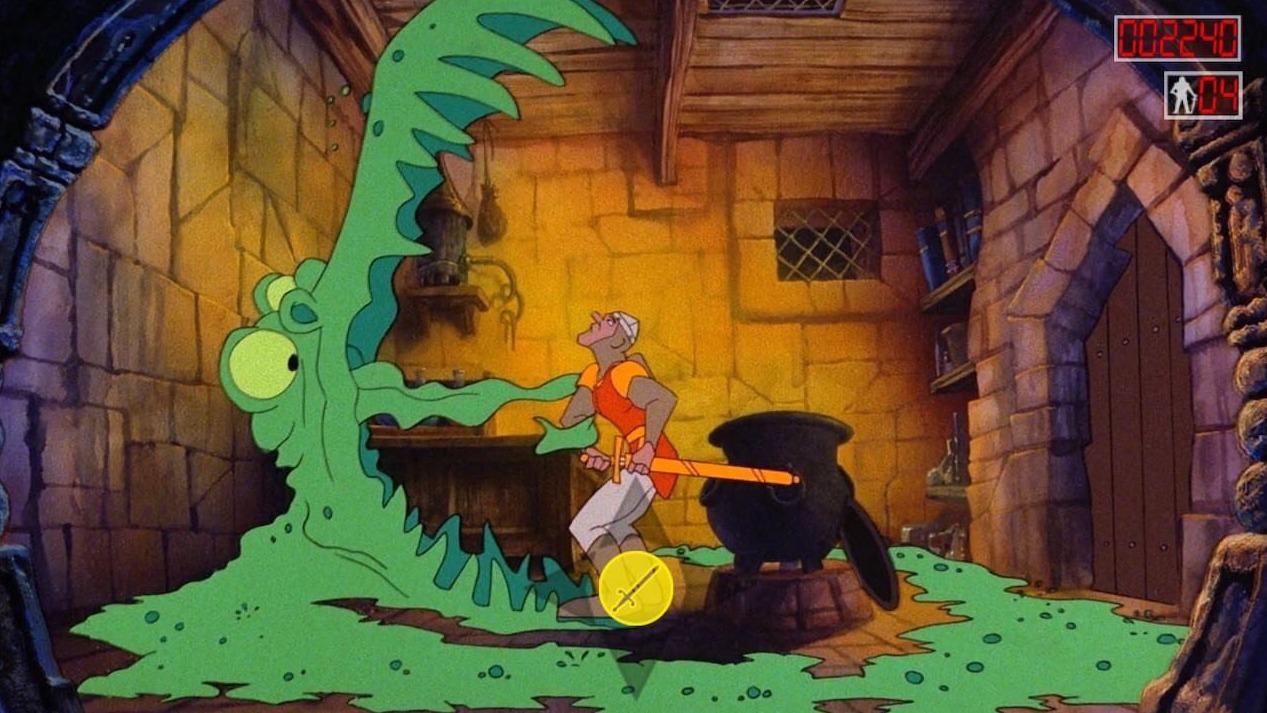
From the moment Dirk the Daring stumbles into the castle, you’re thrust into a world of animated dangers where every decision must be made in a split-second. Unlike traditional arcade games, this one operates on precise input timing, turning each scene into a cinematic quick-reaction challenge. The visuals – stunning animation by Don Bluth’s team – lure you into thinking you’re on a smooth adventure, but the game reveals its teeth quickly. Miss a cue, hit a direction too late, or react a fraction too slow, and Dirk dies in spectacular fashion. Learning the sequences becomes a kind of ritual: memorization first, mastery second. It’s punishing but undeniably groundbreaking, blending animation and gameplay in a way few titles dared attempt at the time.