
























Wizards, vampires, or antiheroes alike: Pattinson always plays his roles with sincerity, even when he doesn’t necessarily take them seriously.
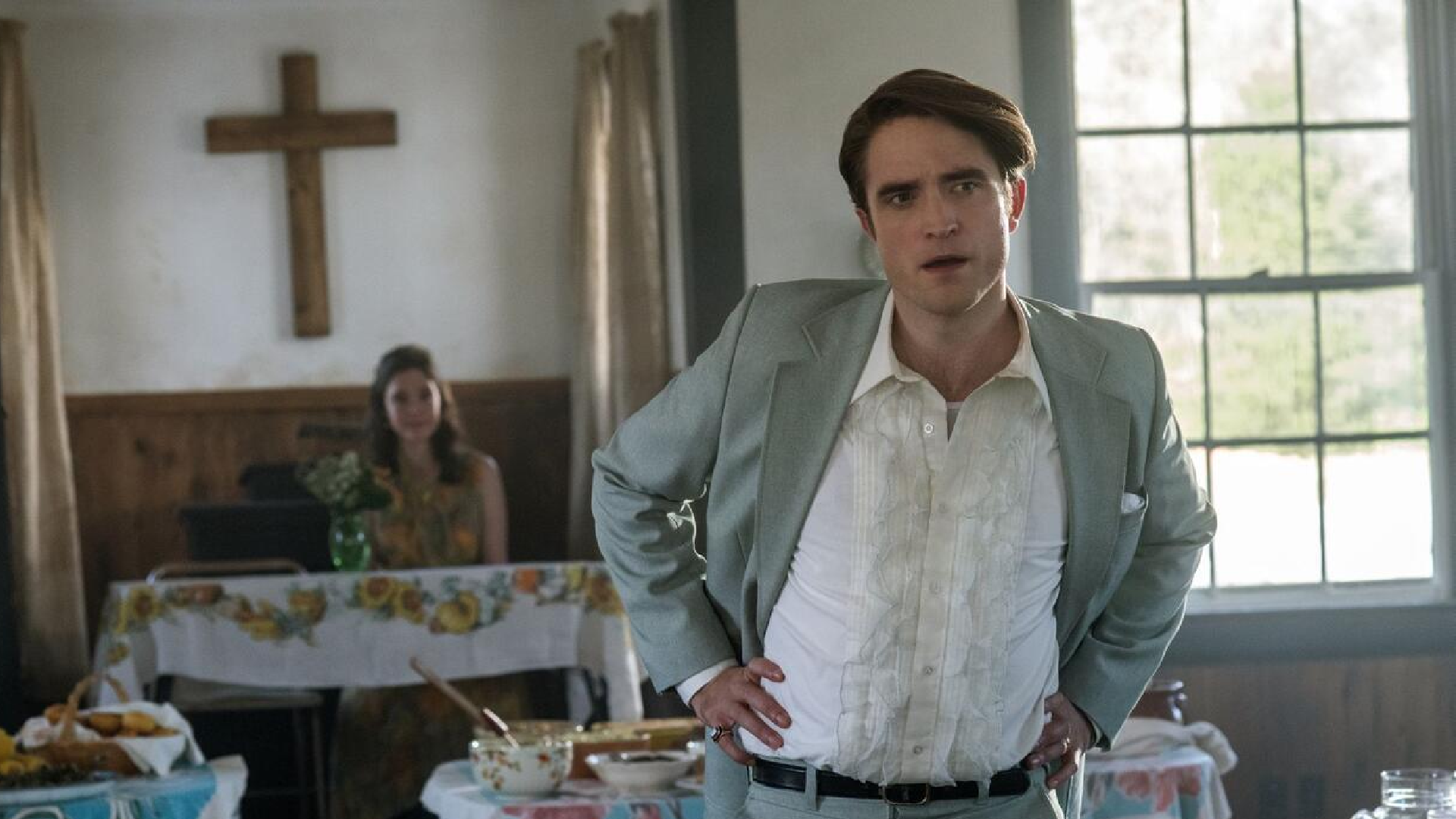
Robert Pattinson turns 40. Born on May 13, 1986, in London, his career is one of the most remarkable transformations of image in modern cinema. First, he was Cedric Diggory in Harry Potter and the Goblet of Fire, then Edward Cullen in Twilight – Breaking Dawn, later the rough-edged indie actor in films such as Good Time, The Lighthouse, and High Life, and finally Bruce Wayne in The Batman. Today, Pattinson comes across as someone who didn’t need to escape fame, but rather turned it against itself.
Between Wizards And Vampires
His early fame came from two fantasy worlds. In Harry Potter and the Goblet of Fire, Pattinson was still the noble, tragic Cedric Diggory in 2005. Three years later, Twilight – Breaking Dawn turned him into a global icon.
As Edward Cullen, he became a projection screen for an entire generation of teenagers: pale, beautiful, melancholic, dangerous, and romantic all at once. The film series with New Moon, Eclipse, and Breaking Dawn made Pattinson and Kristen Stewart world-famous and became a billion-dollar phenomenon.
Humor In Dealing With His Role
What is striking, however, is how little reverence Pattinson ever showed toward his role as Edward Cullen. In interviews, he repeatedly made fun of the character, the romance, and the logic of the saga.
He became especially well known for choosing not to play Edward as a flawless dream figure, but as a dark, self-loathing outsider. At the same time, the often simplified claim that he “never took the role seriously” is only half true: Pattinson took the character’s darkness so seriously that tensions reportedly arose on set. In 2017, he told Howard Stern that he had nearly been fired from Twilight because his interpretation was considered too dark by the producers.
This mixture of irony and seriousness later became his trademark. Pattinson was never the kind of star who polished his own icon. He deconstructs it instead. After Twilight, he did not take the easiest blockbuster path, but instead sought out directors who would pull him away from his poster-boy image: David Cronenberg with Cosmopolis and Maps to the Stars, James Gray with The Lost City of Z, the Safdie brothers with Good Time, Claire Denis with High Life, and Robert Eggers with The Lighthouse. The Guardian once described Twilight in an interview with Pattinson as explicitly the “hardest part” he had ever done a reminder that pop phenomena are often more complicated for actors than they appear from the outside.
The key point: Pattinson did not simply flee from Edward Cullen. He used Edward as a springboard but also as an opponent. Everything that Twilight represented as smooth, beautiful, and idealised, he later answered with grit, risk, and eccentricity. In Good Time, he played a small-time criminal full of panic and nervous energy. In The Lighthouse, he appeared alongside Willem Dafoe as a man breaking under guilt, madness, and the cry of seagulls. In Tenet, he again showed his elegant side, but this time cooler, more ironic, more mature.
The Return As Batman
With The Batman in 2022, he achieved a full-circle moment: another icon, renewed fan expectations, renewed scepticism beforehand and once again, an unconventional answer. Pattinson’s Bruce Wayne was not a confident playboy, but a traumatised, almost pathologically withdrawn young man. This also fits his career: he is less interested in heroes than in damaged people in costume. The sequel The Batman: Part II is currently scheduled for October 2027 after several delays; Warner Bros. confirmed in 2025 that filming is set to begin in spring 2026.
Most recently, Pattinson starred in Bong Joon Ho’s sci-fi satire Mickey 17 . Based on Edward Ashton’s novel Mickey7, the film casts him as an “Expendable” , a worker on a space mission who repeatedly dies and is reprinted. That Pattinson took on a role dealing with identity, replaceability, and self-erasure in a Bong Joon Ho film, the director of Parasite, almost feels like a summary of his career: a star constantly testing new versions of himself.
More Than Just A Bat
On a personal level, Pattinson is now far removed from the feverish tabloid spotlight of the late 2000s. His former relationship with Kristen Stewart was once relentlessly public; today, he lives far more privately. With musician and actress Suki Waterhouse, he had a child in 2024, and the couple only appears selectively in public.
Pattinson’s relationship with Twilight has become more relaxed, but not reverent. In 2025, he reacted with amusement to people still blaming the series for ruining the vampire genre. In essence, he asked whether anyone was still seriously holding on to that a typical Pattinson moment: dry, slightly exasperated, but knowingly playful.
On the eve of his 40th birthday, Robert Pattinson appears as an actor who has survived two careers: the one Hollywood tried to give him after Twilight, and the one audiences expected of him. He never turned Edward Cullen into a cage, but into material. The fact that he never treated the role with deference, but instead ironised, distorted, and darkened it, was not a sign of indifference. It was the beginning of the method that still defines him today: Robert Pattinson does not take fame seriously, but he takes the work behind it very seriously.
Editorial note: Some links in this article are affiliate links. If you purchase something through them, we receive a small commission. The price for you remains exactly the same.