





















• EarlyGame PLUS top logo
  • Join to get exclusive perks & news!
English
    • News
    • Guides
    • Gaming
      • Fortnite
      • League of Legends
      • EA FC
      • Call of Duty
      • Reviews
    • TV & Movies
    • Codes
      • Mobile Games
      • Roblox Games
      • PC & Console Games
    • Videos
    • Forum
    • Careers
    • EarlyGame+
  • Login
  • Homepage My List Settings Sign out
  • News
  • Guides
  • Gaming
    • All Gaming
    • Fortnite
    • League of Legends
    • EA FC
    • Call of Duty
    • Reviews
  • TV & Movies
  • Codes
    • All Codes
    • Mobile Games
    • Roblox Games
    • PC & Console Games
  • Videos
  • Forum
  • Careers
  • EarlyGame+
Game selection
Kena
Gaming new
Enterianment CB
ENT new
TV Shows Movies Image
TV shows Movies logo 2
Fifa stadium
Fc24
Fortnite Llama WP
Fortnite Early Game
LOL 320
Lo L Logo
Codes bg image
Codes logo
Smartphonemobile
Mobile Logo
Videos WP
Untitled 1
Cod 320
Co D logo
Rocket League
Rocket League Text
Apex 320
AP Ex Legends Logo
DALL E 2024 09 17 17 03 06 A vibrant collage image that showcases various art styles from different video games all colliding together in a dynamic composition Include element
Logo
Logo copy
GALLERIES 17 09 2024
News 320 jinx
News logo
More EarlyGame
Esports arena

Polls

Razer blackhsark v2 review im test

Giveaways

Rocket league videos

Videos

Valorant Tournament

Events

  • Copyright 2026 © eSports Media GmbH®
  • Privacy Policy
  • Impressum and Disclaimer
 Logo
English
  • English
  • German
  • Spanish
  • EarlyGame india
  • Homepage
  • Gaming

25 Video Games That Changed The Industry Forever

1-25

Nazarii Verbitskiy Nazarii Verbitskiy
Gaming - January 10th 2026, 11:00 GMT+1
Fortnite

25. Fortnite

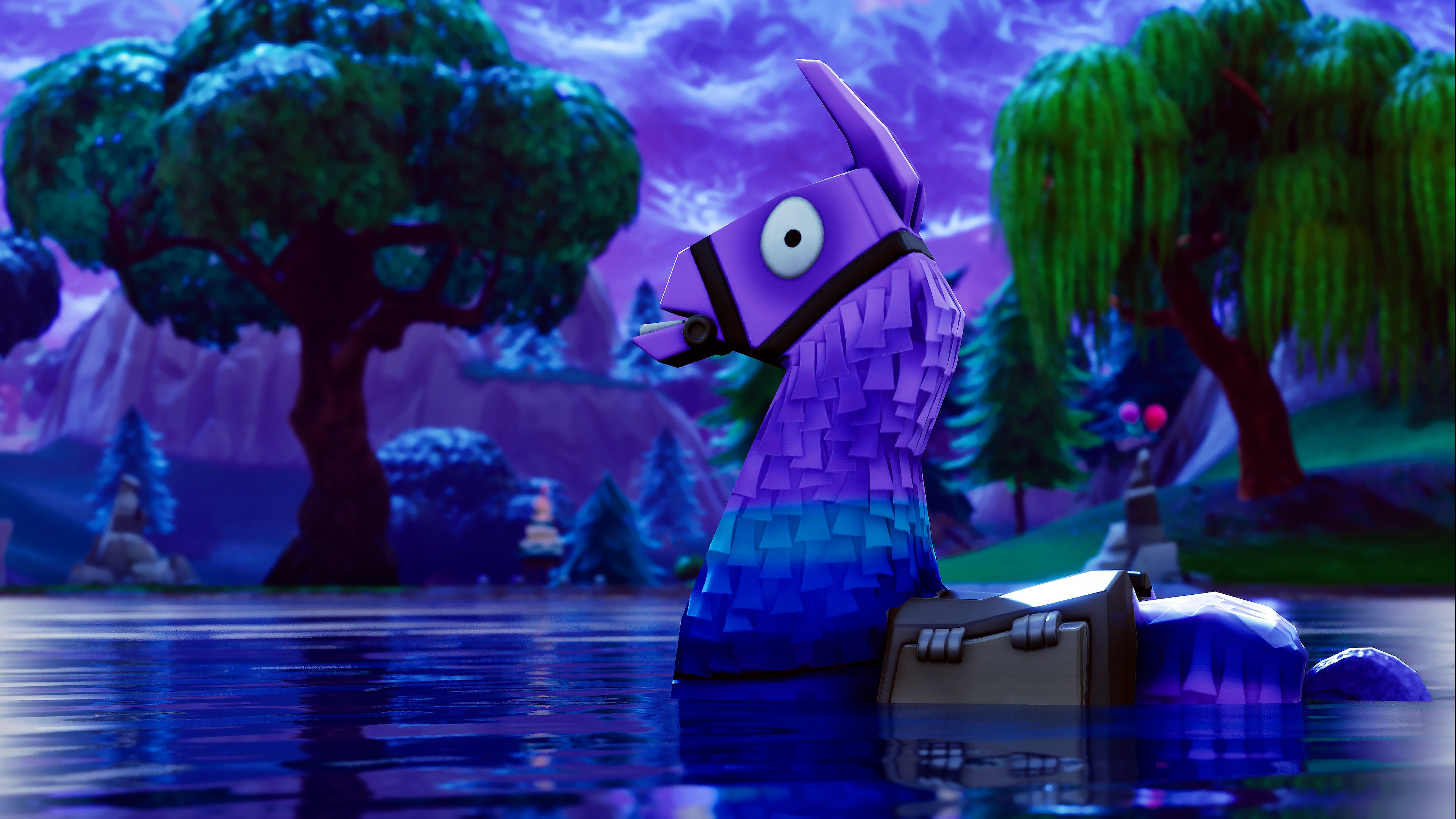
The modern live-service playbook didn’t appear out of nowhere – it was stress-tested in front of millions, season after season. Fortnite helped normalize the idea that a game could behave like a platform: constant updates, time-limited modes, headline-grabbing crossovers, and in-game events that feel closer to a broadcast than a patch note. It also pushed cross-play into the mainstream conversation and proved that cosmetics could fund a free-to-play giant without locking out the core experience. Even the “battle pass” became a familiar phrase partly because of how hard it hit here. | © Epic Games

Dark Souls 1

23. Dark Souls

A lot of studios spent years trying to “fix” difficulty by sanding off the rough edges; this one doubled down and made the rough edges meaningful. With Dark Souls, failure became feedback, and the loop – risking a run for souls, returning to a checkpoint, learning enemy patterns – turned challenge into a language players could actually read. The bonfire checkpoint style, stamina-based combat pacing, and opaque storytelling inspired an entire design subgenre and a marketable label: “soulslike.” Even games that don’t copy the setting borrow the philosophy of fairness, tension, and earned mastery. | © FromSoftware

The elder scrolls 4 oblivion treyler video 32589

24. The Elder Scrolls IV: Oblivion

Before “cosmetic DLC” became a casual shrug, there was a moment when players stared at their screen and asked, “Wait… we’re paying for that?” The Elder Scrolls IV: Oblivion is remembered for more than its sprawling Cyrodiil and quest freedom – its infamous Horse Armor add-on became a cultural flashpoint that foreshadowed modern monetization debates. At the same time, the game pushed open-world RPG immersion with systems like Radiant AI and a dense modding ecosystem that helped turn “mod support” into a selling point. Post-launch content, player-made extensions, and endless side stories all got a little louder after this. | © Bethesda Game Studios

Mortal Kombat

21. Mortal Kombat

Exploration used to mean following a neat line from left to right; then a cartridge showed up and basically said, “Go figure it out.” The Legend of Zelda helped establish the action-adventure template with an open overworld, secrets tucked into every corner, and a sense of discovery driven by curiosity instead of a mission marker. Its save system on console also mattered more than people remember – suddenly a long quest didn’t have to be finished in one sitting. Countless games inherited that mix of combat, puzzles, items that unlock new paths, and the quiet thrill of stumbling onto something you weren’t “supposed” to find yet. | © Nintendo

The Legend Of Zelda

22. The Legend Of Zelda

In the past, exploration meant following a clear path from left to right; then a cartridge came on the market that basically said, “Find out for yourself.” The Legend of Zelda helped establish the action-adventure concept with an open overworld, secrets around every corner, and a sense of discovery driven more by curiosity than by a mission marker. The console's save system was also more important than people remember, and suddenly a long quest no longer had to be completed in one sitting. Countless games have adopted this mix of combat, puzzles, items that unlock new paths, and the quiet thrill of stumbling upon something you weren't “supposed” to find yet. | © Nintendo

Call of Duty 4 Modern Warfare All Ghillied Up

20. Call of Duty 4: Modern Warfare

Multiplayer shooters used to reset the playing field every match; then progression showed up and people started treating lobbies like long-term commitments. Call of Duty 4: Modern Warfare popularized the modern FPS loop of leveling up, unlocking attachments, building classes, and chasing perks and killstreaks that rewarded both skill and time invested. Its cinematic campaign also helped set the standard for blockbuster pacing – scripted set pieces, tight mission variety, and a modern military tone that the genre copied for years. After this, online shooters felt less like isolated rounds and more like ongoing careers with loadouts and identity. | © Infinity Ward

The Sims

19. The Sims

Not every industry shift arrives with explosions – sometimes it’s a door left open and players filling it with their own stories. The Sims turned everyday life into a sandbox, proving there was a huge audience for creativity, social drama, and “just one more day” routines that didn’t require twitch reflexes. It broadened who games were marketed to, pushed the idea of player-driven narrative, and made expansion packs feel like a long-term relationship rather than a one-time purchase. The ripple effect shows up everywhere: cozy games, life sims, streamer-friendly storytelling, and the notion that watching someone play can be as compelling as playing. | © Maxis

Wii Sports

18. Wii Sports

It’s hard to overstate what happened when living rooms turned into miniature bowling alleys and nobody needed a “gamer” label to join in. Pack-in software can be disposable; Wii Sports became a cultural handshake that explained motion controls in seconds and made the Wii a social object as much as a console. Its simple, readable design – swing, point, release – opened the door for grandparents, kids, and party guests who’d never touch a traditional controller. The industry took notes on accessibility, family-friendly design, and the business power of a great bundled game that sells hardware by itself. | © Nintendo

Super Mario 64

17. Super Mario 64

3D games existed before, but the moment it clicked for a mass audience came when movement felt natural instead of clumsy. Super Mario 64 established the grammar for 3D platforming: analog control that allowed precise speed and direction, a camera system that tried to keep up with fast jumps, and level design built around exploration rather than a straight corridor to the flagpole. It taught developers how to stage challenges in open spaces, how to guide players with landmarks, and how to make play feel intuitive even when the world had depth. A huge chunk of “how 3D games feel” traces back here. | © Nintendo

Metal Gear Solid

16. Metal Gear Solid

Blockbuster ambition in games used to be a promise; then one stealth mission delivered it with voice acting, cinematography, and dramatic pacing that felt unusually confident for the time. Metal Gear Solid helped mainstream stealth as a primary playstyle, not a gimmick, while blending cutscenes and gameplay into a cohesive thriller structure that developers still chase. It also showed how direction – camera angles, sound design, performances – could shape emotion as strongly as mechanics. The result was a shift in expectations: players started demanding movie-level storytelling and presentation, and publishers realized games could carry that weight without losing interactivity. | © Konami

Tetris

15. Tetris

The cleanest proof that game design can be universal is how quickly people “get it” without a tutorial. Blocks fall, panic rises, and suddenly you’re negotiating space like it’s a real resource – because it is. Tetris didn’t just popularize the puzzle genre; it showed publishers that simplicity can be endlessly deep, portable, and cross-cultural. Its Game Boy pairing helped define the idea of a must-have pack-in that sells hardware as much as software, and its core loop became a template for modern mobile obsession: short sessions, instant readability, infinite mastery. | © Sega

Ranking Every Final Fantasy Game Final Fantasy 7

14. Final Fantasy VII

Marketing budgets didn’t start chasing “cinematic” storytelling in games until players proved they’d show up for it in massive numbers. With Final Fantasy VII, the leap to PlayStation-era presentation – 3D characters, pre-rendered backgrounds, and FMV spectacle – helped push JRPGs into the global mainstream and made “epic narrative” a commercial argument, not just a creative one. Its success also reinforced the CD-ROM era shift: bigger worlds, bigger music, bigger drama, and a release that felt like an event. After 1997, publishers treated RPG storytelling as something that could headline a console generation. | © Square Enix

Bio Shock

13. BioShock

A city at the bottom of the ocean shouldn’t feel so alive, yet every hallway, poster, and audio log is doing quiet work on your brain. That commitment to environmental storytelling – and a willingness to tackle ideology head-on – helped BioShock change what mainstream shooters were “allowed” to be. It blended FPS pacing with immersive-sim DNA, giving players meaningful choices and a narrative twist that became a touchstone for modern story design. The ripple effect shows up whenever a blockbuster game tries to make its world argue back, not just serve as a backdrop for gunfire. | © 2K Games

Farmville

12. Farmville

It looked harmless: crops, cute animals, a little routine before dinner. Then the notifications started, and suddenly your social feed was part of the game. FarmVille helped lock in the mechanics that would dominate social and mobile for years – timers, daily check-ins, “neighbors” as progression fuel, and monetization that nudges rather than blocks. More importantly, it proved viral design and data-driven iteration could scale a game to tens of millions, turning player behavior into a feedback loop for content, pricing, and retention. | © Zynga

CHRONO TRIGGER

11. Chrono Trigger

Time travel is an easy gimmick; using it to structure an RPG so cleanly that every era feels like it matters is the real trick. Chrono Trigger helped rewrite expectations for pacing and replay value, from its multiple endings to the now-famous New Game Plus idea that encouraged experimentation instead of a one-and-done playthrough. It also showed how cinematic flair could coexist with classic RPG systems, keeping battles snappy while the story kept moving. Plenty of modern RPGs still chase that balance: big stakes, minimal bloat, and reasons to come back. | © Square Enix

Crash Bandicoot

10. Crash Bandicoot

Mascots are usually built to be cute first and playable second; this one arrived as both a character and a technical flex. The corridor-style 3D design of Crash Bandicoot solved a problem early PlayStation platformers struggled with: camera control and depth judgment in 3D space. By guiding players “into” the screen and staging levels like obstacle courses, it made 3D movement feel readable on a new console generation. It also became a case study in how a single character can anchor a brand identity – Sony needed a face, and Crash fit the moment. | © Naughty Dog

Star Fox

9. Star Fox

A modest-looking space shooter ended up acting like a preview of the hardware future. Star Fox mattered because it used the Super FX chip to push polygonal 3D onto a system built for sprites, helping normalize the idea that console games could lean on specialized hardware to break through limitations. That collaboration between Nintendo and Argonaut didn’t just produce a hit; it signaled a direction the entire industry would follow – co-designing tech and software together to make “impossible” visuals feasible at home. | © Nintendo

Street Fighter II

8. Street Fighter II

Arcades didn’t become competitive arenas by accident – people needed a game that made bragging rights feel measurable. With Street Fighter II, the genre’s modern language clicked into place: readable matchups, distinct characters, and the combo system that turned improvisation into skill expression. It also helped establish the social rhythm of head-to-head play, where crowds form, rivals return, and small mechanical advantages become personal obsessions. Fighting games have evolved in every direction since 1991, but the blueprint for the scene still traces back to this cabinet. | © Capcom

Quake

7. Quake

The moment players started thinking about “engines” as products, not just invisible tech, a lot of it flowed from one dark, fast shooter. Quake helped push true 3D spaces and popularized a culture of modding and online play that treated the game as a foundation – something you could reshape, reskin, and rebuild into new experiences. Its multiplayer-first energy and engine-driven approach nudged the industry toward reusable tech stacks and community creation, while its influence echoed through the rise of competitive FPS standards and the long life of PC shooter ecosystems. | © id Software

Pong

6. Pong

Before graphics arms races and cinematic trailers, there was a wooden cabinet, two paddles, and a dot that felt weirdly alive. Pong didn’t just entertain – it proved the business model, turning coin-drop curiosity into sustained demand and giving Atari the kind of hit that can launch an industry. Its simplicity also established a design principle that still matters: immediate comprehension is a superpower, especially for a new medium. When people talk about gaming’s commercial birth story, this is usually where it starts. | © Atari

Grand Theft Auto III

5. Grand Theft Auto III

Liberty City didn’t just feel big in 2001 – it felt alive, the kind of place where you could ignore the “correct” route and still end up with a story worth telling. That shift to a fully 3D, roaming crime sandbox in Grand Theft Auto III rewired mainstream expectations for open-world games: mission structure plus chaotic freedom, cars as both traversal and toy, radio as worldbuilding, and a city that kept moving whether you behaved or not. After it landed, “open world” stopped being a novelty feature and became an AAA destination in itself. | © Rockstar North

World of Warcraft

4. World of Warcraft

MMOs existed long before 2004, but this one turned the genre into something people could recommend to friends who’d never touched it. The quest-driven leveling flow, readable roles, and endlessly expandable endgame in World of Warcraft helped standardize the modern MMO vocabulary – guild life, raids as scheduled social events, and a long-term service model that could dominate a player’s calendar for years. It also sparked an era of “WoW-likes,” because the industry suddenly had a clear template for scale and retention. | © Blizzard Entertainment

Doom

3. Doom

The early ’90s PC scene learned a brutal lesson: speed, atmosphere, and smart distribution can hit harder than flashy marketing. Doom didn’t just popularize the first-person shooter, it pushed tech forward, made LAN multiplayer a bragging-rights obsession, and leveraged shareware in a way that helped it spread like wildfire. Even the conversation around authorship and mod-friendly culture took a turn as players started treating levels and custom content as part of the ecosystem, not an afterthought. | © id Software

Baldurs Gate 3

2. Baldur's Gate 3

High-budget RPG ambition used to come with a familiar caveat – great writing, sure, but don’t expect everyone to show up. Then Baldur’s Gate 3 arrived with cinematic presentation, sharply reactive quests, and choices that feel less like dialogue options and more like consequences that stick, pulling the classic CRPG tradition into the mainstream spotlight. Its long runway of updates and community-facing support also helped reinforce the idea that a sprawling single-player (and co-op) RPG can keep evolving without turning into a live-service treadmill. | © Larian Studios

Minecraft

1. Minecraft

The most influential “toolbox” in gaming history happens to look like a toy, and that’s part of the trick. Building, surviving, modding, roleplaying, engineering – Minecraft made all of it feel natural inside one blocky language, then let the community push it into a platform for user-generated worlds, servers, and creations that outgrew any single genre label. It normalized the idea that players don’t just consume content; they manufacture it, share it, and keep a game culturally relevant for more than a decade. | © Mojang Studios

1-25

Every era has that one release people still point to when they’re trying to explain why modern games look and play the way they do. Sometimes it’s a new camera style that suddenly feels “normal,” sometimes it’s a story told with real confidence, or an online mode that turns into a way of life. The impact lingers long after the credits.

Here are 25 titles that left fingerprints everywhere – on genres, mechanics, business models, and even the way players argue about what games should be. Some were instant landmarks; others only revealed their reach once the industry started borrowing their best ideas.

  • Facebook X Reddit WhatsApp Copy URL

Every era has that one release people still point to when they’re trying to explain why modern games look and play the way they do. Sometimes it’s a new camera style that suddenly feels “normal,” sometimes it’s a story told with real confidence, or an online mode that turns into a way of life. The impact lingers long after the credits.

Here are 25 titles that left fingerprints everywhere – on genres, mechanics, business models, and even the way players argue about what games should be. Some were instant landmarks; others only revealed their reach once the industry started borrowing their best ideas.

Related News

More
Tlou 2 ending msn
Gaming
Top 15 Worst Video Game Endings of All Time Ranked
Moon
TV Shows & Movies
15 Heaviest Sci-Fi Movies of All Time
SZA One of Them Days cropped processed by imagy
Entertainment
Top 10 Best Debut Movie Actors of 2025
Resi requiem leon
Gaming
Oh My God, Okay, It's Happening! – Resident Evil Requiem Showcase Releases THIS Week
Cropped Thunderbolts
Entertainment
The Most Expensive Movies of 2025
Hollow Knight Silksong cropped processed by imagy
Gaming
The Steam Awards Have Ended: Here Are the Winners in Every Category
Mario tennis fever
Gaming
The Most Playable Characters Ever – Mario Tennis Fever Coming In February
Arc Raiders dev about expeditions
Gaming
One Million Resets Later, Arc Raiders Rethinks Its Expeditions
Cropped the pitt
Entertainment
Golden Globes 2025: All the TV Category Winners
One Battle After Another cropped processed by imagy
Entertainment
Golden Globes 2025: All the Film Category Winners
Steam Hardware 25 11 12 01
Gaming
Over 1,000$? The Steam Machine Could Be More Expensive Than You Might Think
Cropped Conclave
Entertainment
Hideo Kojima Just Announced His Favorite Movies of 2025
  • All Gaming
  • Videos
  • News
  • Home

Subscribe to our Newsletter

Sign up for selected EarlyGame highlights, opinions and much more

About Us

Discover the world of esports and video games. Stay up to date with news, opinion, tips, tricks and reviews.
More insights about us? Click here!

Links

  • Affiliate Links
  • Privacy Policy
  • Impressum and Disclaimer
  • Advertising Policy
  • Our Editorial Policy
  • About Us
  • Authors
  • Ownership

Partners

  • Kicker Logo
  • Efg esl logo
  • Euronics logo
  • Porsche logo
  • Razer logo

Charity Partner

  • Laureus sport for good horizontal logo

Games

  • Gaming
  • Entertainment
  • TV Shows & Movies
  • EA FC
  • Fortnite
  • League of Legends
  • Codes
  • Mobile Gaming
  • Videos
  • Call of Duty
  • Rocket League
  • APEX
  • Reviews
  • Galleries
  • News
  • Your Future

Links

  • Affiliate Links
  • Privacy Policy
  • Impressum and Disclaimer
  • Advertising Policy
  • Our Editorial Policy
  • About Us
  • Authors
  • Ownership
  • Copyright 2026 © eSports Media GmbH®
  • Privacy Policy
  • Impressum and Disclaimer
  • Update Privacy Settings
English
English
  • English
  • German
  • Spanish
  • EarlyGame india